
Bathtub Reglazing in New York City
Up to $100 off – valid only until
Bathtub Liners in NYC: Pros, Cons, Lifespan & Better Alternatives
 Artem Tugbaev
Last updated:
Dec. 24, 2025
Artem Tugbaev
Last updated:
Dec. 24, 2025
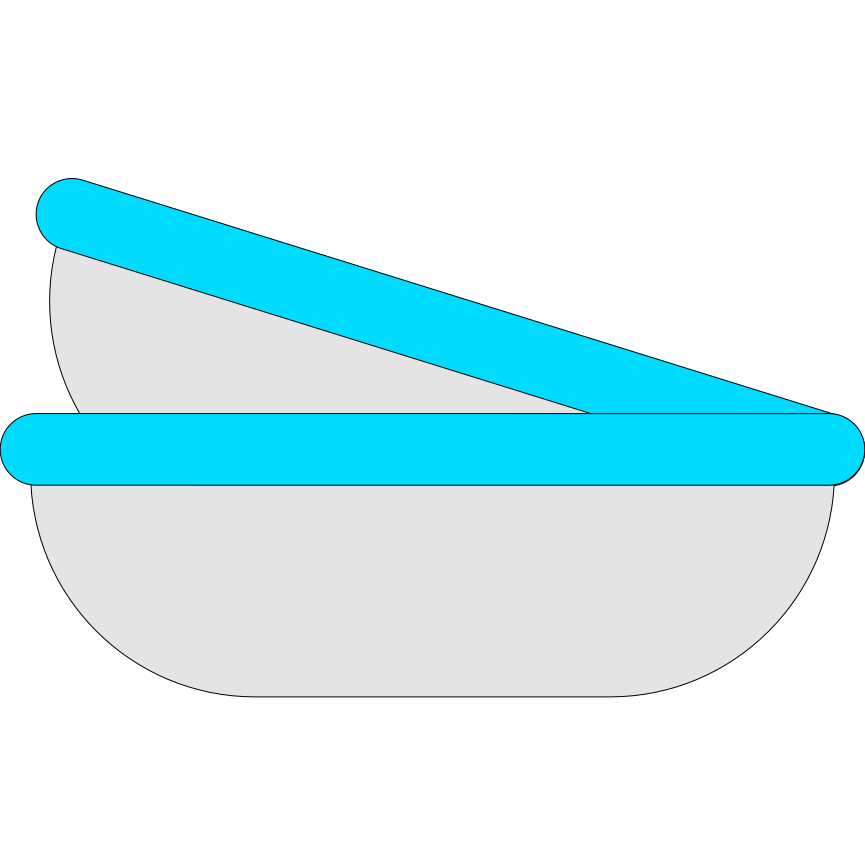
A bathtub liner (also called a tub insert) can seem like a quick fix: a new shell goes over the old tub for an instant “new tub look.” In real life, liners succeed or fail based on one thing—fit + sealing. When either is even slightly off, moisture can get trapped underneath, which can lead to odors, mold, and early failure.
If you’re renovating a bathroom in New York City and deciding between a liner and refinishing, this guide breaks down what a liner is, how it’s installed, the pros/cons, and how it compares to pour-on reglazing.
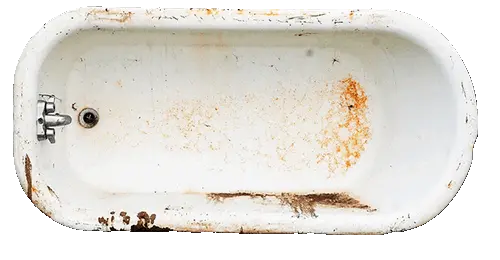
Best for: cosmetic upgrades when the tub is structurally sound and the liner can be custom-fit precisely.
Not ideal for: tubs that flex or move, have a history of leaks, unusual shapes, or bathrooms where sealing around drain/overflow is hard to guarantee.
What Is a Bathtub Liner?
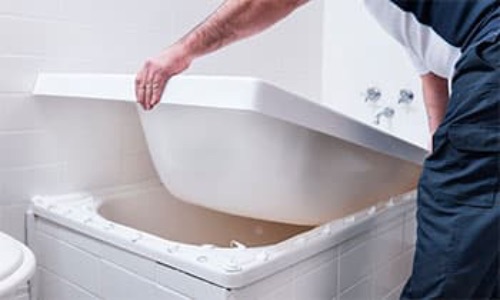
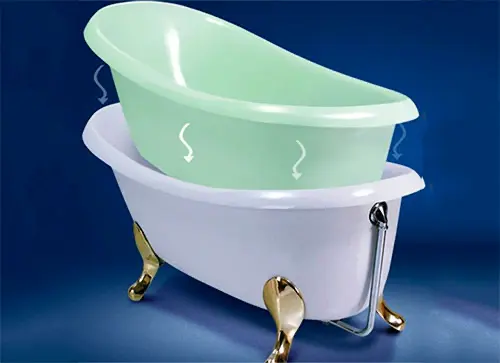
A bathtub liner is a custom-formed shell (usually acrylic, PVC, or fiberglass) designed to match your tub’s shape. It’s installed over the existing tub using adhesives/foam and sealed around the perimeter, drain, and overflow to create the appearance of a new tub without full demolition.
Done well, a liner can provide:
-
A bright, smooth finish
-
A non-porous surface that’s easier to clean
-
A “new tub look” without removing heavy cast iron (common in NYC)
How Long Do Bathtub Liners Last?
A properly manufactured liner installed correctly can last up to ~10 years (sometimes longer), but longevity depends heavily on:
-
Exact measurements and fit
-
Adhesion quality (no gaps)
-
Sealing around drain/overflow
-
Whether the tub flexes or shifts
-
Long-term moisture control
The main reason liners fail isn’t the material — it’s installation variables.
Rule of thumb: a liner can last many years, but installation quality matters more than the liner material itself.
How Bathtub Liner Installation Works
Liner installation is more involved than most people expect. A typical install includes:
-
Remove drain & overflow hardware
-
Clean and dry the tub completely
-
Measure precisely and cut drain/overflow openings
-
Apply adhesive/foam to avoid voids (no air pockets)
-
Set the liner and seal perimeter + fixtures
-
Reinstall hardware and allow proper cure time (varies by system)
Important: In many bathrooms, liners may require tile work near the tub edge depending on the existing wall layout.

Benefits of Bathtub Liners
Bathtub liners can be a reasonable option when conditions are right:
-
No full tub removal (huge plus for heavy cast iron tubs)
-
A clean, glossy finish similar to a new acrylic tub
-
Non-porous surface that resists staining and is easy to wipe down
-
Less demolition than replacement
Drawbacks of Bathtub Liners (The Real-World Problems)
Before choosing a liner, consider the tradeoffs:
If water gets between the liner and the original tub, it may not dry properly. Over time this can cause musty odors, mold/mildew growth, adhesive breakdown, and a shorter lifespan.
Not all tubs match “standard” shapes. If your tub is unusual, older, or modified over time, fit can be difficult.
Some installations require removing and reinstalling adjacent tile — which adds complexity and cost.
Because a liner is a second shell, it can feel less solid than the original cast-iron tub. If bonding isn’t uniform, the liner may flex, squeak, or crack over time.
High-quality liners + correct installation can approach the cost of replacement in some cases, especially when tile work is involved.
Bathtub Liner vs. Pour-On Reglazing (Our Method)
If your tub is structurally sound but the surface is worn, reglazing can often deliver the “new tub look” with fewer long-term risks.
| QUICK COMPARISON | Bathtub Liner | Pour-On Reglazing |
| Durability & Issues | Often lasts ~5–10 years when fit and sealing are excellent; risk of trapped moisture if sealing fails. |  Commonly lasts 7–15 years with proper prep and care; seamless, integrated surface. Commonly lasts 7–15 years with proper prep and care; seamless, integrated surface. |
| Installation Process | 2-3 Day multi-step process | 3-4 hour single visit |
| Ready to Use | Immediately | After 24 Hours |
| Impact on Tiles | High risk
None. No demolition needed. | |
| Overall Value | High initial cost. Feels hollow & can crack. | Superior value. Solid, integrated finish. |
If you want a solid, seamless surface and want to avoid the “hidden moisture” problem that can happen with liners, pour-on reglazing is often the better long-term choice.
👉 Learn more: Pour-On Method
👉 Pricing
A liner can make sense if:
- You want an “insert” feel similar to a new acrylic tub
- Your tub shape is standard and can be matched precisely
- The bathroom layout won’t require major tile disruption
- You hire an experienced installer who guarantees fit + sealing
Consider alternatives if:
- The tub flexes or moves when stepped in
- There’s a history of leaks or moisture behind/under the tub
- Your tub has an unusual shape/size
- You want the most durable finish with minimal risk of trapped moisture
Want the Best Option for Your Tub?
Not sure whether a liner or refinishing makes more sense for your tub? Send a photo and a few details (material + any flex/leaks). We’ll tell you what’s realistic and which option is likely to hold up best long-term.
✅ Single-visit pour-on reglazing (3–4 hours)
✅ Ready to use in ~24 hours
✅ Seamless finish (no overspray, no gap)