
Bathtub Caulking & Re-Caulking in NYC
Re-Caulking, Built Into Every Reglazing
Caulk is the seal at the joint where the tub meets the wall — and it’s usually the first thing to crack, peel, or grow mold. We redo that joint as part of every reglazing, in the same visit, and our pour-on method changes how long the new seal holds.
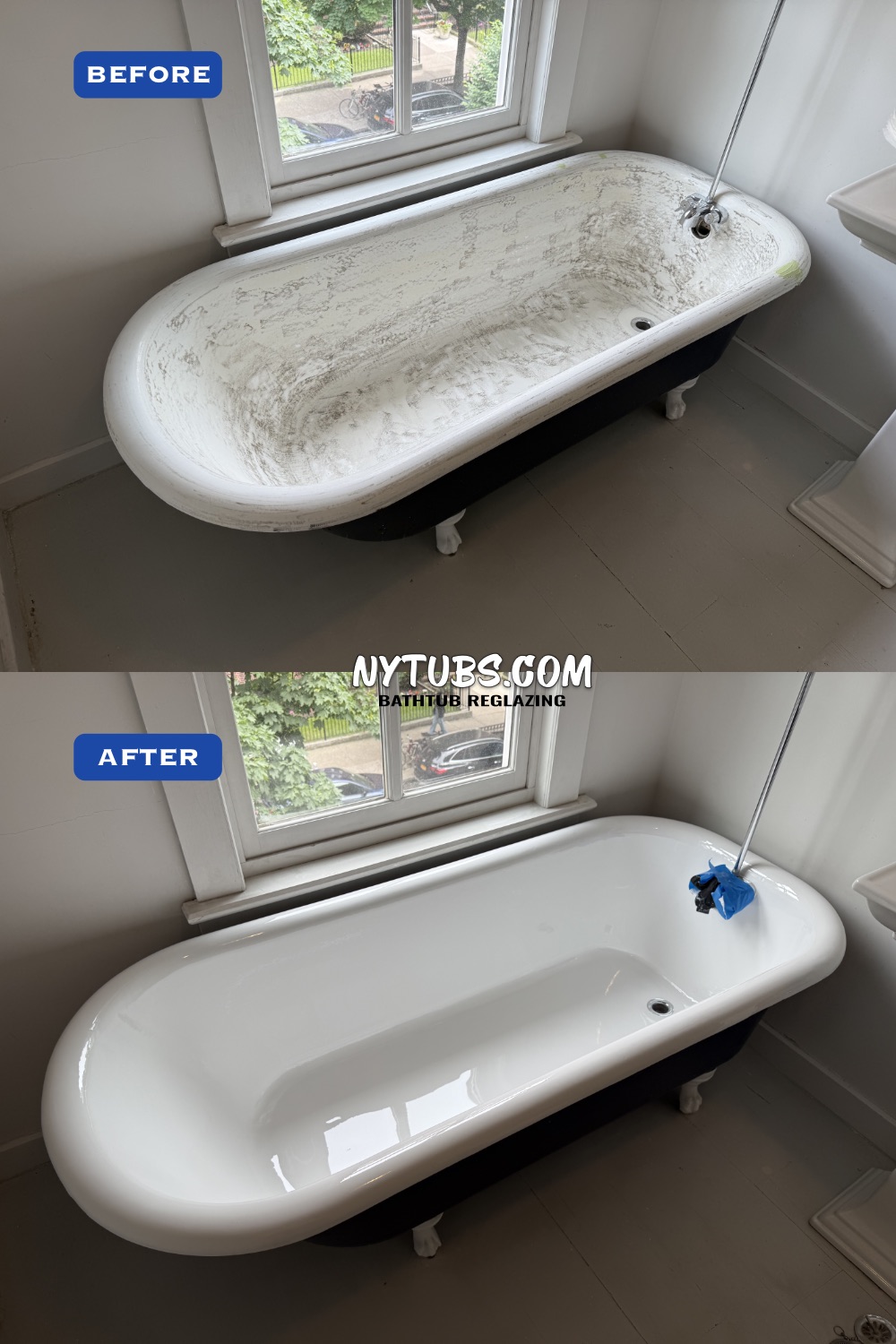
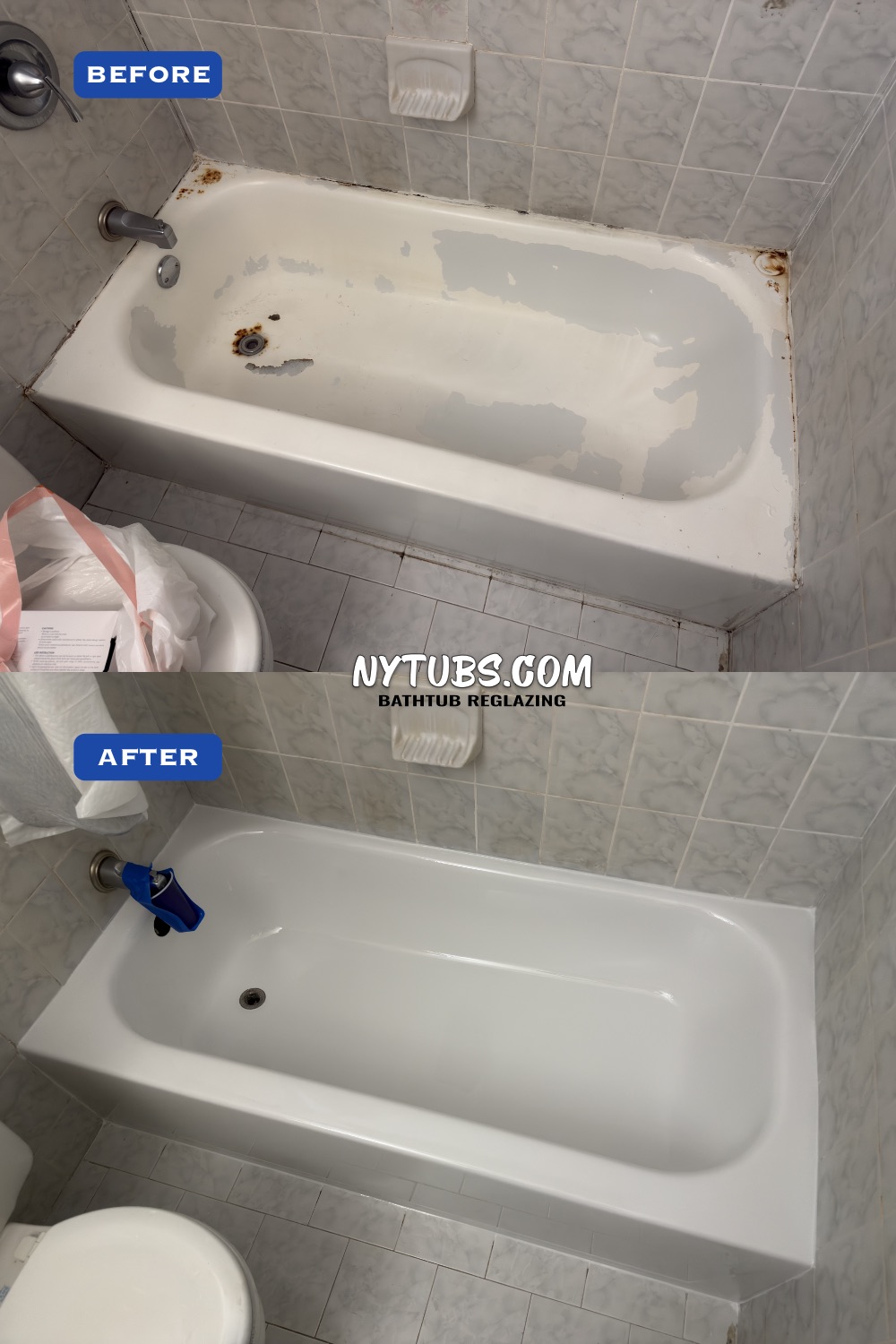
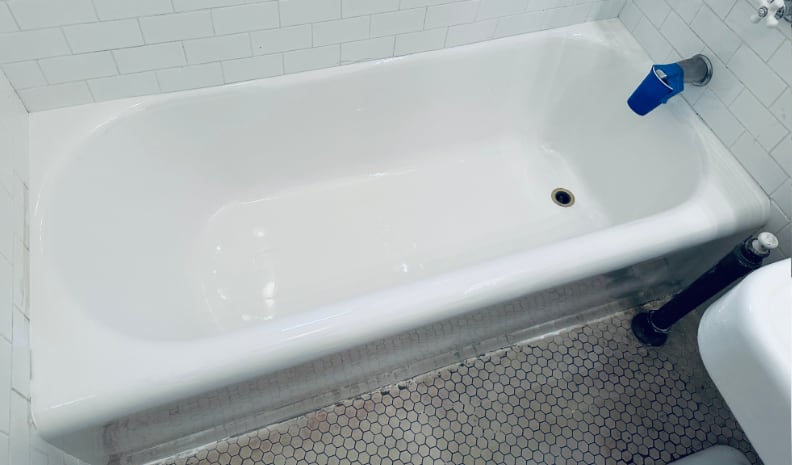 AFTER
AFTER
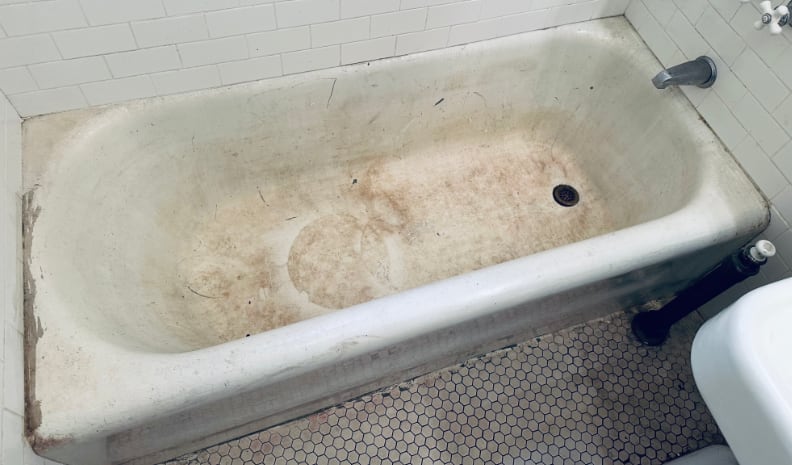 BEFORE
Why Bathtub Caulk Fails
An exposed caulk bead lives a hard life. Two things work against it — everything around the tub, and the caulk material itself.
What the bead is up against
Standing water
It sits in standing water after every shower, day after day.
Cleaners & scrubbing
Cleaning products and scrubbing wear on the bead on top of that.
Building movement
It rides along as the building settles and vibrates.
And the material gives out
Cheap acrylic caulk
- Dries out
- Shrinks
- Cracks
Silicone
Holds up longer than acrylic — but it still gives out, just in a different way:
- Loses its grip at the edges
- Starts to peel
- Its surface collects the soap film that mold feeds on
Once there is even a small gap, water wicks in behind the caulk. That is when the damage spreads:
- Soft drywall behind the wall
- Loose tiles
- Stains around the tub
- In New York apartment buildings, a slow leak at the tub joint that ends up in your downstairs neighbor’s ceiling
It is also why the same joint gets re-caulked again and again — each new bead is exposed to everything that destroyed the previous one.
Why This Seam Lasts
-
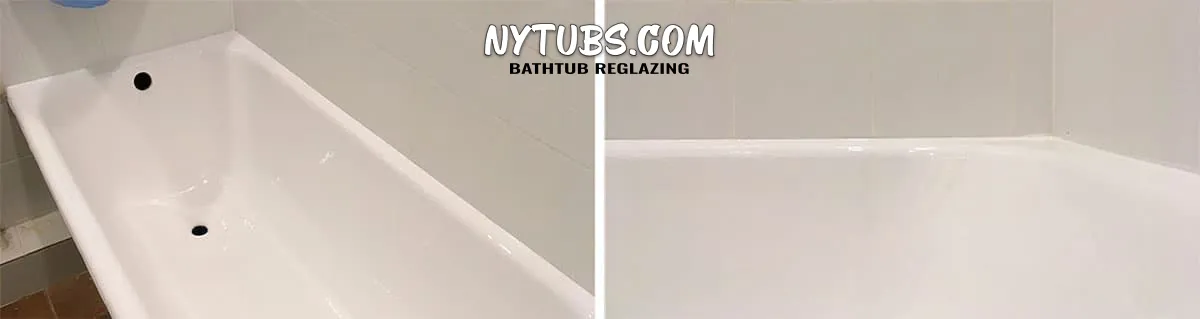
No exposed caulk line — nothing to yellow, peel, or collect mold at the edge of the tub
-
The sealant stays flexible, so it absorbs the small movements of the tub and the building instead of cracking
-
The corner wipes clean like the rest of the coated tub — no special scrubbing, no bleach pens
-
It is done in the same visit as your reglazing, with no separate appointment
Caulking is included free with every bathtub reglazing. If the gap between your tub and the wall is wider than standard, it may need extra caulk to fill before coating — that starts at $35, and we will let you know before any work begins. Bathtub reglazing starts at $475, tax included — see our pricing page for details.
Frequently asked questions
Why does bathtub caulk keep cracking or growing mold?
Because it is exposed. A caulk bead sits in water after every shower and takes cleaners and scrubbing on top of that. Acrylic caulk dries out and cracks; silicone peels at the edges and holds the soap film that mold grows on. Once a gap opens, water gets behind it and the problem spreads into the wall.
What makes your caulking different?
The order of work. We remove the old caulk completely, seal the joint with a flexible, fast-curing sealant, and then cover it with our pour-on coating. The sealant ends up under the finish — protected from water and cleaning — and the corner looks like a clean 90° angle instead of a silicone bead.
Is caulking included with bathtub reglazing?
Yes — it is included free with every bathtub reglazing. If the gap between the tub and the wall is unusually wide, filling it may require extra caulk, which starts at $25. We will confirm that with you before starting.
Do you offer caulking as a separate service, without reglazing?
No — we restore bathtubs, and caulking is built into that job. The seal is protected by the coating that goes over it, so it is not something we install on its own. Many companies charge extra for caulking; with us it is included free in every reglazing. If your finish is in good shape and only the caulk has failed, a standard re-caulk is a simple handyman job — but if the tub surface is showing wear too, reglazing fixes both in one visit.
How soon can I use the tub?
Caulking happens during the same visit as your reglazing. The whole job takes about 3–4 hours on site, and the tub is ready to use in 24 hours.
What our customers say



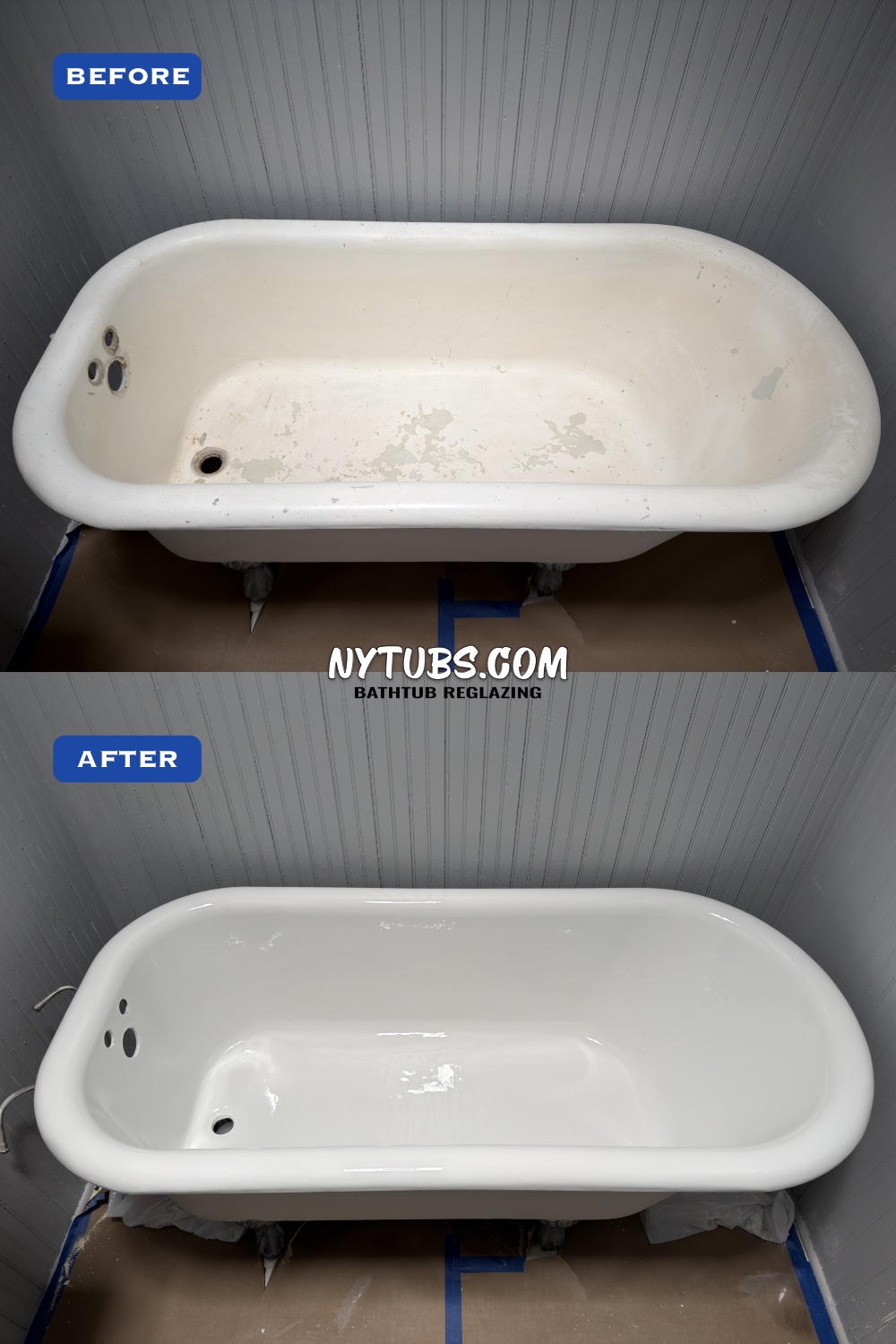
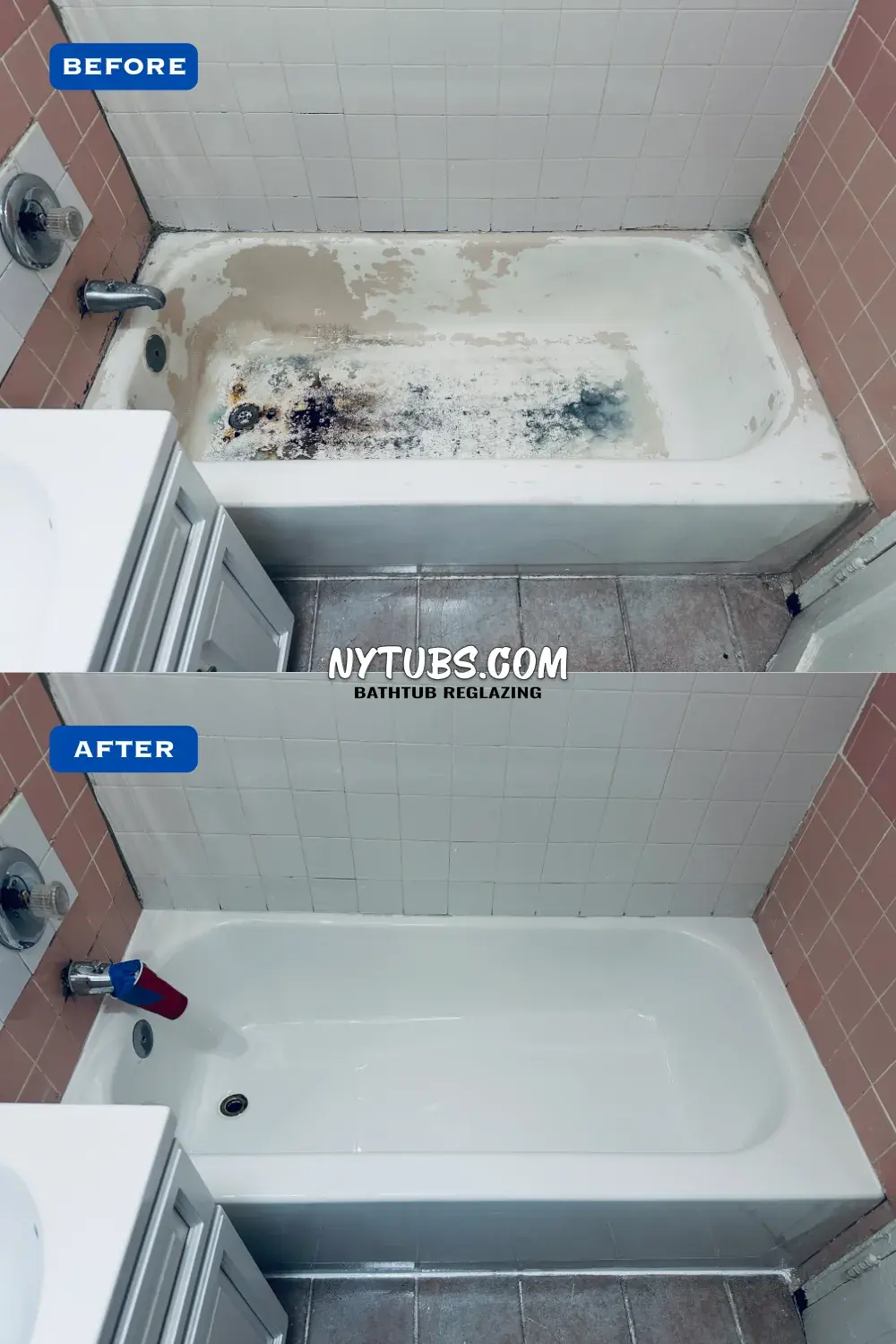
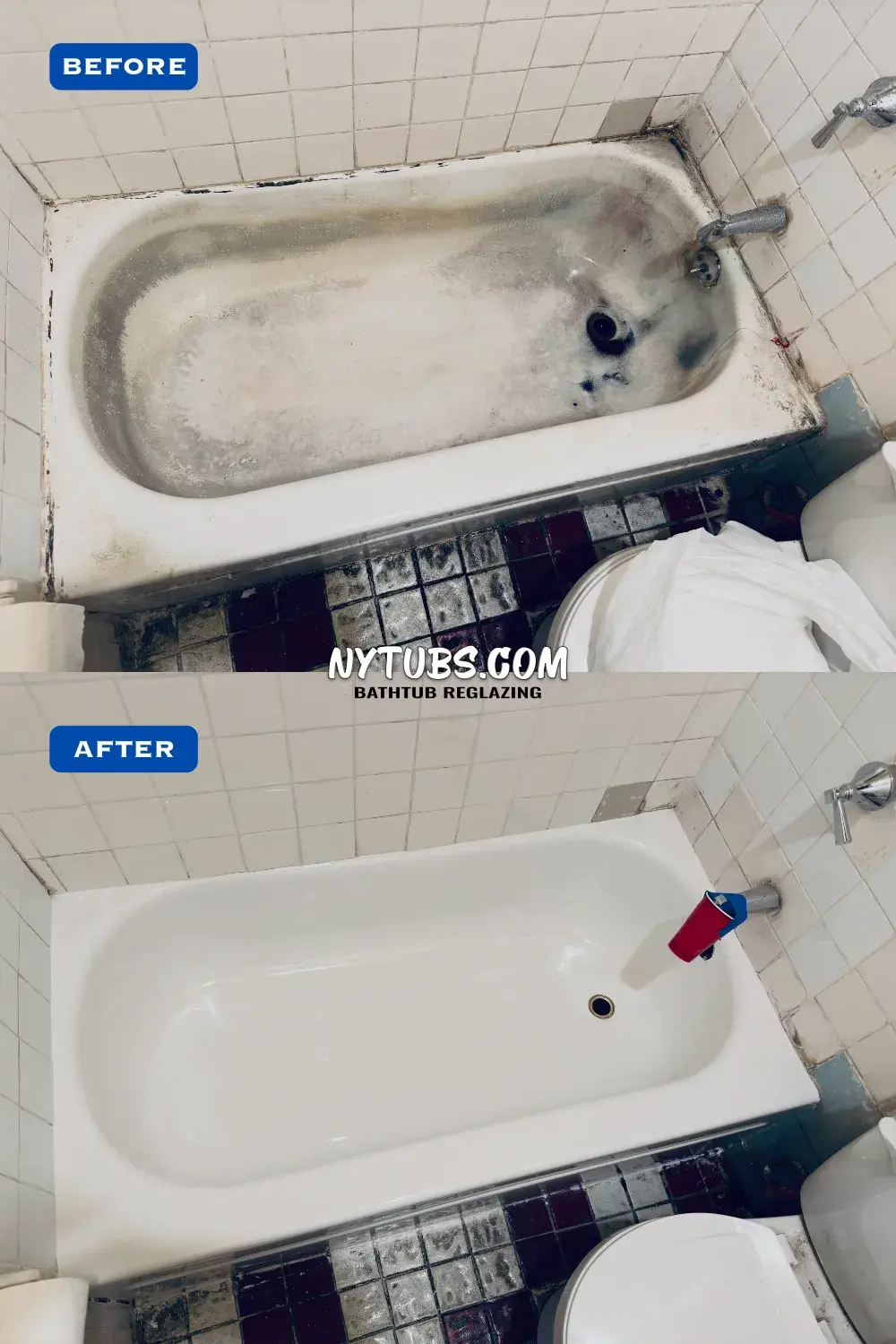
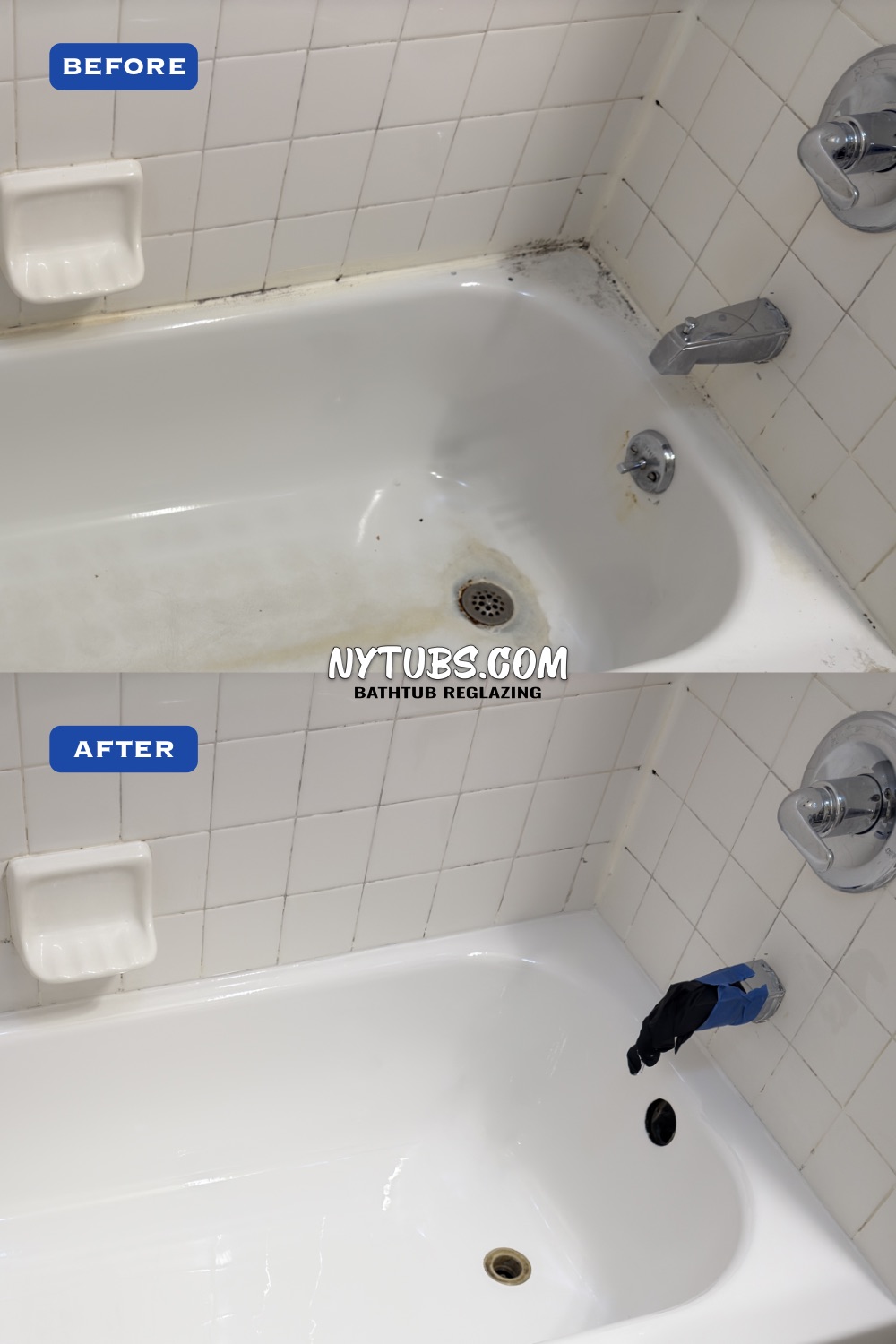
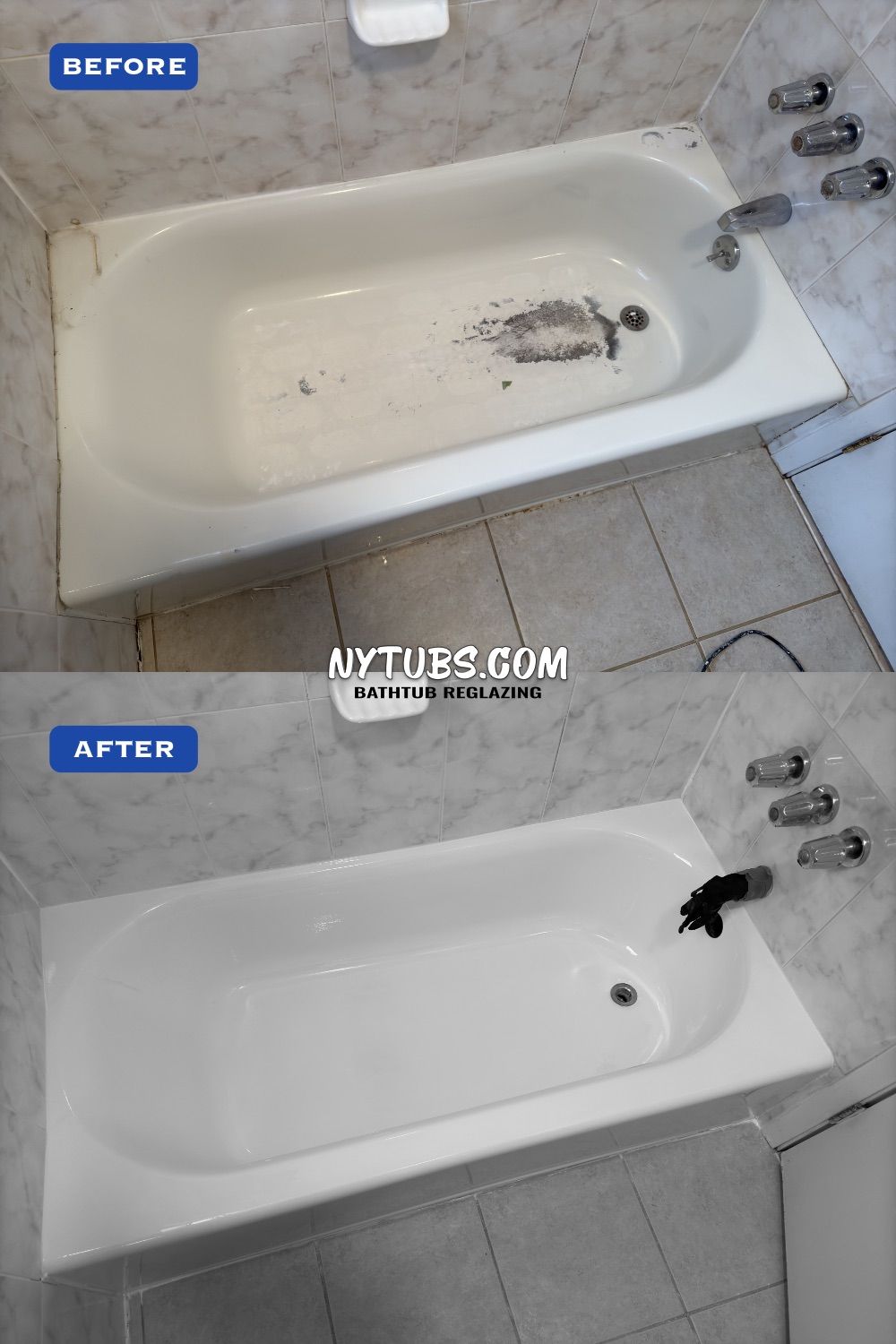
Before and after
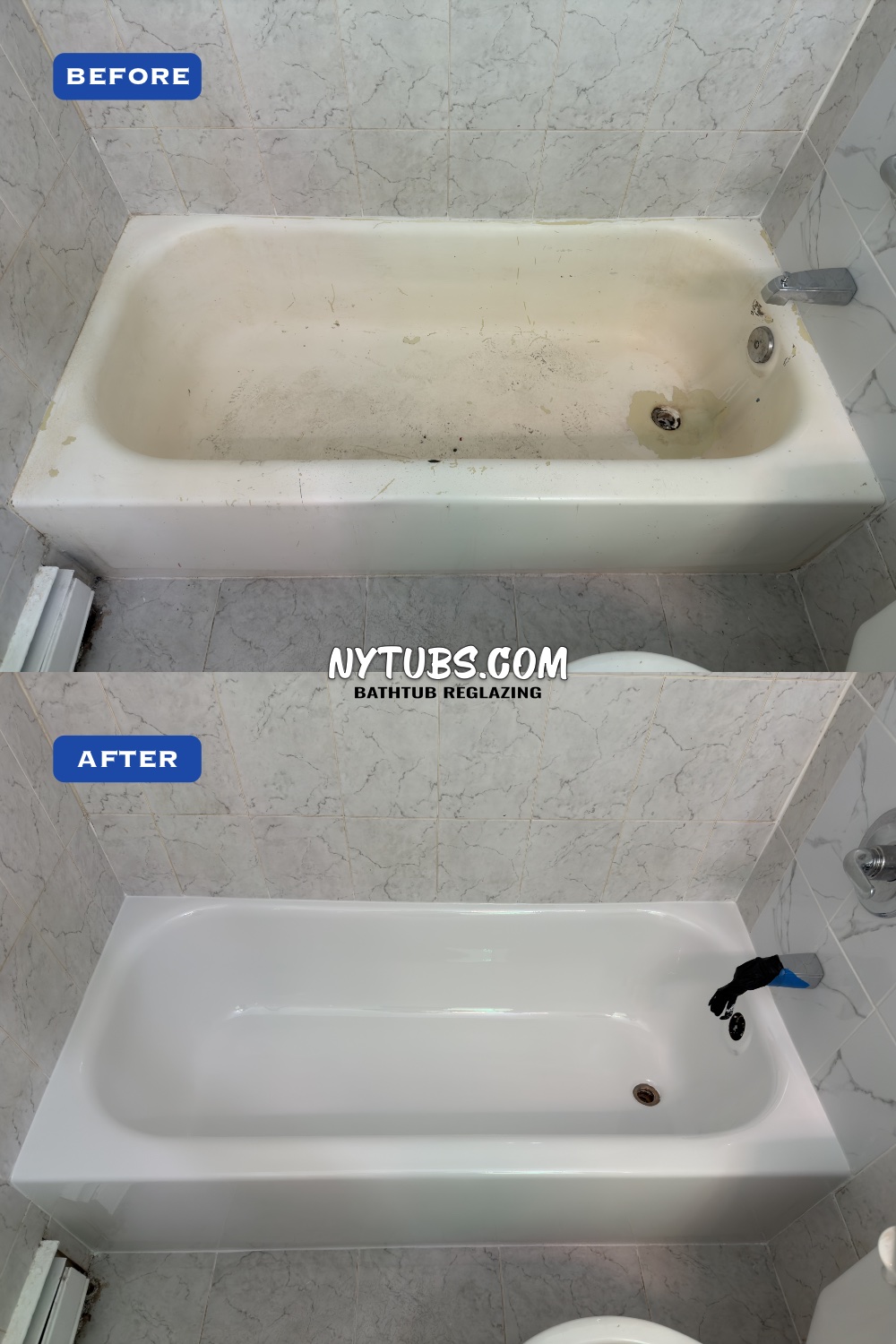
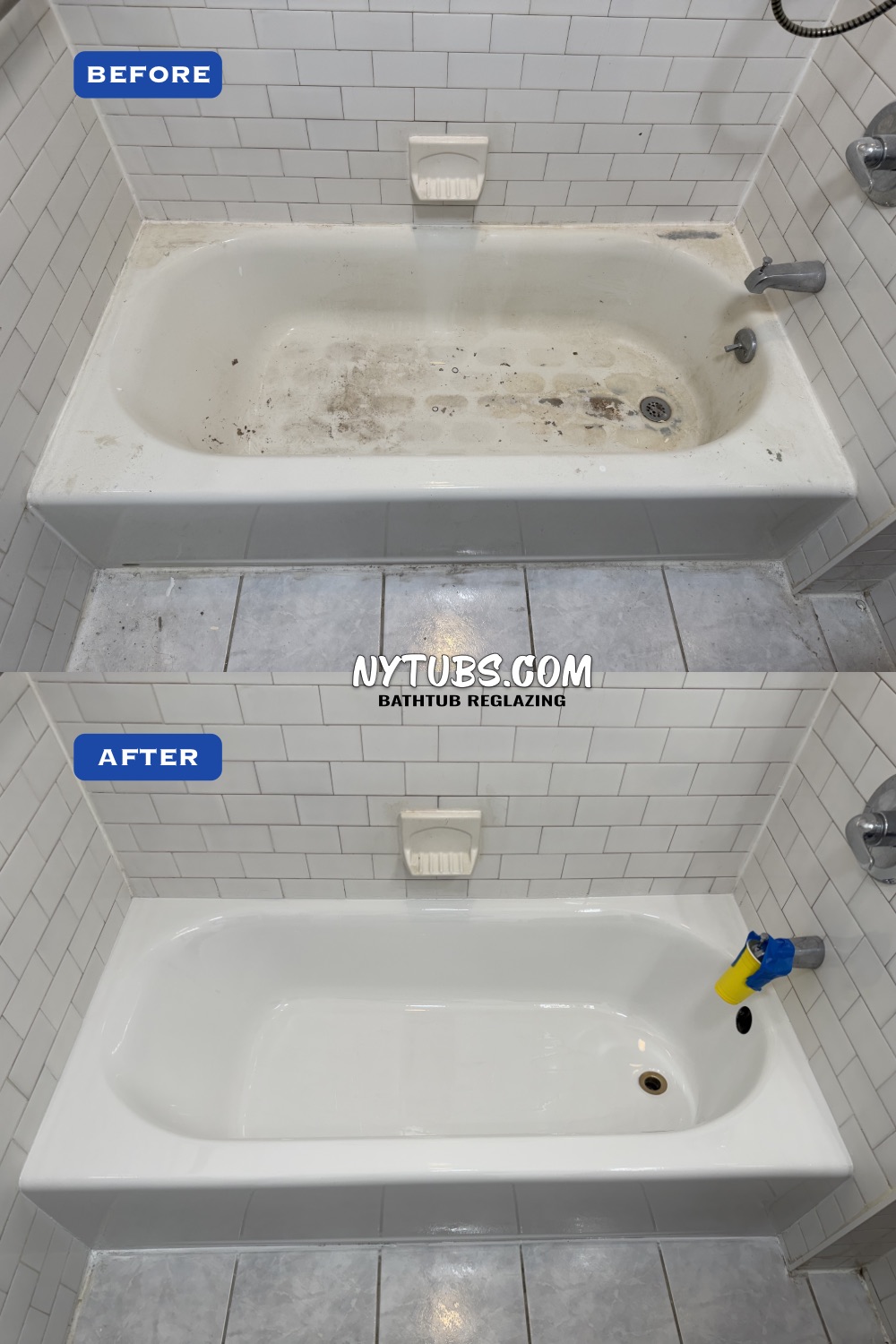
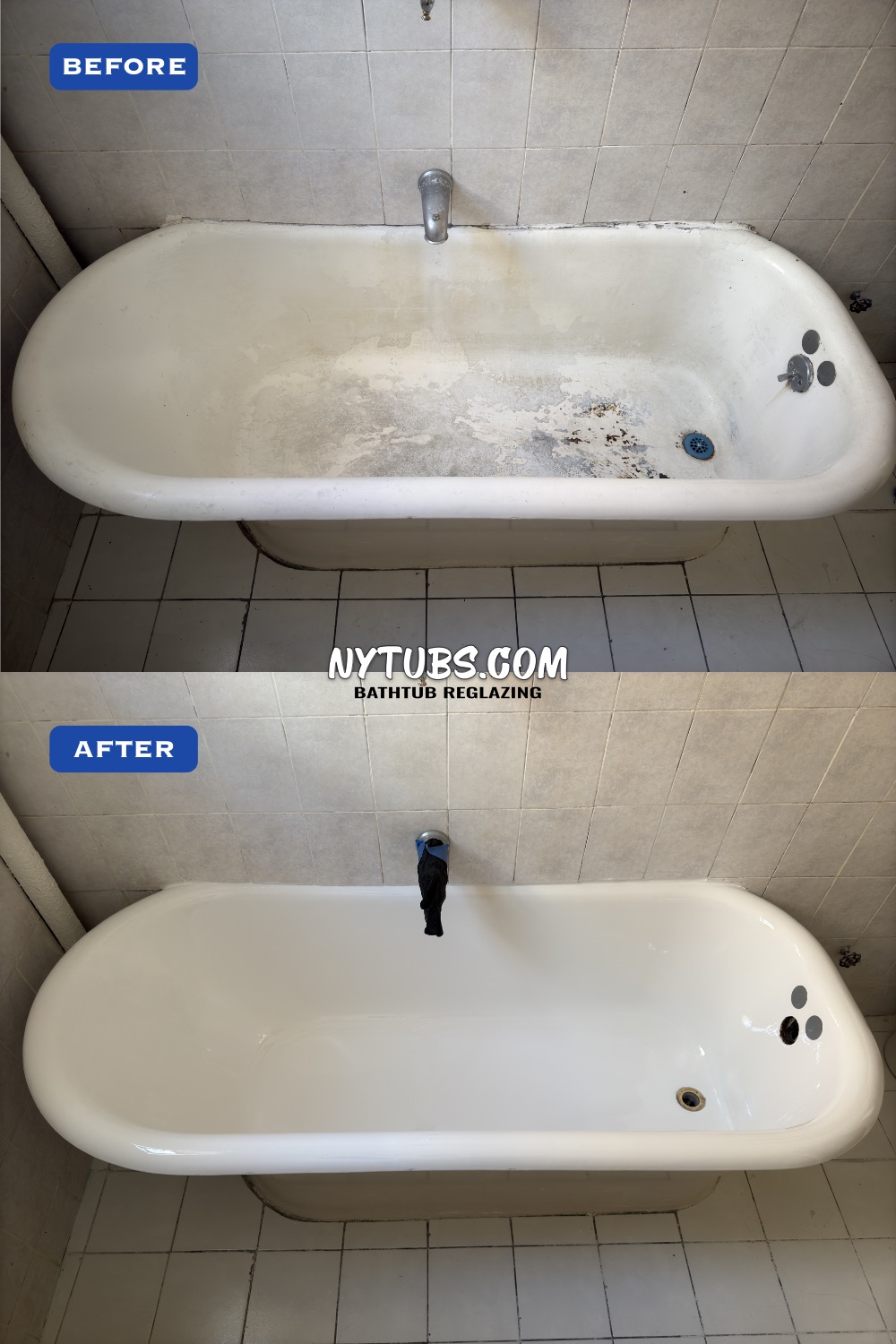
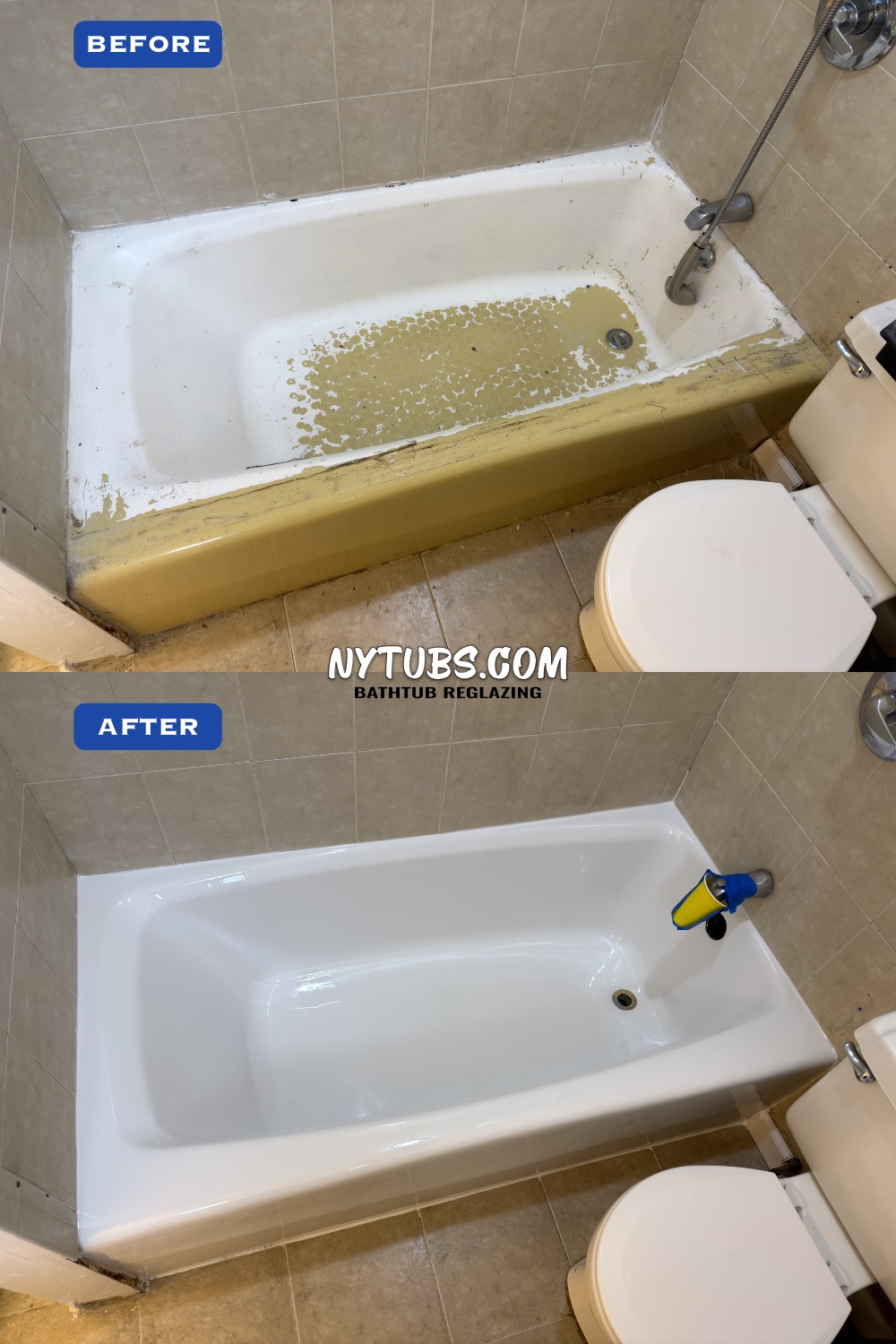
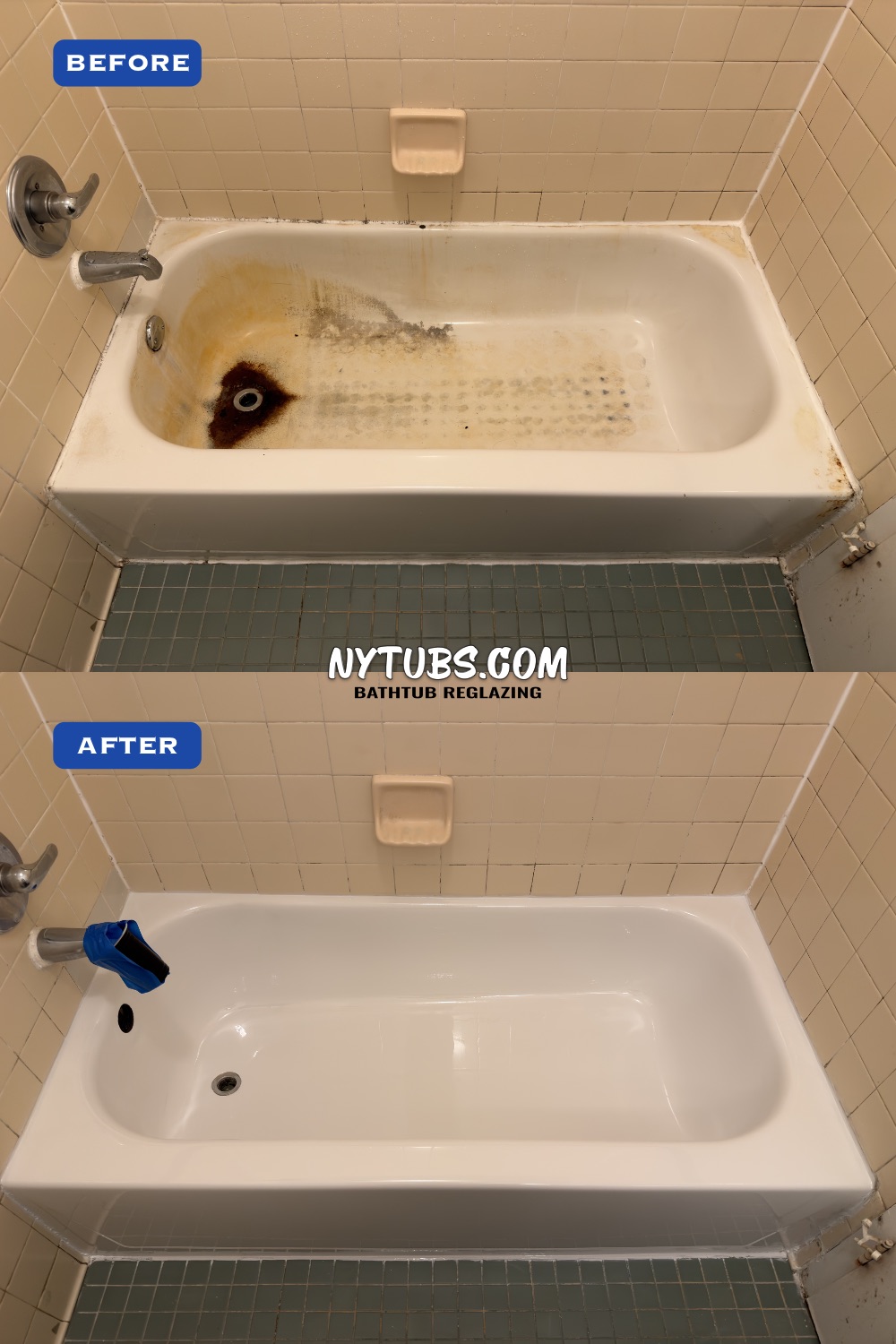
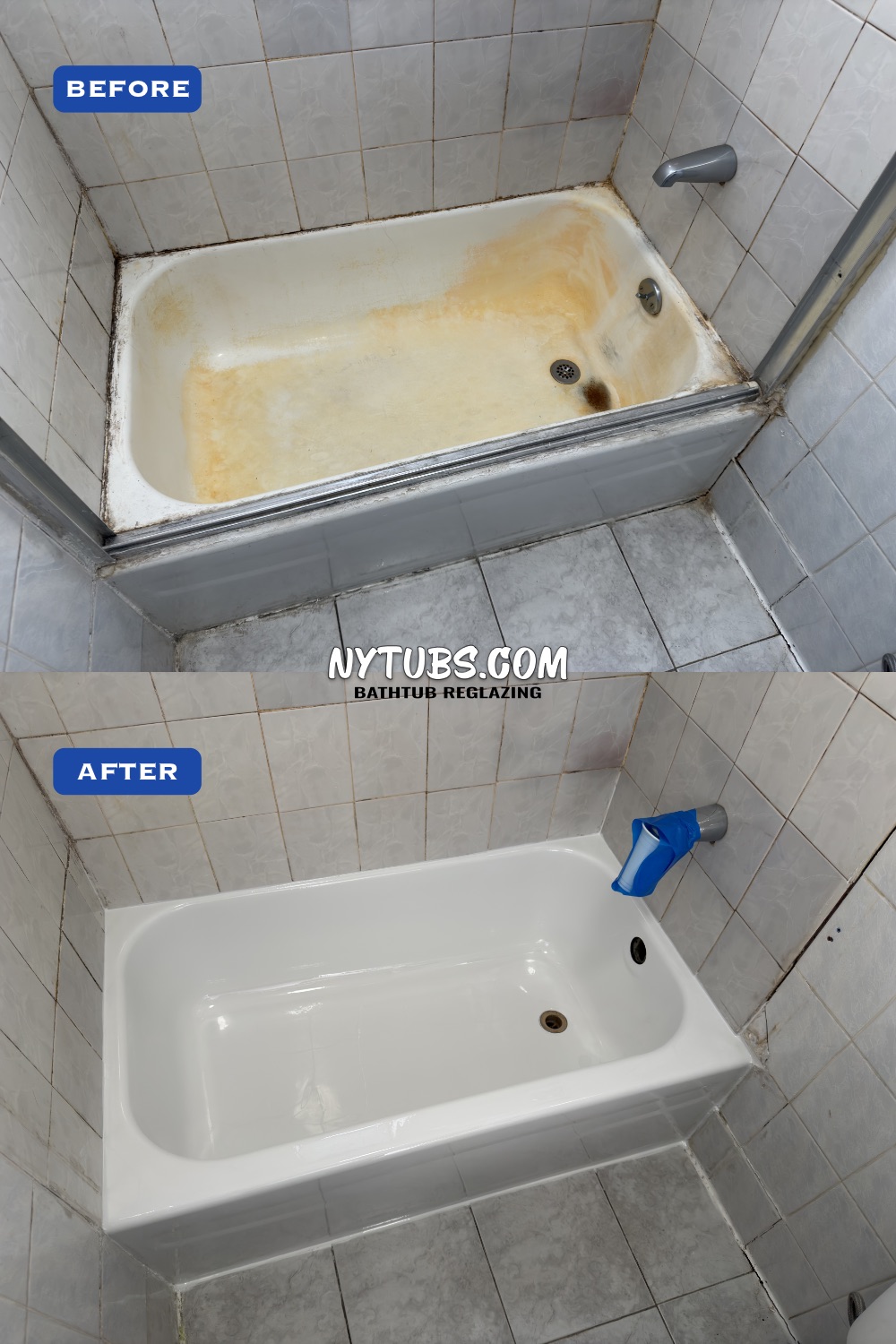
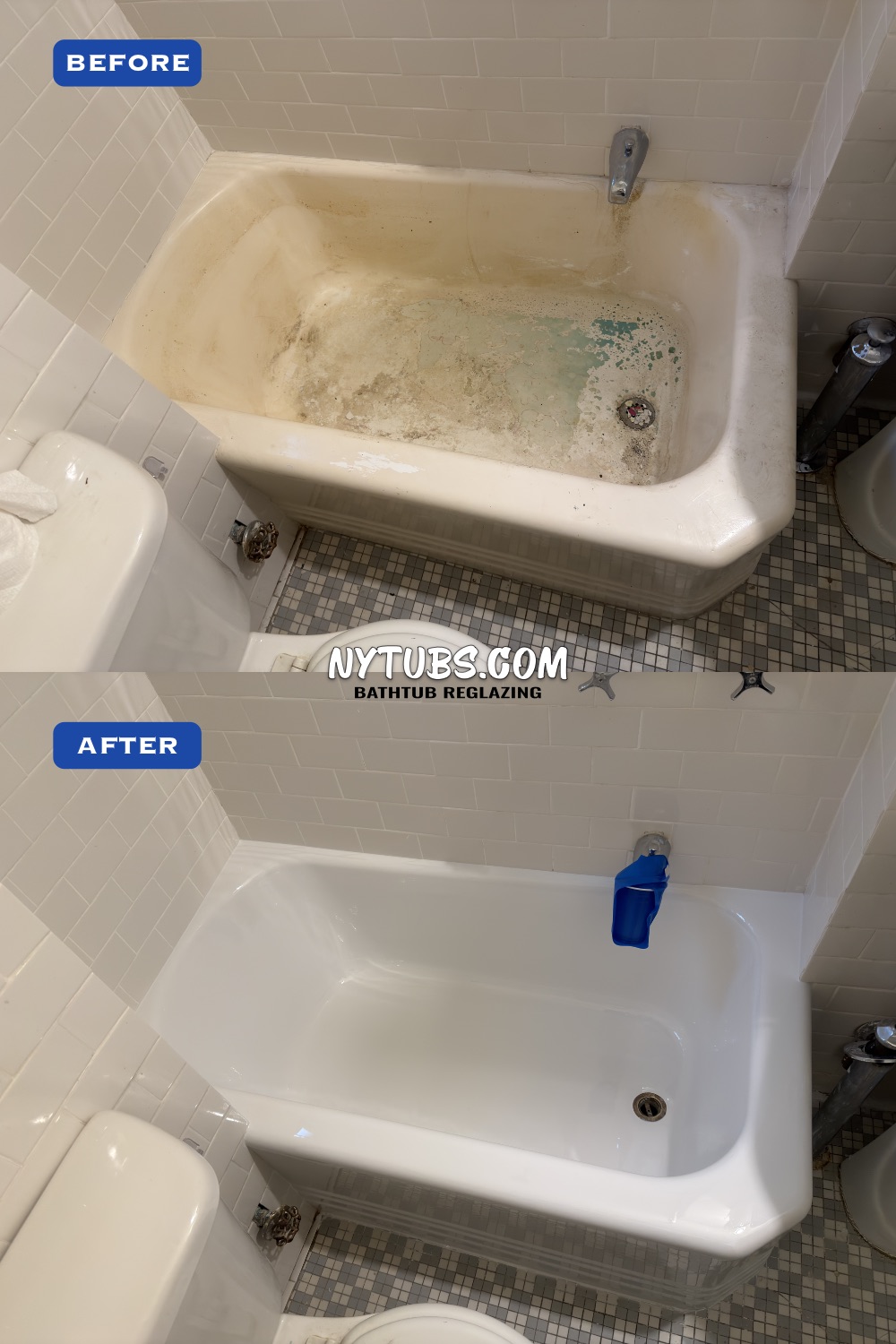
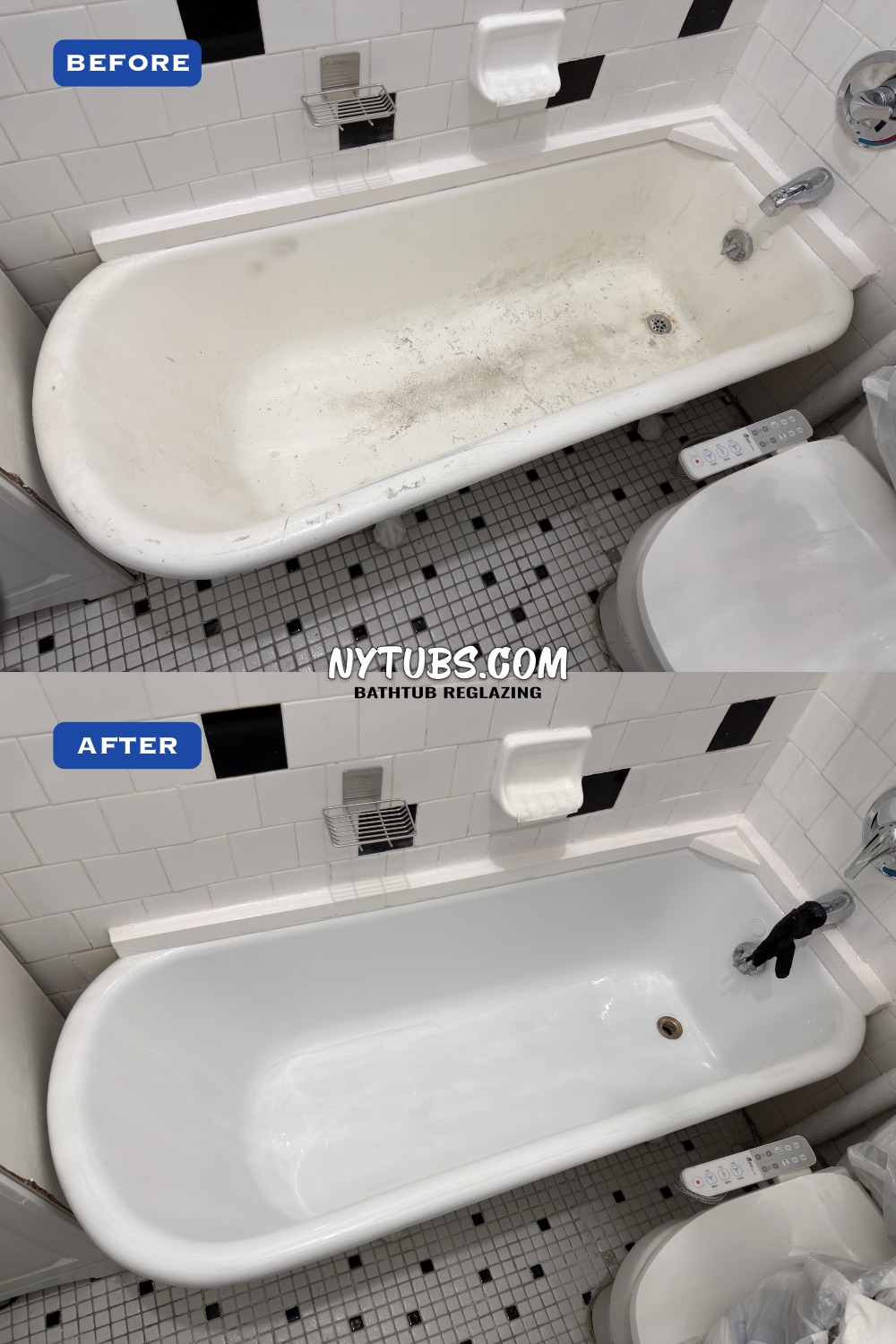
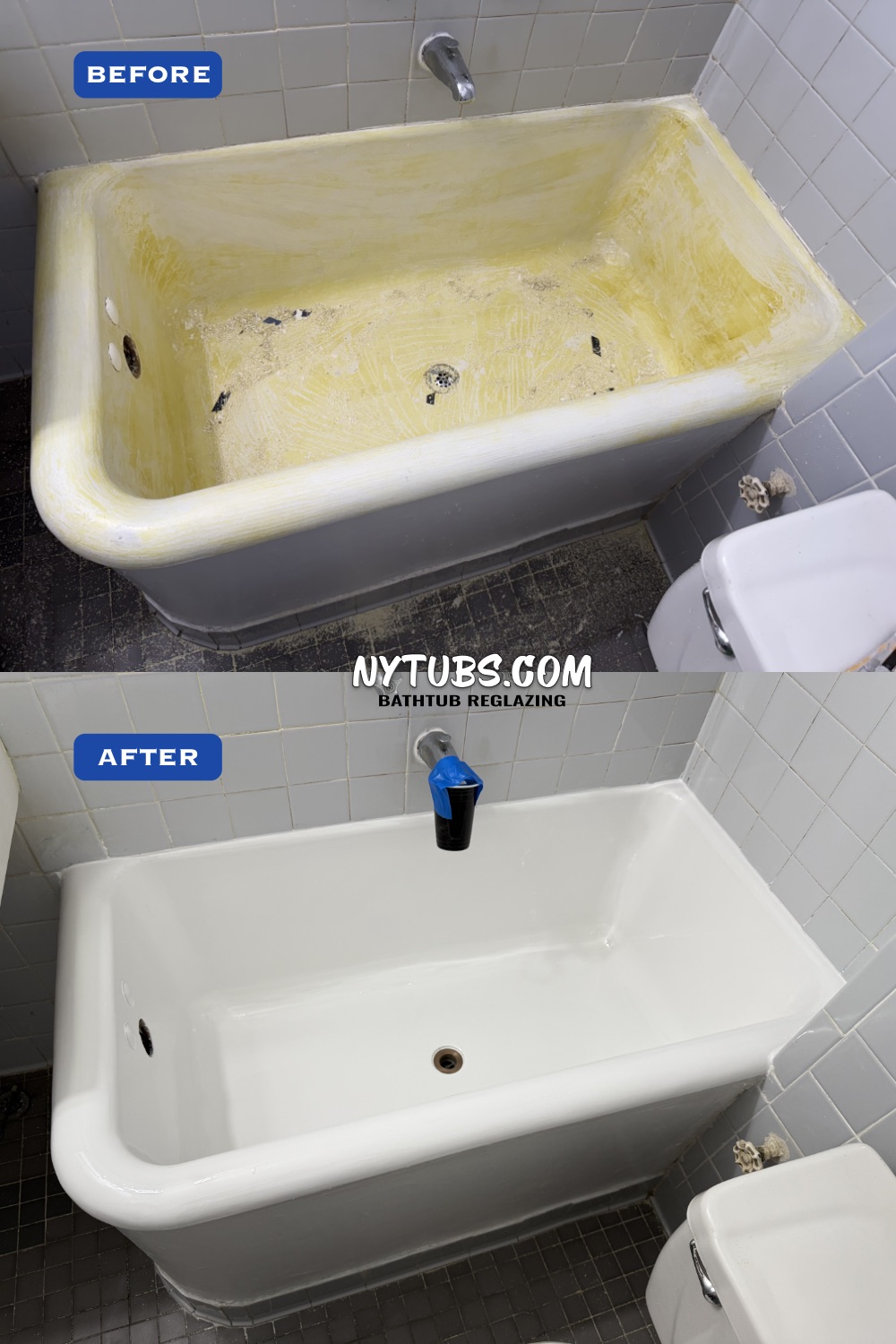

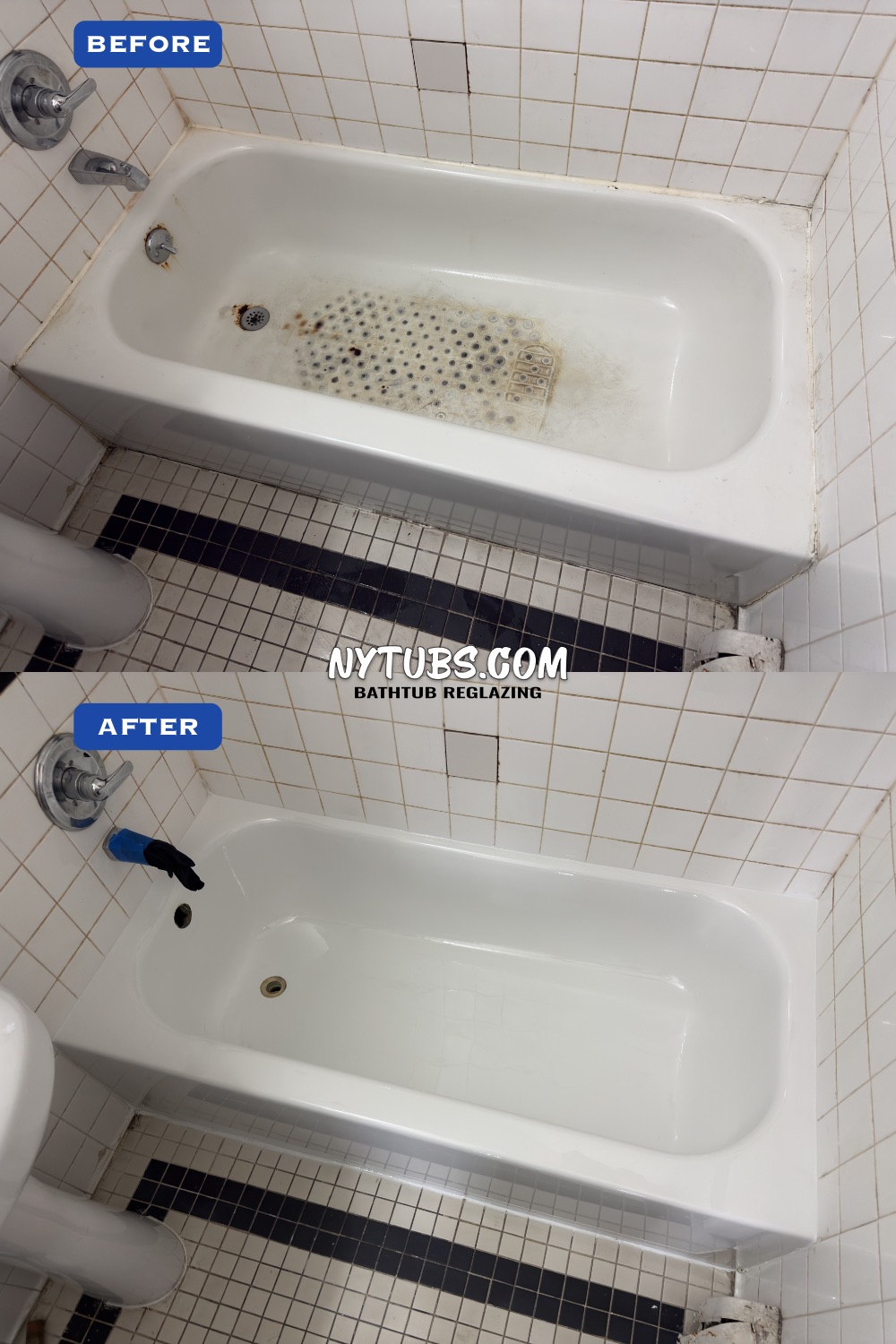
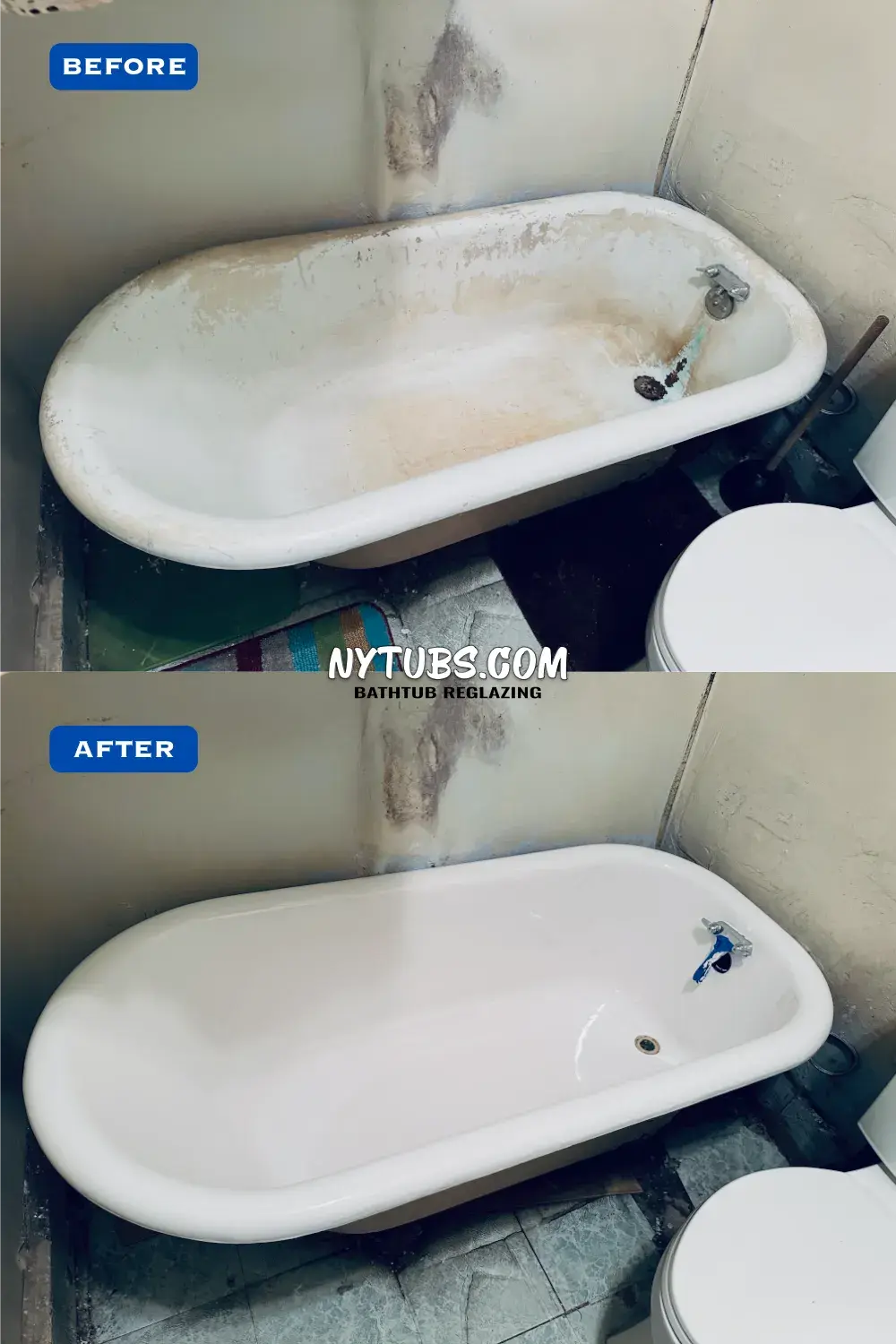
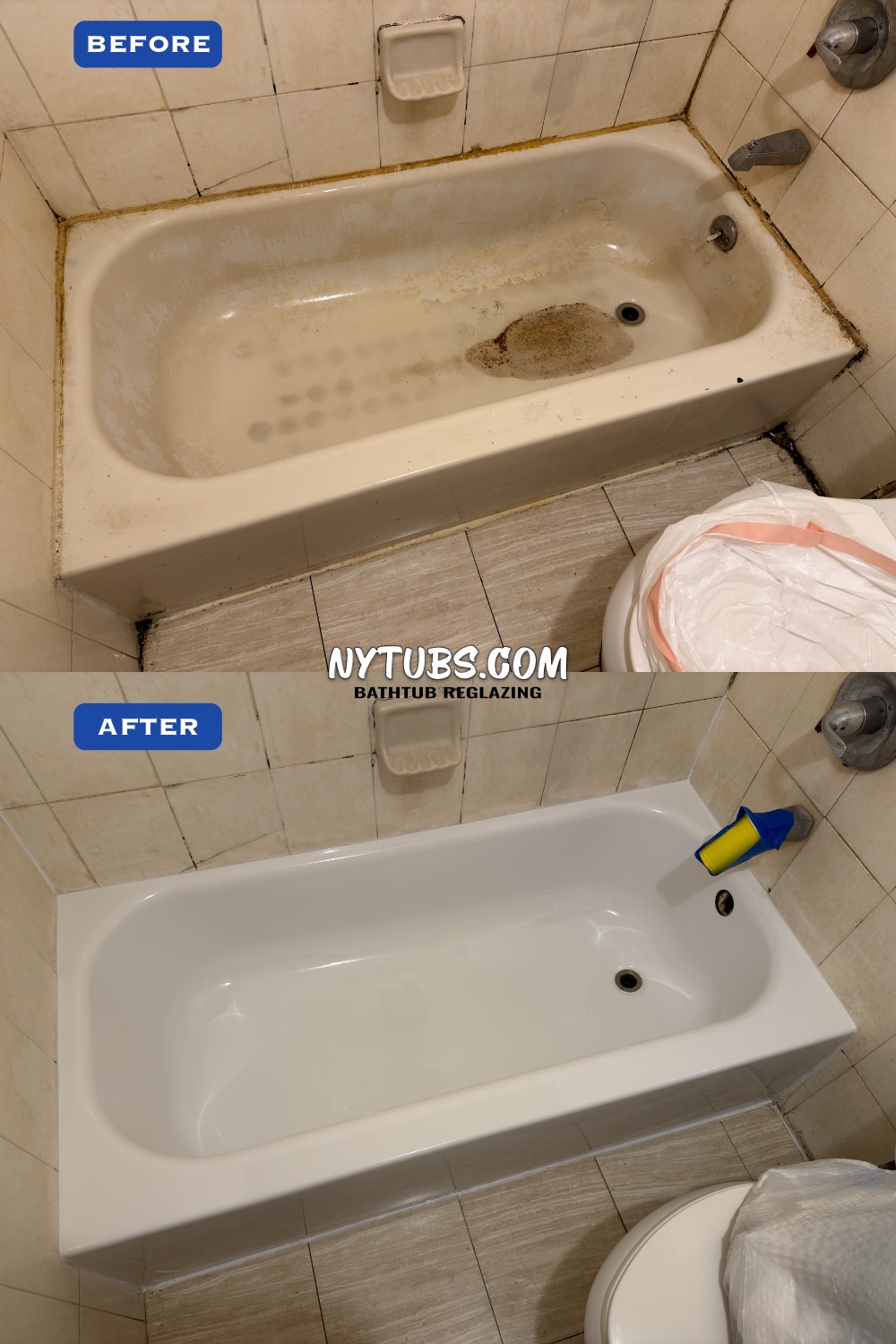

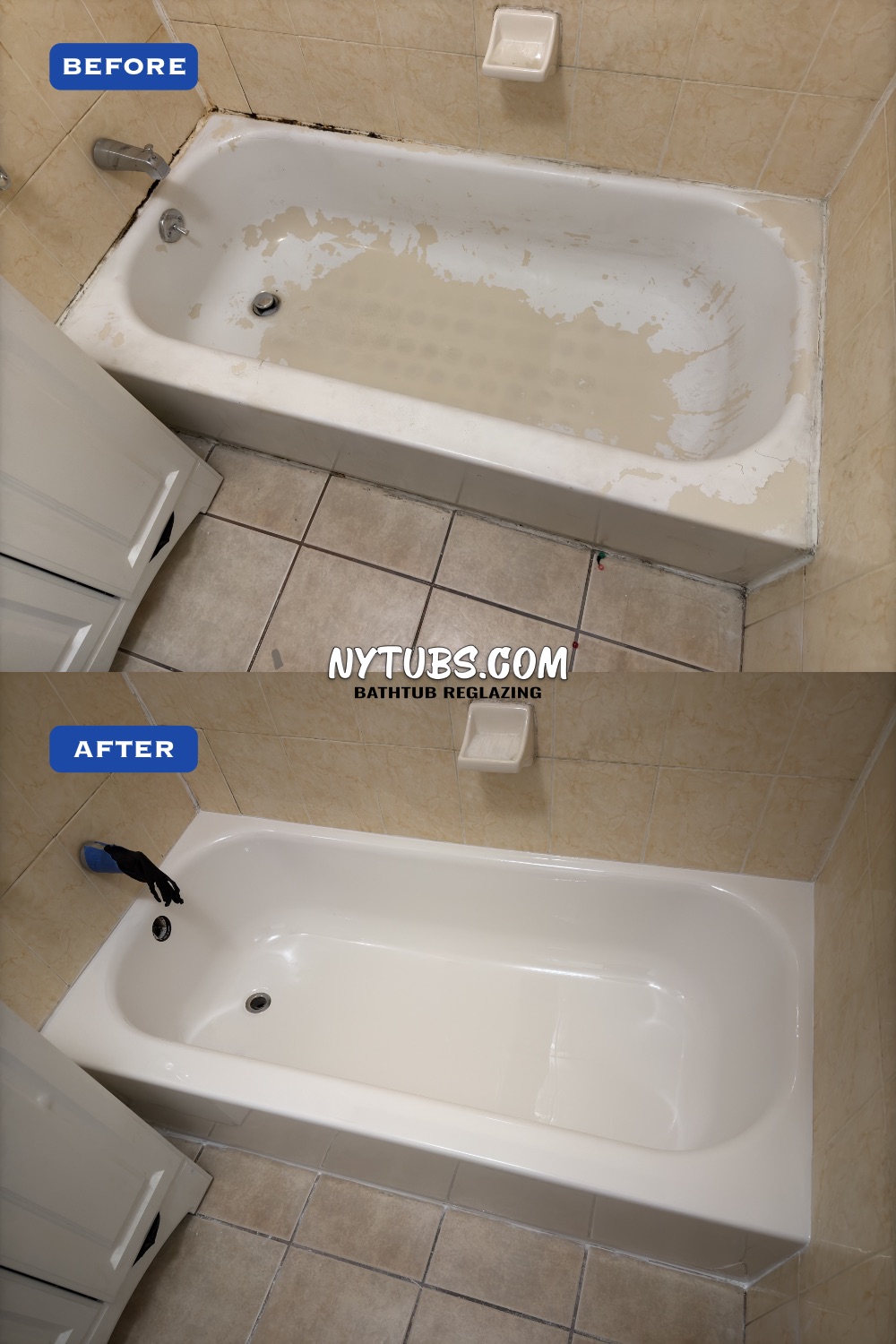
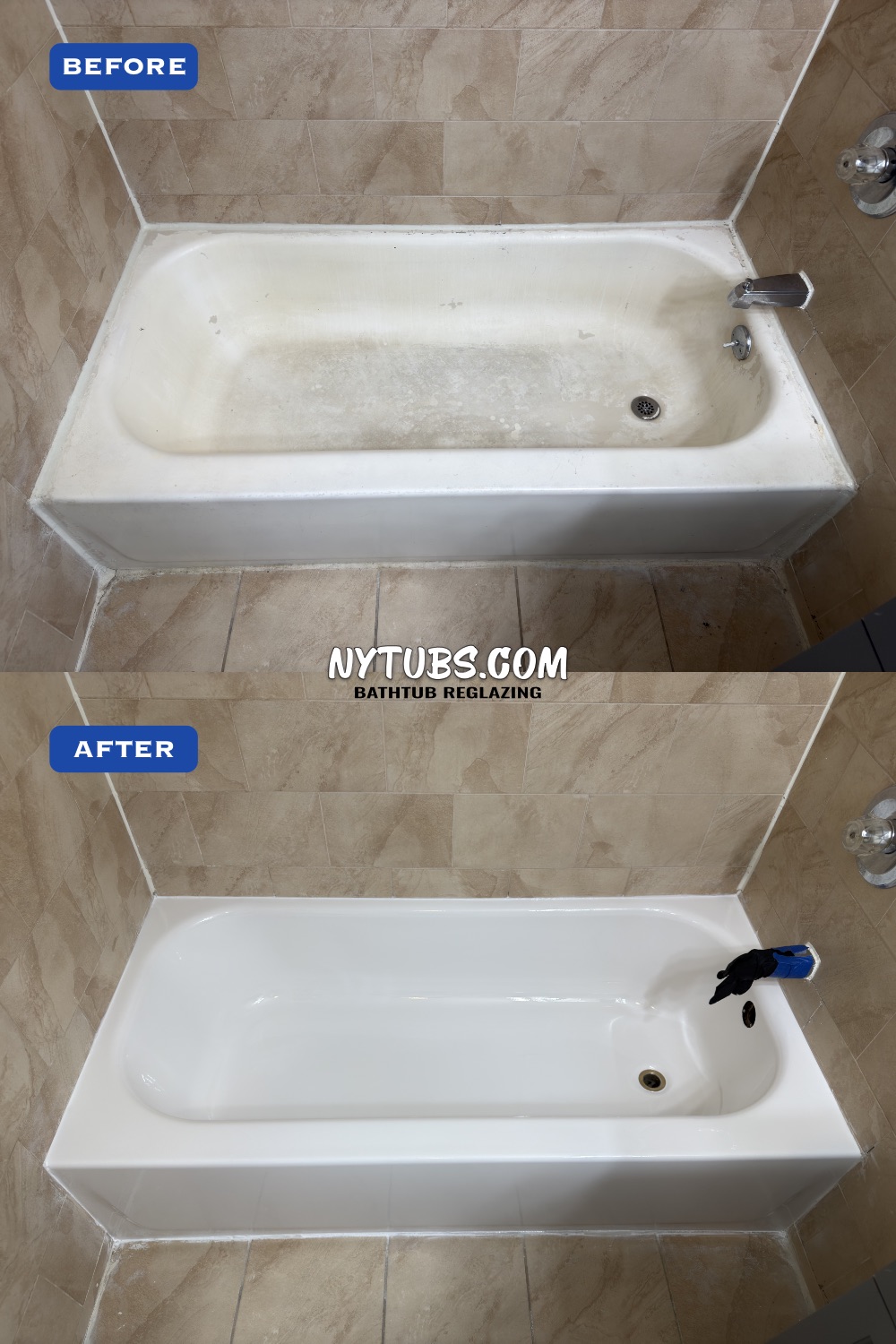
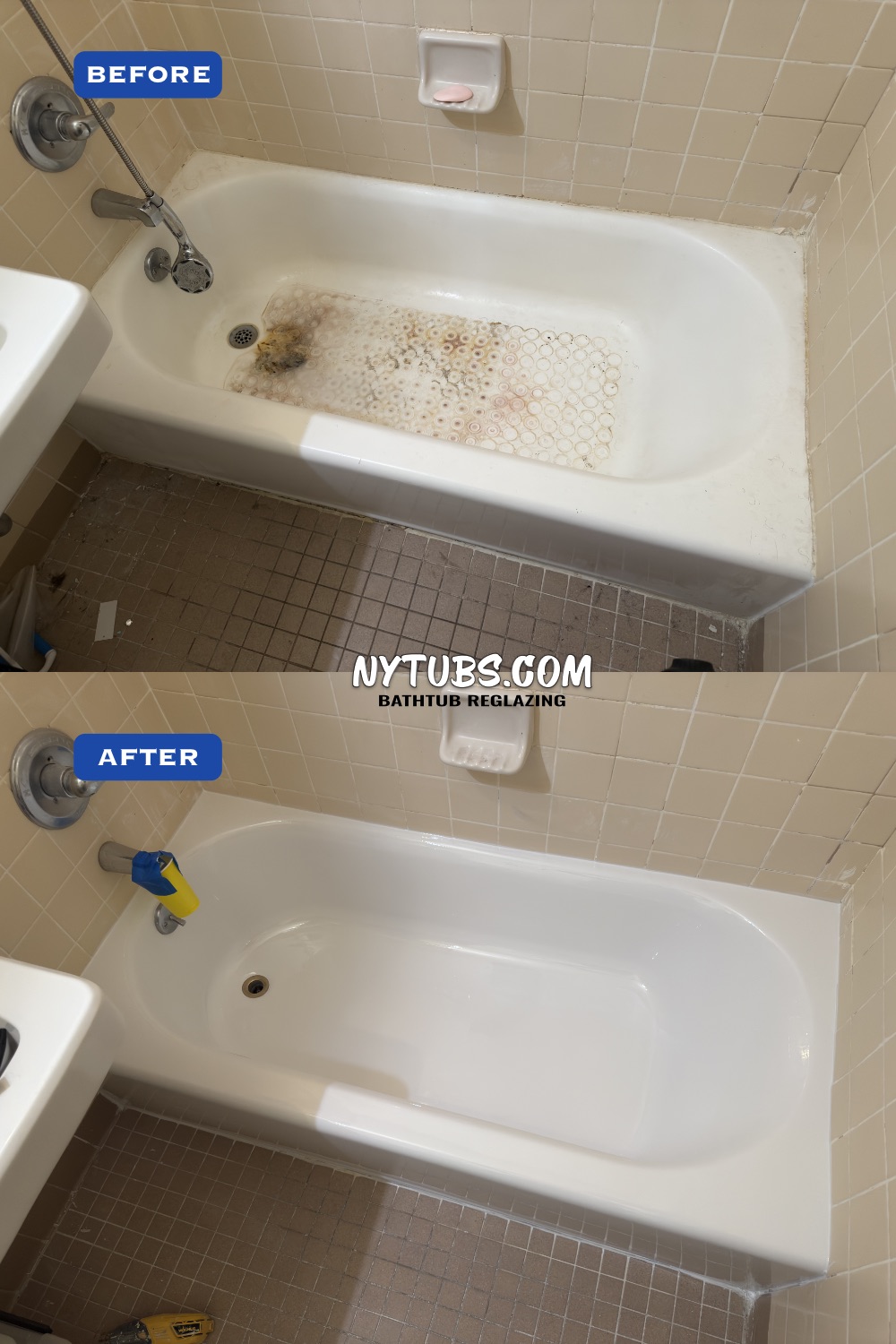
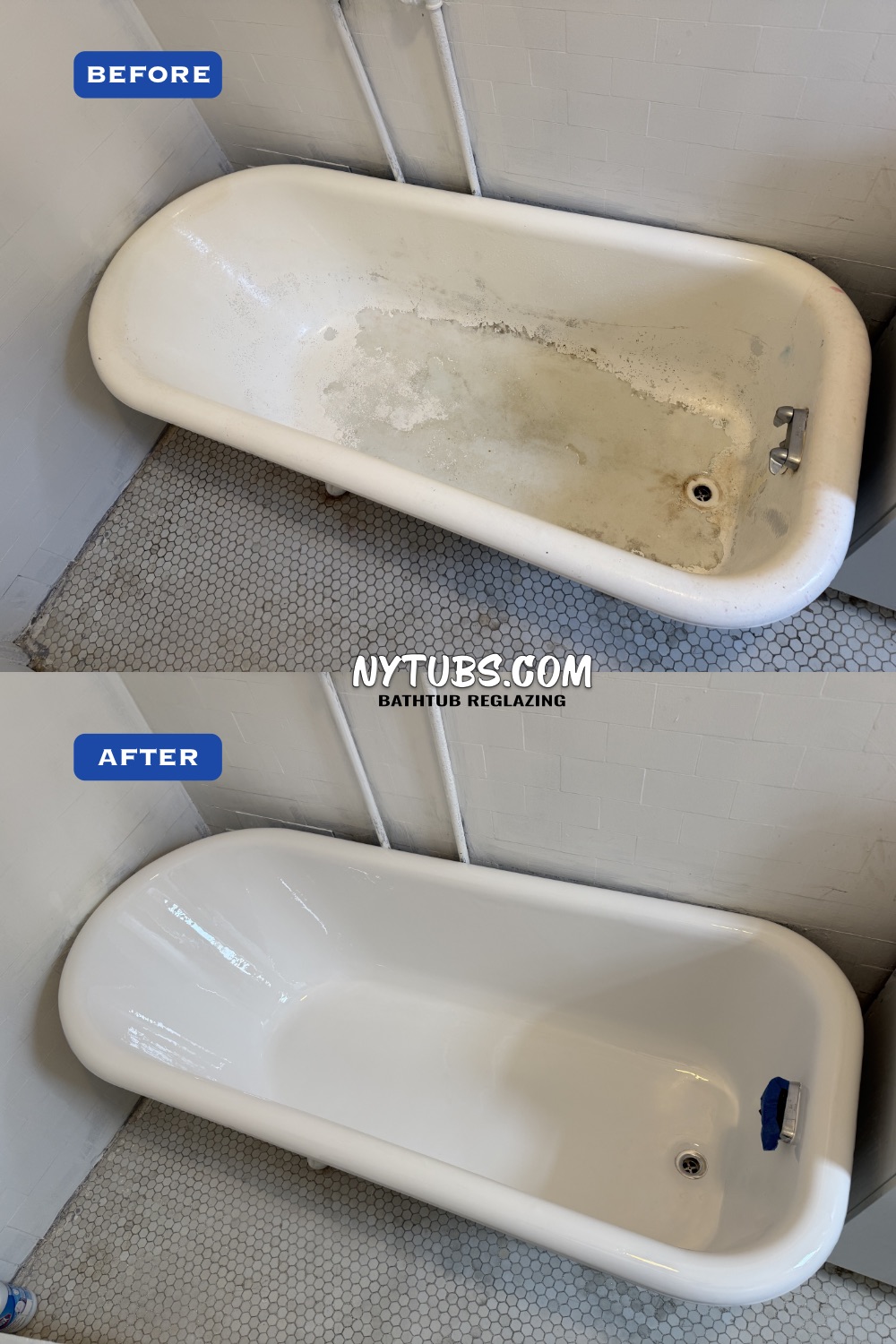
Follow us on Instagram
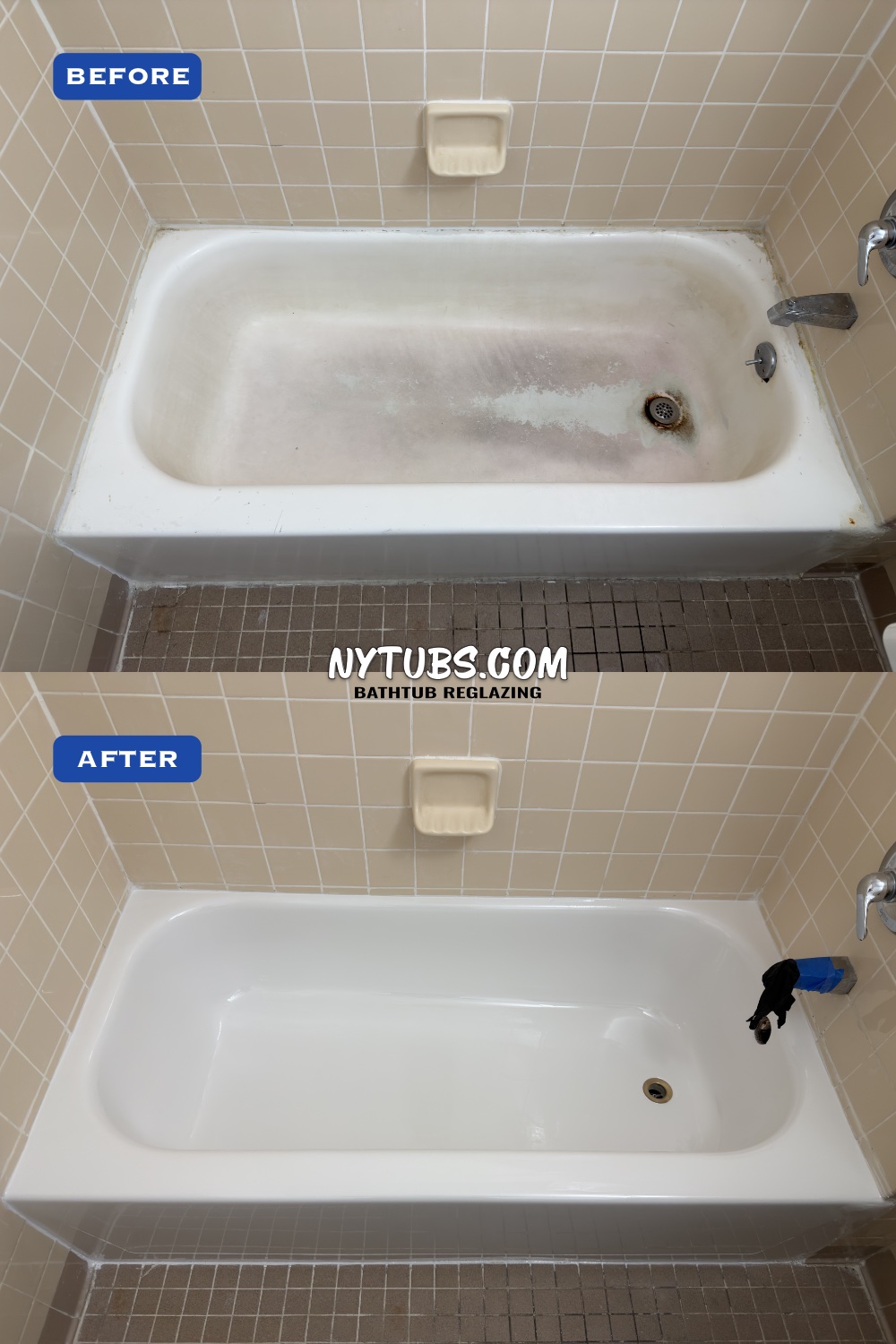
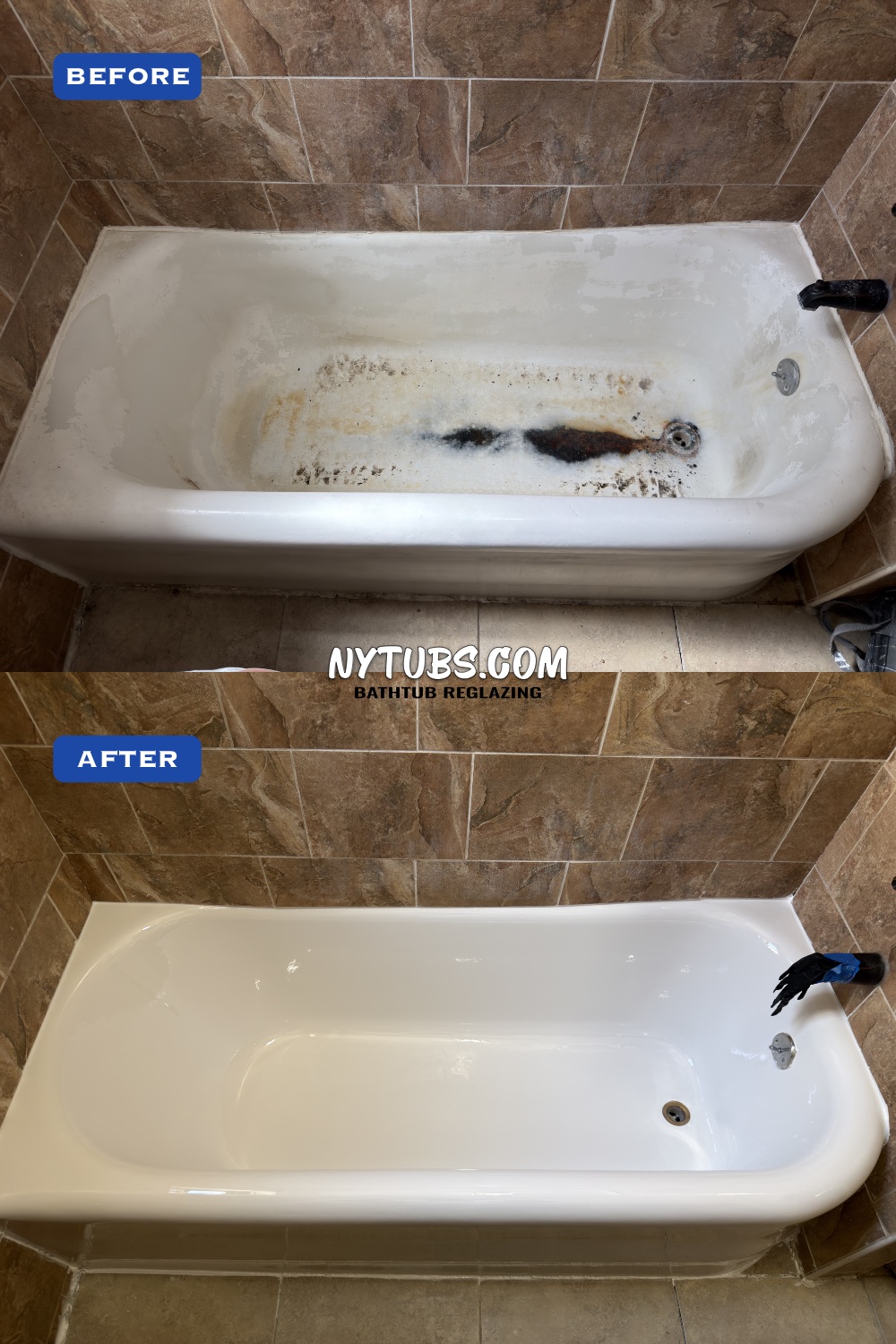
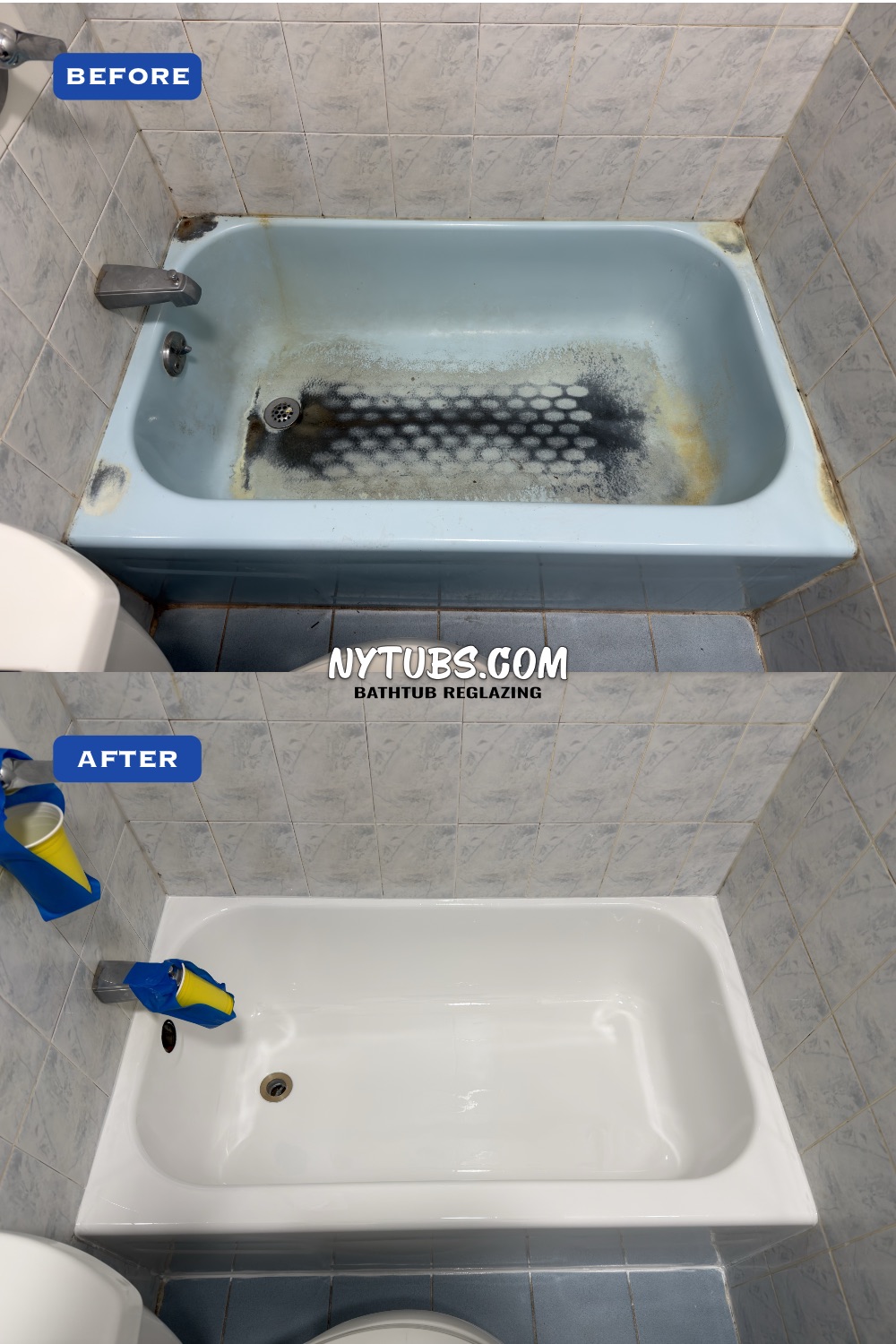
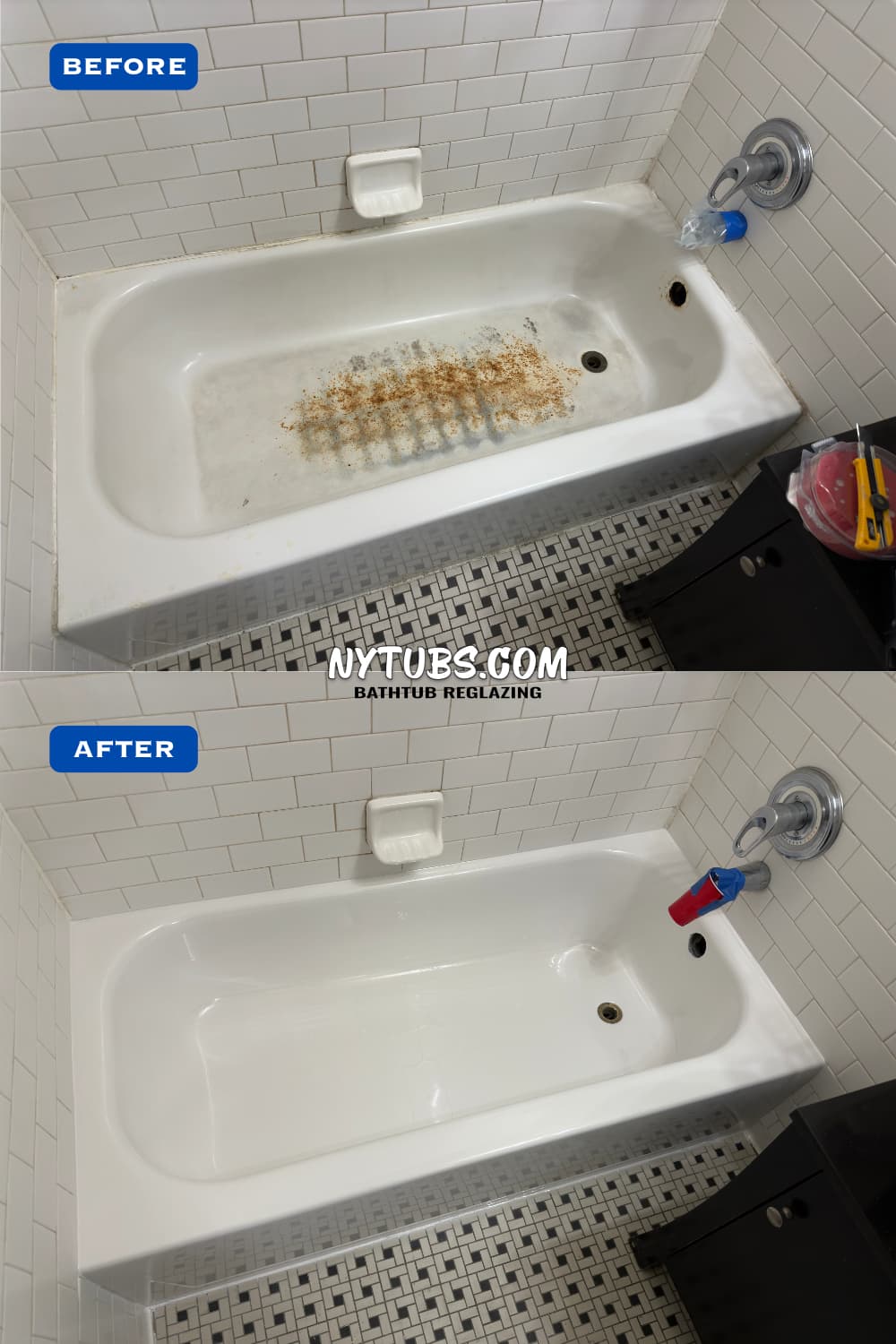
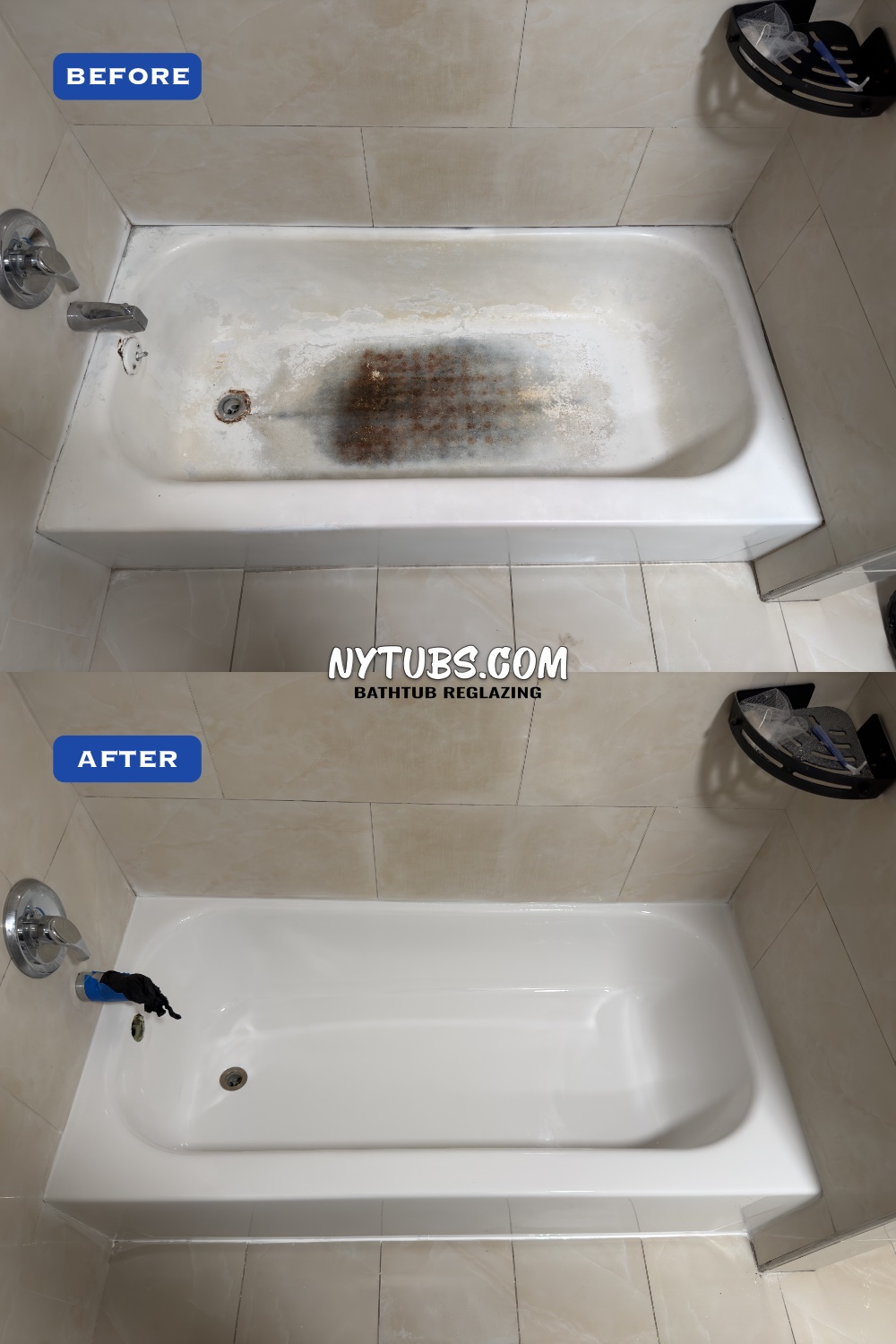
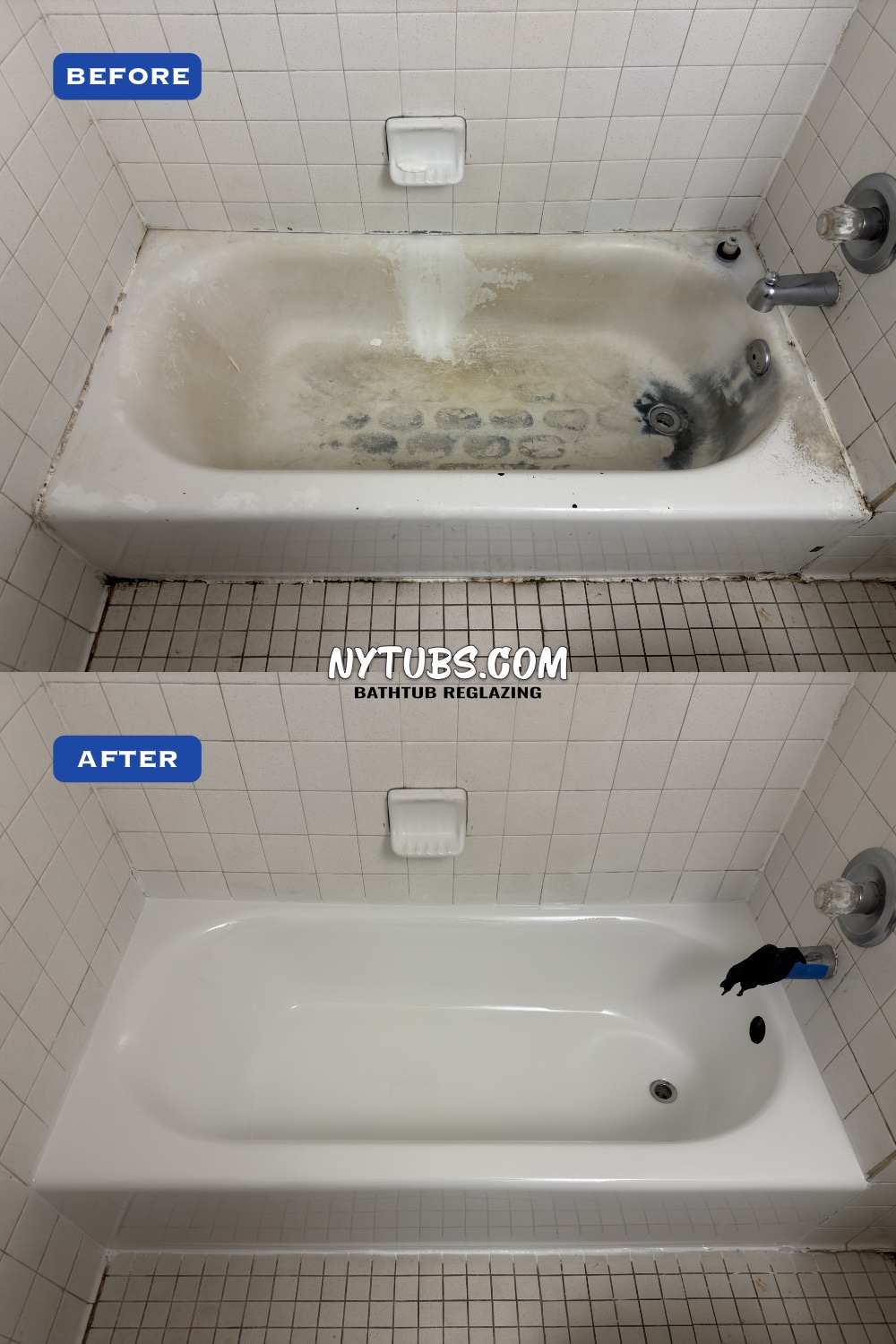
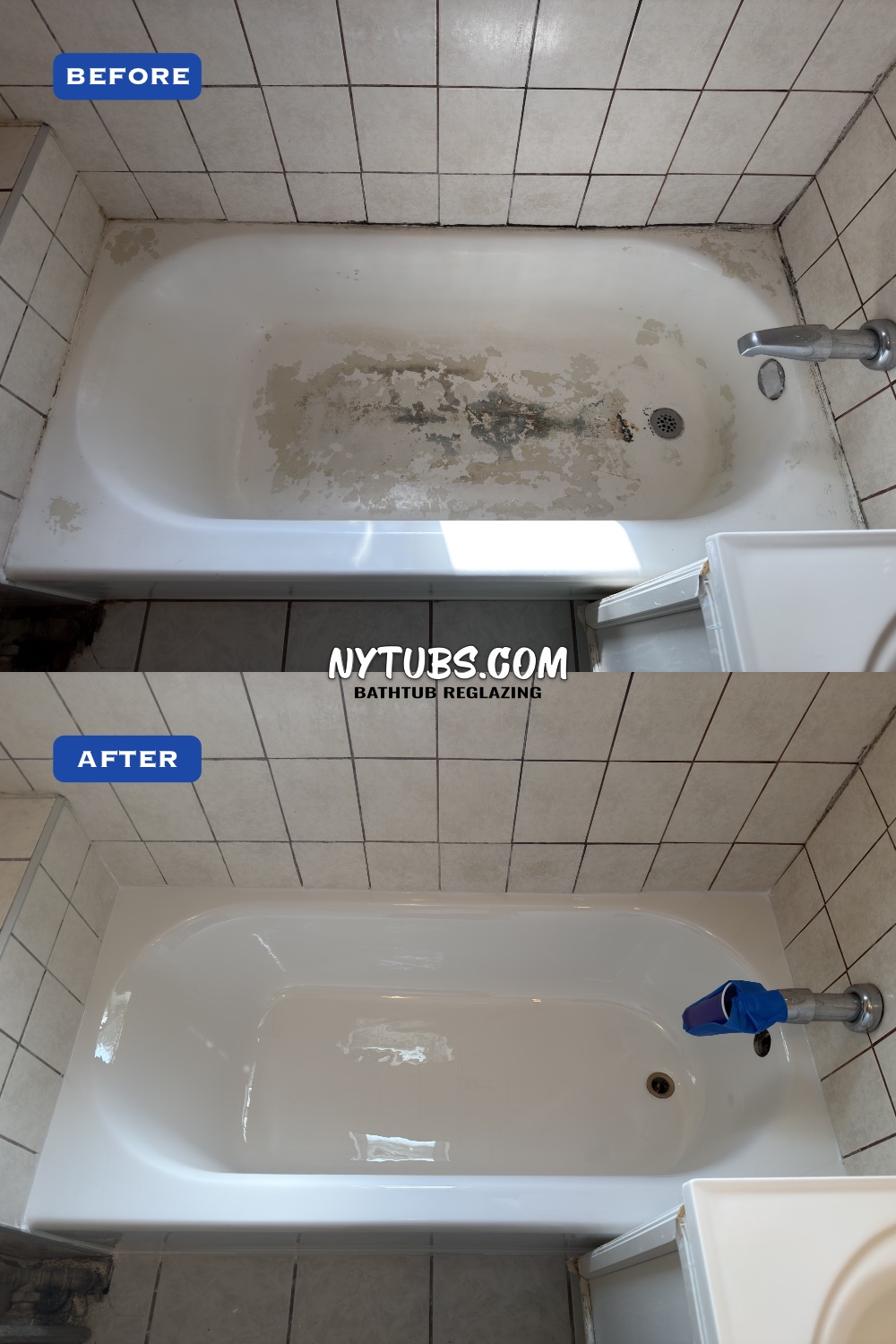
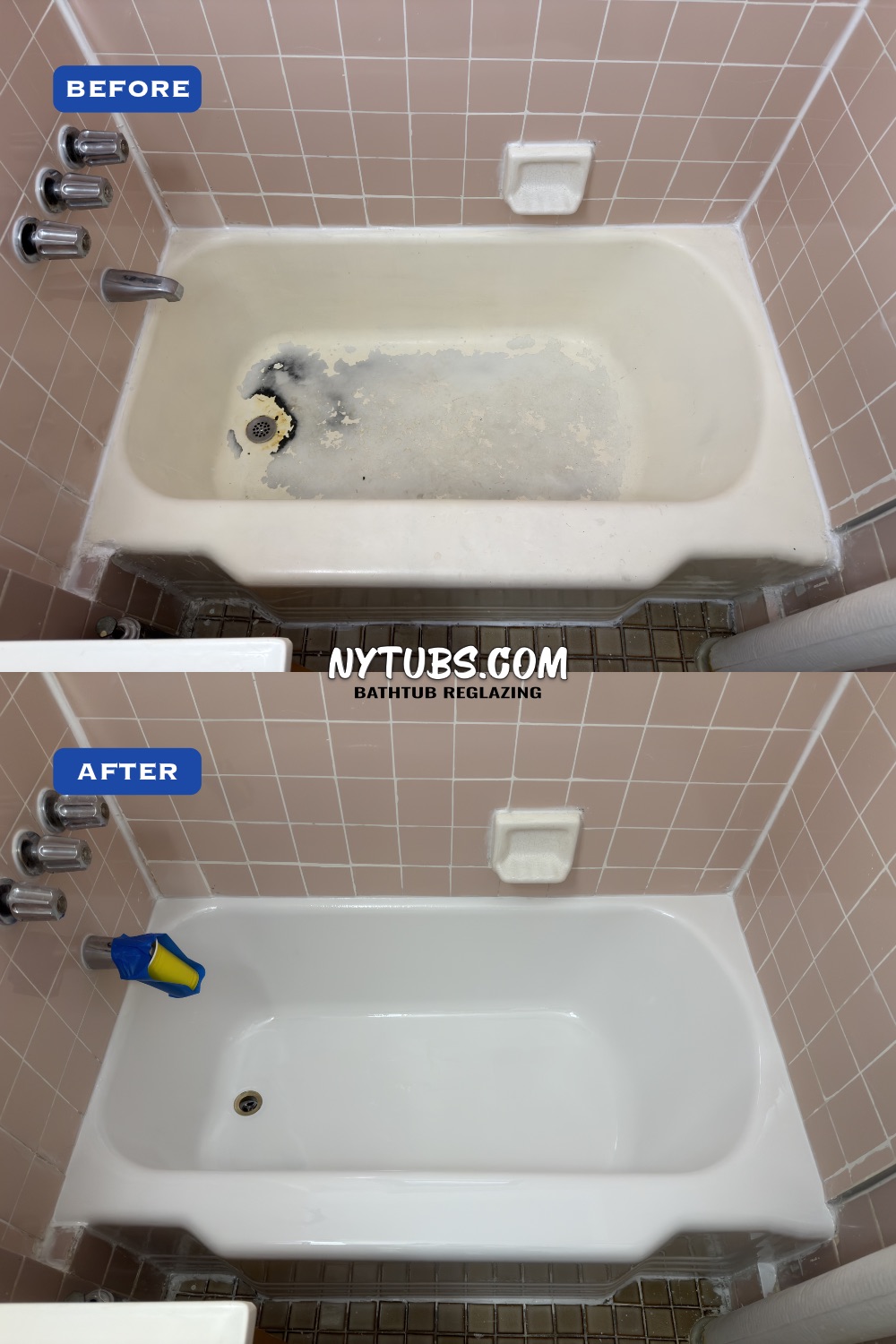
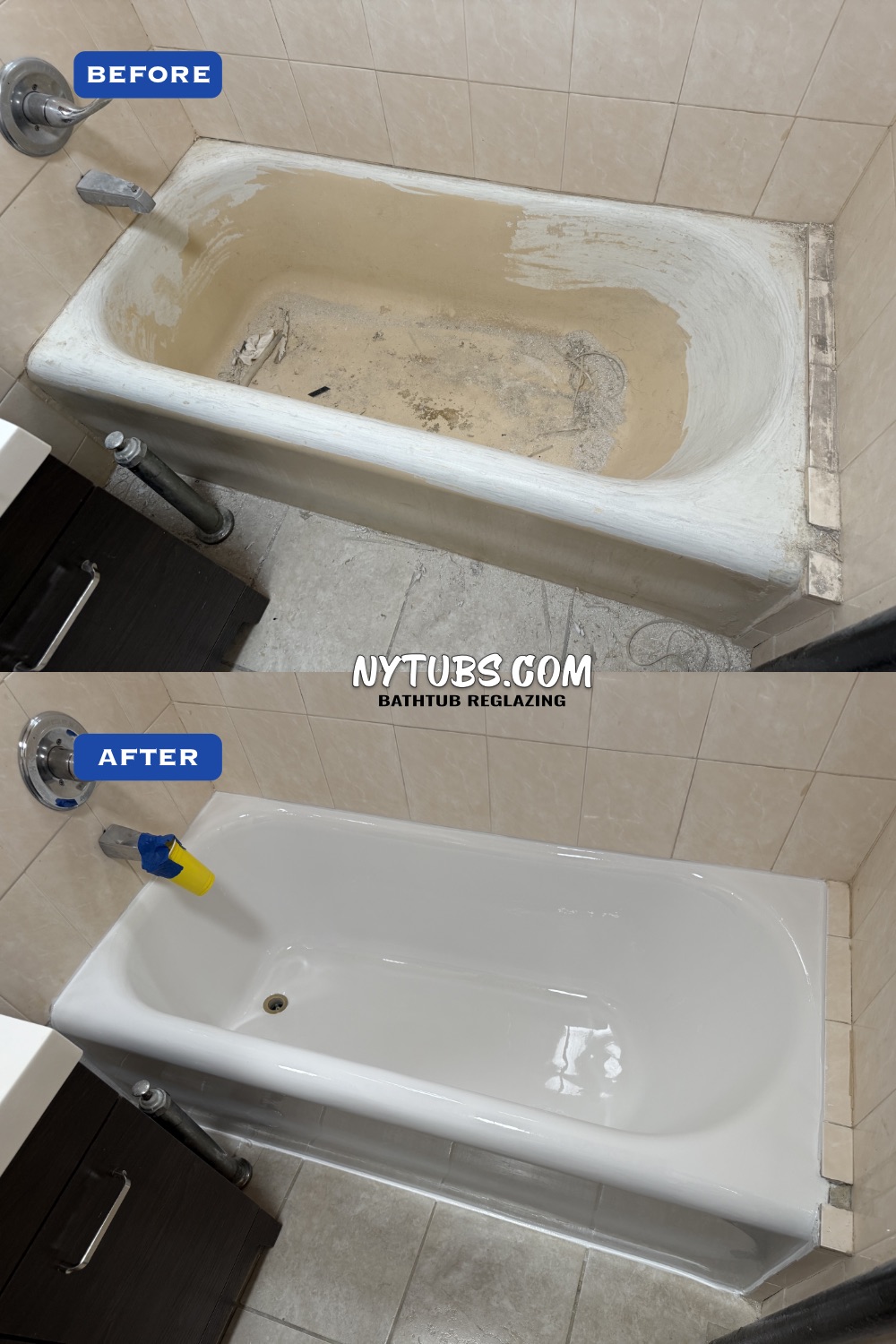
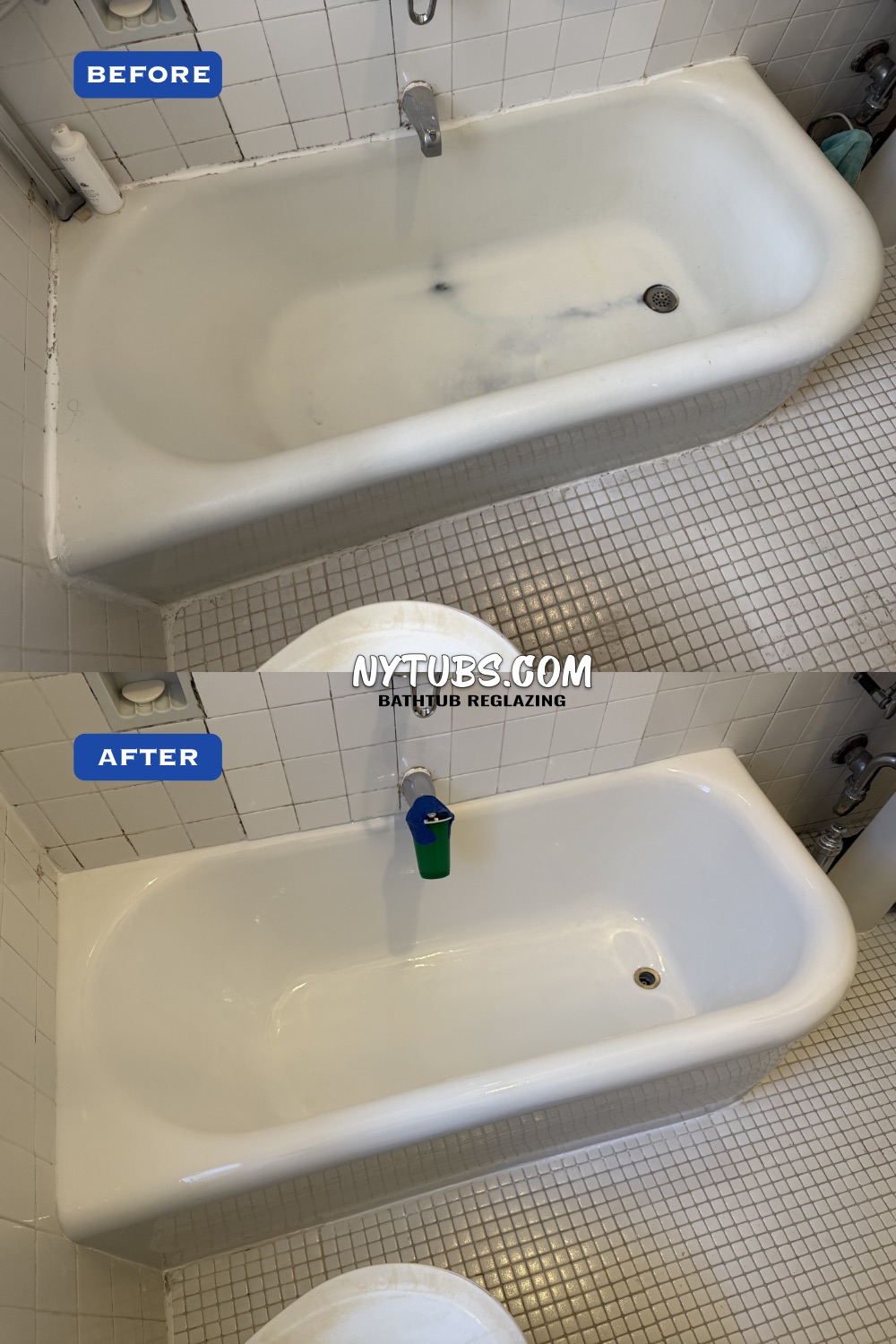
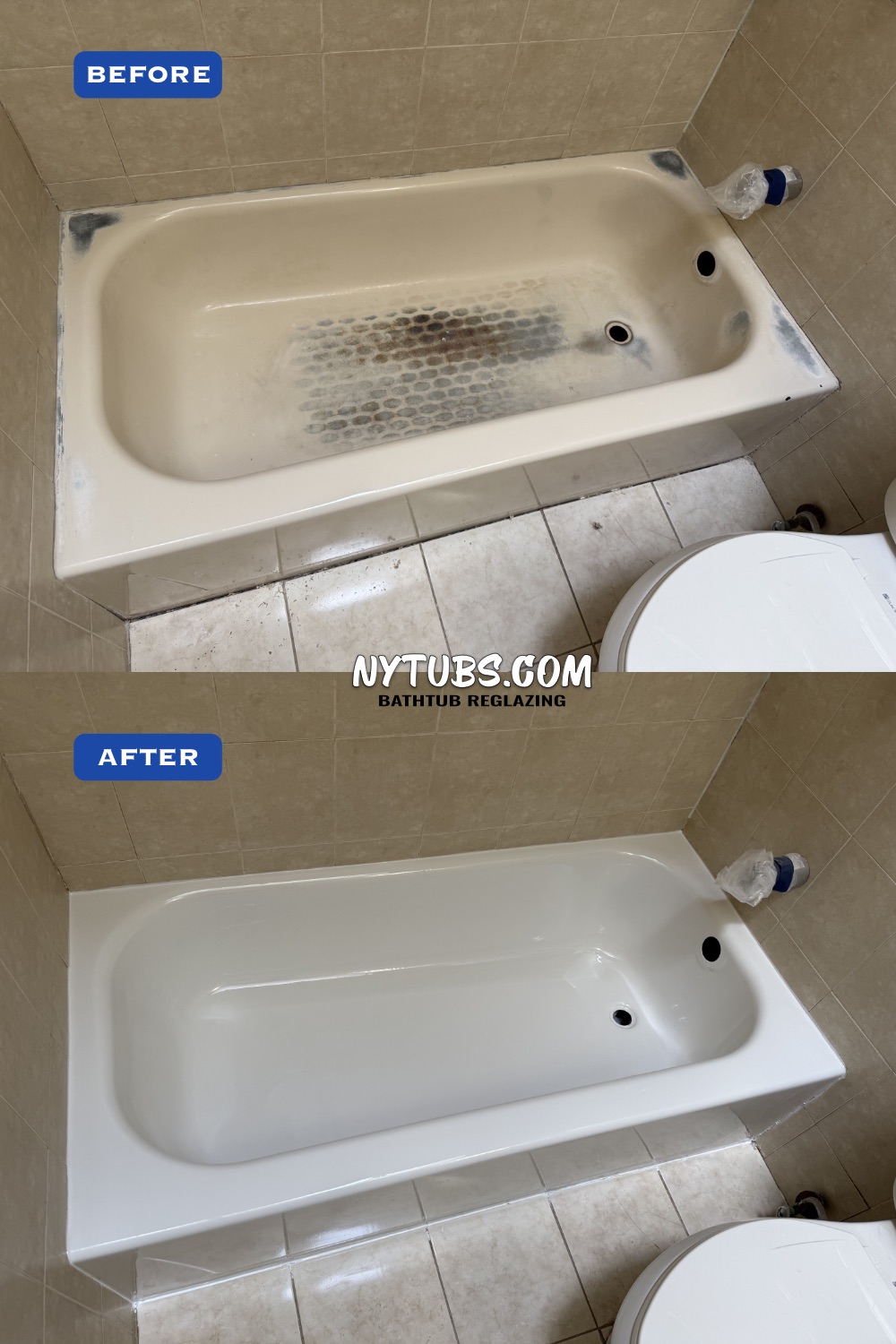
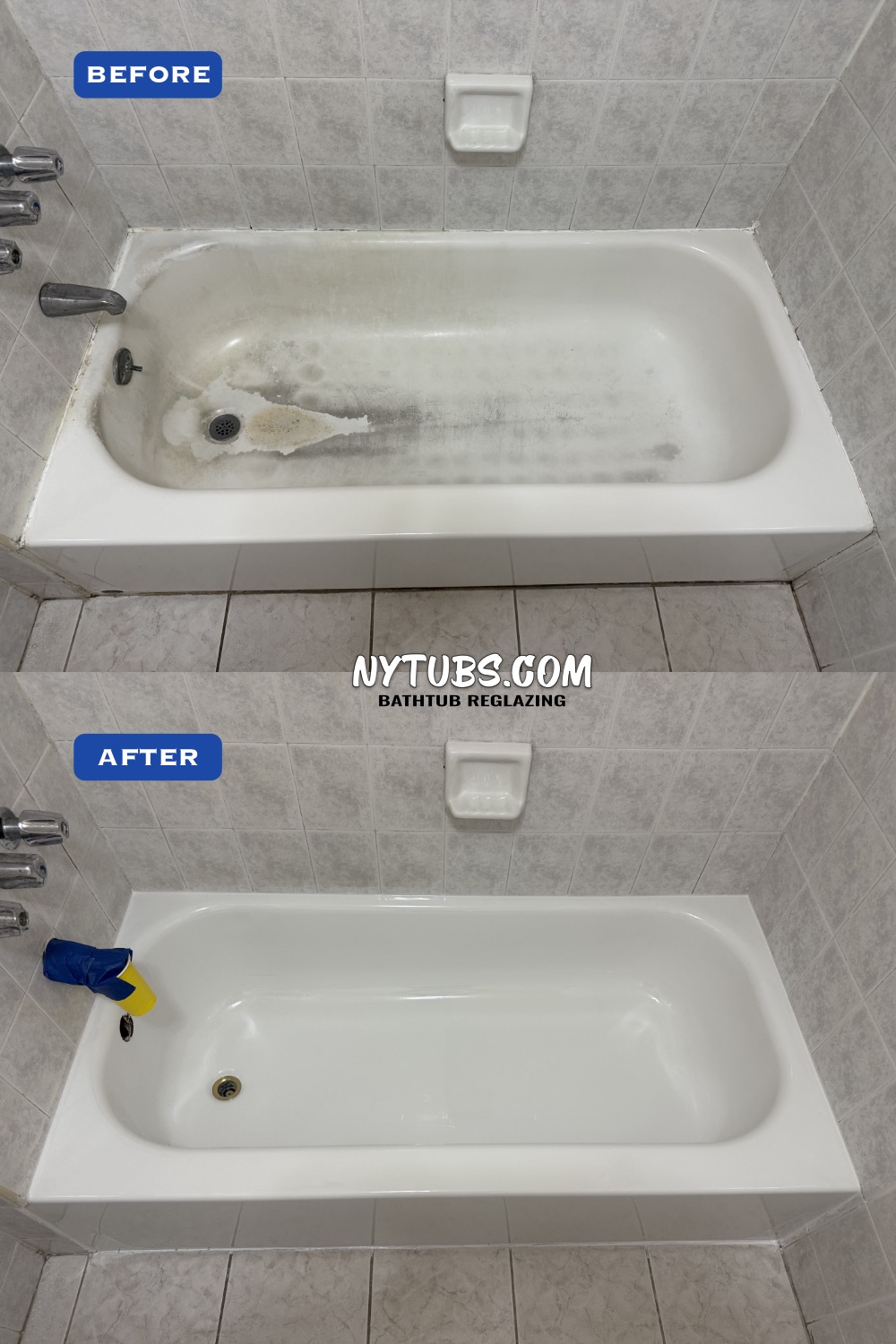
We remove the old caulk, seal the joint with a flexible sealant, and cover it with our pour-on coating. There is no exposed caulk line to peel or grow mold — just a clean, easy-to-wipe corner where the tub meets the wall.
Our services
One method — pour-on, self-leveling coating — applied to the tubs New York apartments actually have.



-
-
What You Get✓ One visit, ready in 24 hours✓ 5-year written warranty✓ Licensed & fully insured