
When to Reglaze a Bathtub: Before or After Remodeling?
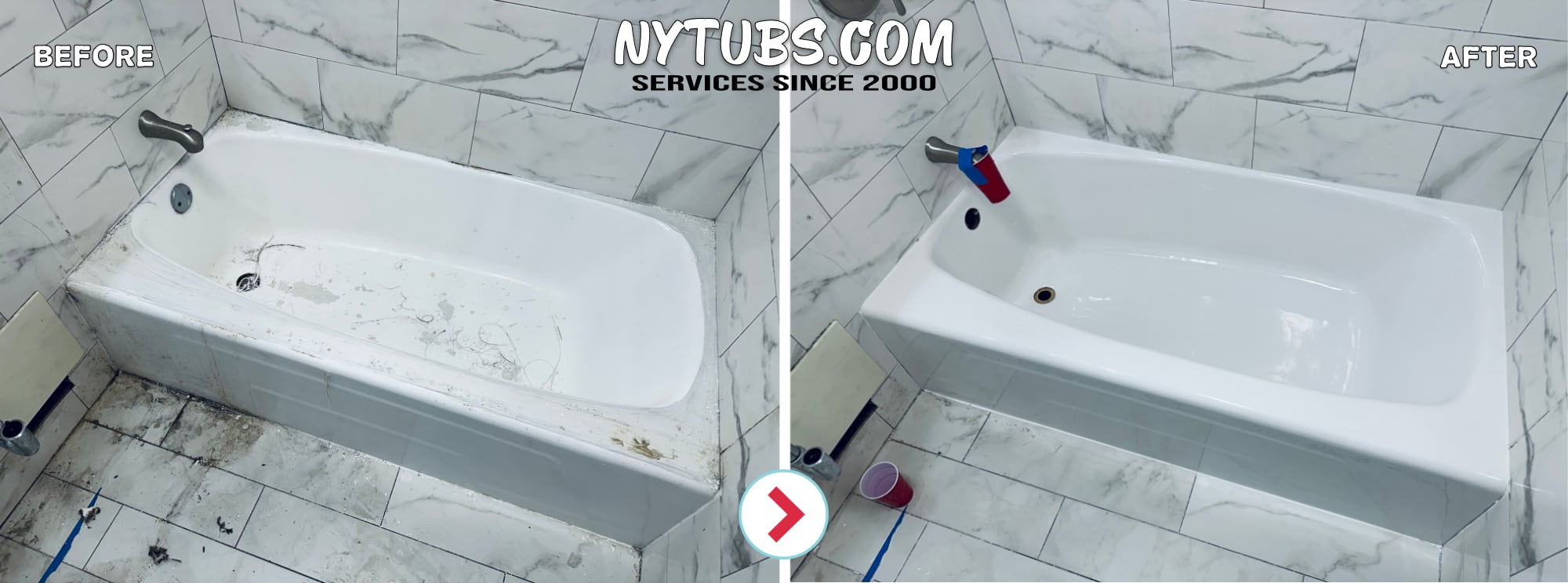
Short answer: reglaze your bathtub after the major remodeling is done — not before. Once tile, plumbing, drywall, and painting are finished, the fresh coating isn’t exposed to dust, falling tools, or impacts that could mar it. Here’s why the timing matters, and exactly where reglazing fits in your renovation.
By “after the remodel” we mean after the messy, high-impact stages specifically — demolition, tiling, and painting. Those are what put a fresh finish at risk. Make the tub one of the last things you touch.
Four things to keep in mind
Timing of the reglaze
It’s best to refinish the tub after all major bathroom work is complete. That keeps the freshly coated surface safe from falling tiles, dropped tools, and other construction debris — and avoids the mix-ups that happen when several trades are working at once.
Curing conditions
Once the tub is coated, the finish needs the right conditions to cure. For at least two days the bathroom should stay warm, dry, well-ventilated, and dust-free. If remodeling is still going on elsewhere, keep construction dust and debris out of the room.
“Help” from pets
A curious pet can easily damage a still-curing surface — a single paw print means re-doing the work and paying for it twice. Keep animals out of the bathroom until the finish has fully set.
Protecting your warranty
A professional can tell a coating defect from later mechanical damage. Our 5-year warranty covers the finish itself — not a chip from a dropped tool or tile work done afterward. Reglazing last means the fresh surface never faces that risk.
Follow these recommendations and give the coating the right conditions to cure, and you’ll get a smooth, even finish — free of bubbles, craters, and other defects — that holds up for a good 10–15 years.
Frequently asked questions
Should I reglaze my bathtub before or after remodeling?
After. Do it once the dusty, high-impact stages (demolition, tile, paint) are done, so the fresh finish isn’t scratched or dusted.
Can I reglaze before tiling?
Not recommended. Tile work is the dustiest, highest-impact stage and can damage a fresh coating.
Will remodeling after reglazing void my warranty?
Our 5-year warranty covers the finish itself, not mechanical damage from later work. That’s why we recommend doing the tub last.
How long does the finish need to cure?
Keep the bathroom warm, dry, ventilated, and dust-free for at least two days; the tub is ready for normal use in about 24 hours.
Already reglazed and now remodeling — what do I do?
Cover the tub fully before demolition, keep tools and debris off it, avoid abrasives nearby. Small chips can usually be spot-repaired.
Do you refinish acrylic tubs too?
We refinish cast iron and steel tubs only.
Where reglazing fits in your remodel timeline
If you’re renovating the whole bathroom, the tub finish should go near the end — after everything dusty or high-impact, but before the final caulk. A typical order looks like this:
- Demolition & removal — tear-out of old tile, fixtures, and surfaces.
- Plumbing & electrical — any rough-in work behind the walls.
- Drywall / backer board — walls closed up and prepped.
- Tile & grout — the dustiest, highest-impact stage.
- Painting — walls and trim finished.
- Bathtub reglazing — now the surface is the last thing applied, with nothing left to scratch or dust it.
- Hardware & caulk — reinstall trim and run fresh silicone around the tub once the finish has cured.
Notice the tub is step six, not the very last — fresh caulk goes on after the new finish cures, so the silicone seals against a clean surface.
Already reglazed, now planning a remodel?
It happens — the tub gets done first, then a bigger renovation comes along. The finish doesn’t have to be at the mercy of the work. Cover the tub completely before demolition, keep tools and tile off the surface, and avoid harsh chemicals or abrasive cleaners near it. If the finish does get nicked during the work, it can usually be spot-repaired rather than redone.
Protect a finished tub during later work
- Cover it fully before any demolition.
- Keep tools, tile, and debris off the surface.
- No abrasive cleaners or solvents nearby.
- Spot-repair small chips instead of refinishing.
The payoff of doing it last
- Warranty protection. Refinishing after the remodel lowers the chance of voiding the warranty through mechanical damage.
- One clean result. With the room finished, the restored tub becomes the final touch that pulls the whole bathroom together.
- No paying twice. Reglaze before the messy work and you risk re-doing it — sequencing it last keeps your costs down.
Reglazing after the bathroom remodel is the practical, cost-smart choice. It keeps the tub in great shape, avoids paying twice, and makes the restored surface the finishing touch that ties the whole bathroom together.
Planning a bathroom remodel in New York City?
Get the tub on the schedule for the right moment. We reglaze cast iron and steel tubs with the pour-on method — 3–4 hours of work, ready in about 24, backed by a 5-year warranty.