
How to Get Rid of Bathtub Stains: Your Ultimate Guide
Hard water, soap scum, rust, mildew — bathtub stains build up no matter how careful you are. The good news: most come off with simple household supplies and the right method. Here’s how to handle each type, and how to keep them from coming back.
Understanding bathtub stains
Start by identifying what you’re dealing with — the right fix depends on the cause:
- Hard water — white or yellowish streaks from mineral deposits.
- Rust — orange or reddish spots from metal fixtures or iron-rich water.
- Soap scum — a sticky film left as soap and water dry over time.
- Mold & mildew — black or green growth in damp, poorly ventilated spots.
Supplies you’ll need
Gather these before you start — you probably have most already:
- Baking soda
- White vinegar
- Dish soap
- Hydrogen peroxide
- Lemon juice
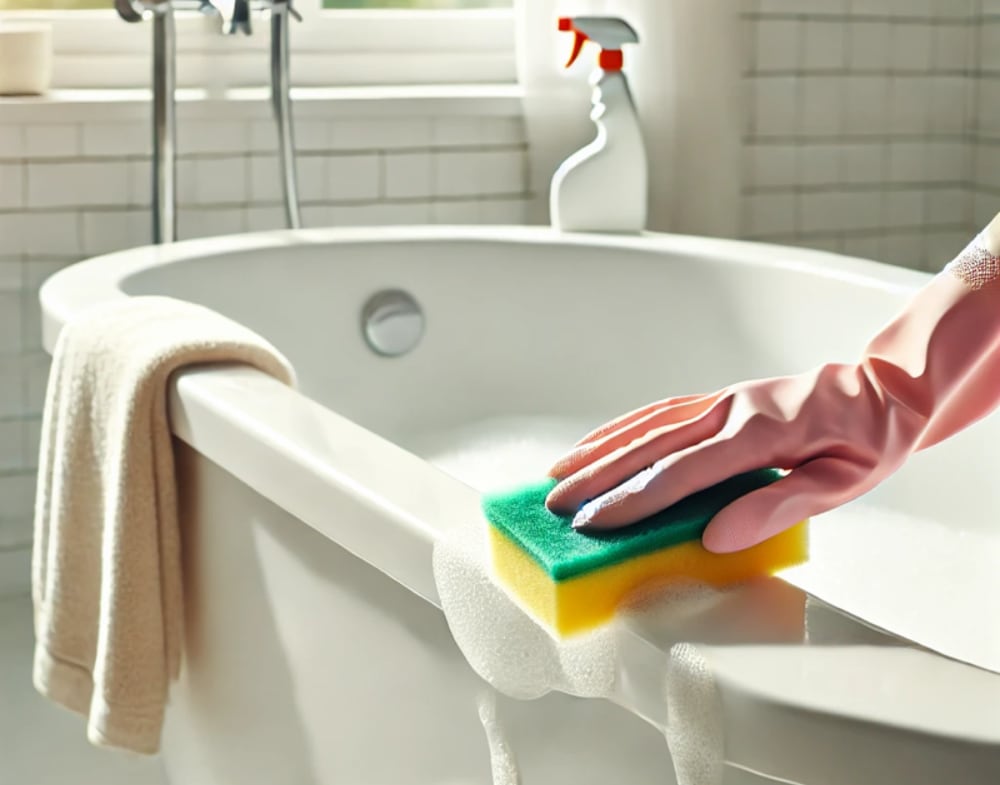
- Soft-bristle brush or sponge
- Microfiber cloths
One caution for older or refinished tubs: skip abrasive powders, scouring pads, and strong acids — they can wear down enamel or a refinished surface and leave it dull. The soft-brush methods below are safe for everyday cleaning.
How to remove different types of stains
Hard water stains
- Mix equal parts of white vinegar and water in a spray bottle.
- Spray the solution over the stained areas.
- Let it sit for 15–20 minutes to dissolve mineral deposits.
- Scrub with a soft brush and rinse with warm water.
For stubborn stains, sprinkle baking soda on the area before spraying with vinegar.
Rust stains
- Apply lemon juice directly to the rust spot.
- Sprinkle baking soda over the juice to create a paste.
- Let it sit for 30 minutes, then scrub gently with a sponge.
- Rinse thoroughly with warm water.
If the stain persists, use a rust remover specifically designed for bathtubs.
Soap scum
- Combine dish soap and white vinegar in a spray bottle.
- Spray generously over the soap scum.
- Allow the solution to work for 15 minutes.
- Scrub with a sponge or brush, then rinse clean.
Tip: regularly wiping the tub after use helps prevent soap scum buildup.
Mold and mildew
- Mix hydrogen peroxide and water (1:1 ratio) in a spray bottle.
- Spray the mixture on the moldy spots and let it sit for 10–15 minutes.
- Scrub with a brush and rinse thoroughly.
Ensure proper ventilation to prevent mold from returning.
Prevention tips for a stain-free tub
- Dry after each use — a quick wipe with a microfiber cloth stops water spots before they form.
- Clean weekly — routine cleaning with mild soap and water keeps grime from building up.
- Improve ventilation — open a window or run the fan to cut the moisture mold needs.
- Use a tub mat — protects the surface from scratches and trapped grit.
When to call in a pro
Some marks aren’t really stains. When a tub has deep discoloration, etched spots, or a chalky surface that won’t come clean, the finish itself is worn — and no amount of scrubbing brings it back. That’s when refinishing makes sense: we re-coat the existing cast iron or steel tub so it looks new again, without replacing it.
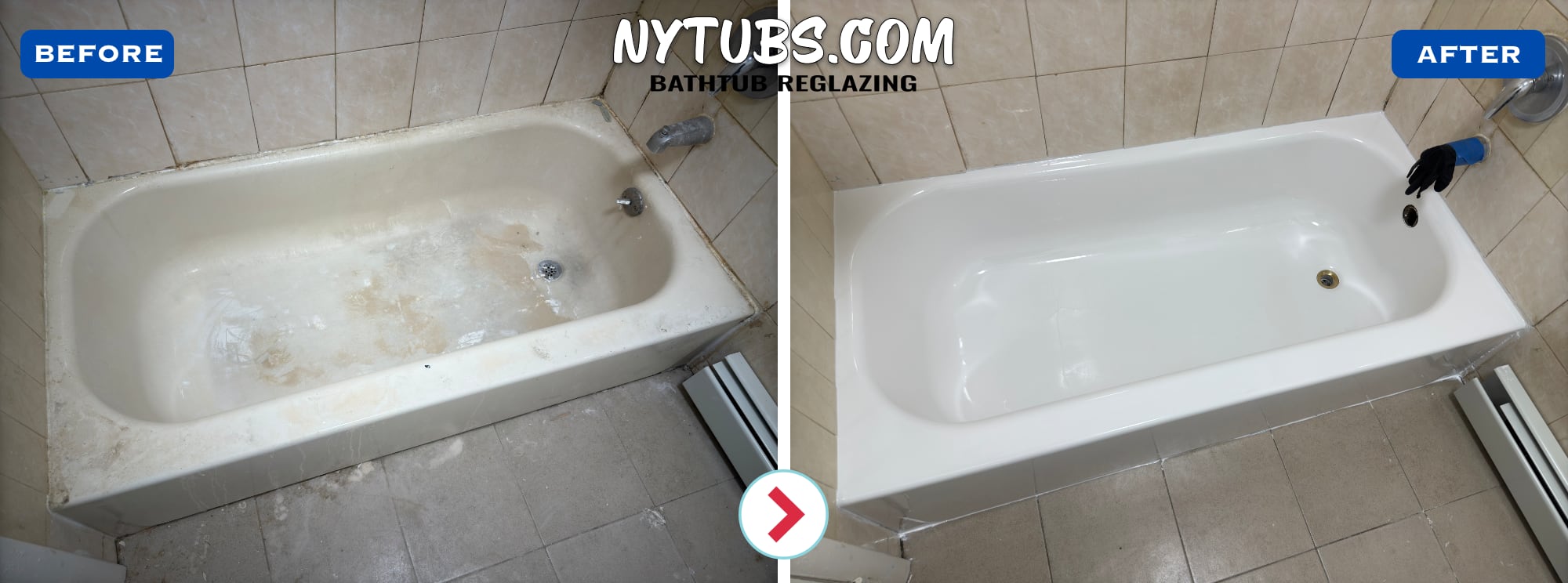
Tub looking worn beyond cleaning?
We refinish cast iron and steel tubs across New York City — one visit, ready to use the next day.