
Bathtub Finish Peeling: Causes, Fixes & Professional Reglazing
Can anything be done when a bathtub finish starts peeling, flaking, or lifting? Yes. In most cases a peeling tub can be professionally reglazed back to a smooth, even white finish — without replacing it.
Cast iron tubs are built to last for decades. The tub itself is strong and resistant to structural damage, which is why many homeowners choose restoration over removal when surface problems show up.
Cast iron also holds heat well, dampens noise, and — especially with clawfoot tubs — anchors the look of the bathroom. In New York City apartments these tubs are everywhere, so peeling finishes often turn up on older cast iron or previously refinished surfaces.
Why does bathtub enamel start peeling?
Cast iron is durable, but the factory enamel on top is not. Over time, several things make the finish lose adhesion and peel:
- Daily impact from dropped objects (shampoo bottles, metal items)
- Temperature swings from hot and cold water
- Constant moisture exposure
- Age-related enamel fatigue
- Earlier refinishing with spray-on coatings that bonded poorly
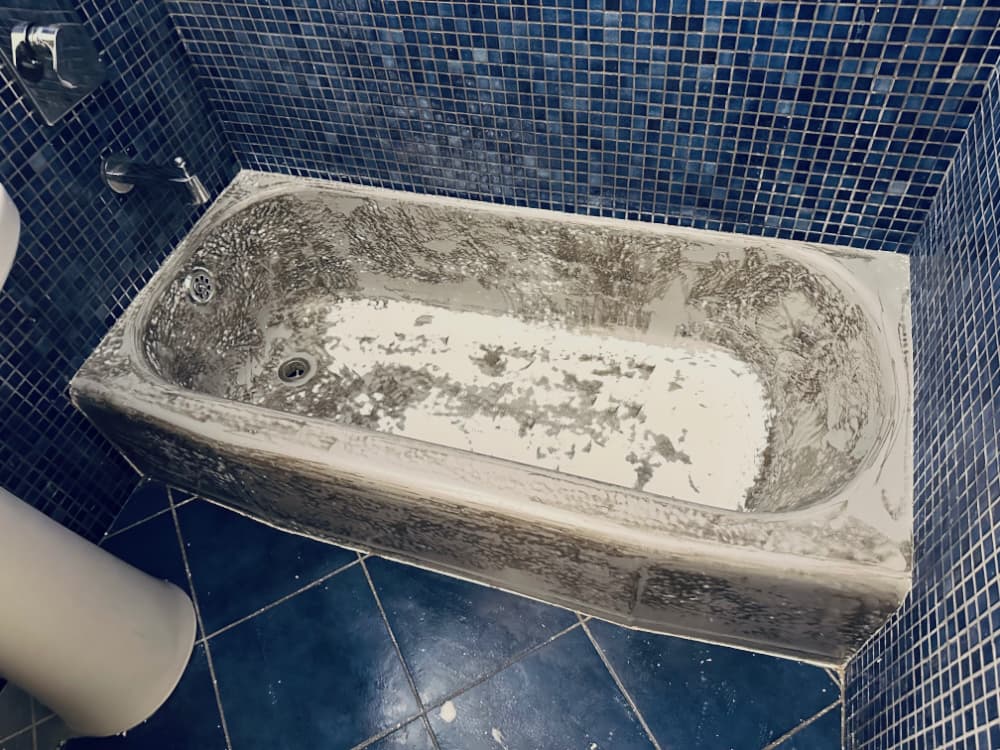
Often, tubs refinished years ago with traditional spray-on enamel start peeling early because the surface wasn’t prepped well enough. Once the coating is damaged, rust, hard-water minerals, and dirt work into those areas, causing discoloration, roughness, and further breakdown.
Should you replace a peeling bathtub?
Removing and replacing a tub — especially a cast iron one — is costly and disruptive. These tubs are extremely heavy, and pulling one out often damages surrounding tile, walls, and flooring. Installing a new tub can take days or weeks and usually needs several trades.
In many NYC homes, replacement can easily cost several times more than professional reglazing — and the tub is unusable the whole time. Fortunately, there’s a far more practical option.
Restoring a peeling bathtub with the pour-on method
Professional reglazing restores the existing tub instead of replacing it. With a modern pour-on application method, even badly damaged or peeling finishes can be rebuilt into a smooth, seamless surface.
Unlike spray-on coatings, the pour-on method lays down a thick, self-leveling layer that restores both appearance and durability.
How is bathtub reglazing performed?
Successful reglazing comes down to proper surface prep — it takes professional tools, experience, and attention to detail. The restoration typically includes:
- Remove loose, damaged coating — all peeling enamel is mechanically stripped and the surface sanded to eliminate weak adhesion points.
- Repair chips, cracks, and rust — damaged areas are filled, reinforced, and smoothed.
- Clean and treat — the tub is washed, degreased, sanitized, rinsed with hot water, and fully dried for maximum bonding.
- Apply the pour-on coating — mixed and poured evenly around the perimeter; because it self-levels, it leaves a smooth, streak-free finish with no overspray, bubbles, or thin spots.
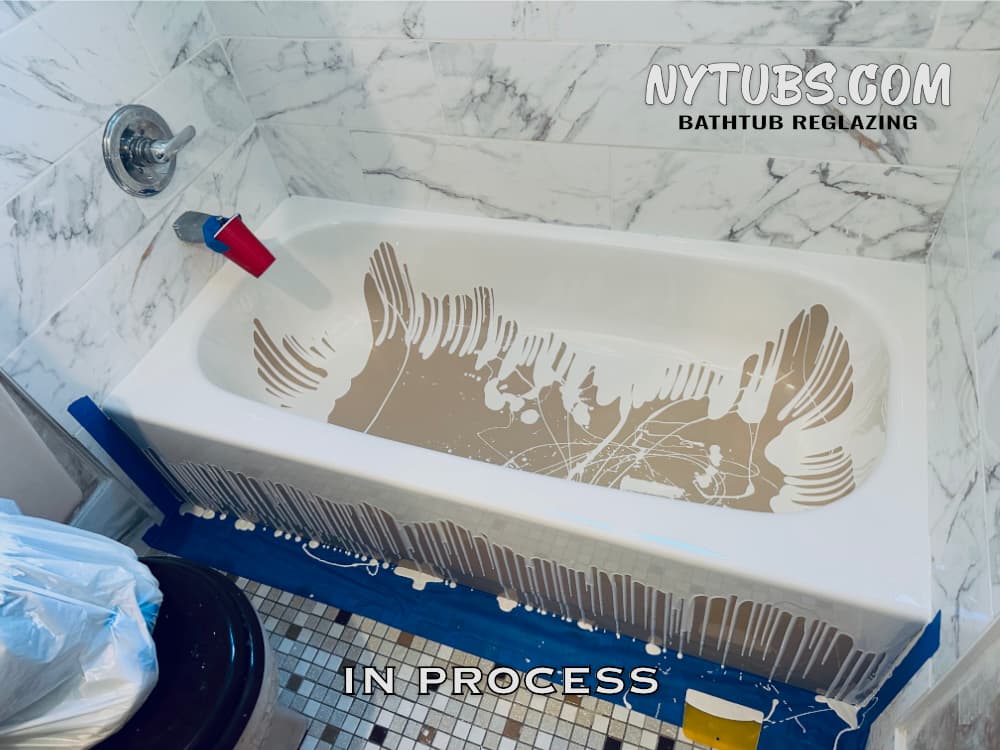
No heavy equipment is dragged through your home, and the work area is left clean when we’re done.
Why professional reglazing matters
Reglazing isn’t a simple cosmetic fix. Without correct prep, a new coating fails fast — often peeling again within months. An experienced pro ensures:
- Proper removal of failed coatings
- Correct surface chemistry and bonding
- Long-term durability instead of a temporary result
Our technicians use a proven pour-on system built specifically to prevent peeling and premature failure — so the finish lasts.
Frequently Asked Questions
Can a peeling bathtub be repaired?
Yes. In most cases a peeling tub can be professionally reglazed instead of replaced. The loose coating is stripped, the surface repaired and prepped, and a new pour-on layer rebuilds a smooth, durable finish.
Why is my bathtub finish peeling?
The factory enamel loses adhesion over time from dropped objects, hot-and-cold temperature swings, constant moisture, and age. Often it’s an old spray-on refinish that was poorly prepped and started peeling early.
Should I replace or reglaze a peeling cast iron tub?
Reglazing is usually the smarter call. Replacing a heavy cast iron tub is costly and disruptive — it can damage tile and walls and take days. In many NYC homes, replacement costs several times more than reglazing.
Why do refinished tubs peel again?
Almost always because of poor surface prep. If the failed coating isn’t fully removed and the surface isn’t prepped correctly, a new coating won’t bond — and it can peel again within months. Proper prep is what makes it last.
How long does pour-on reglazing last on a peeling tub?
With proper care, 7–15 years even under daily use. The pour-on coating is thick and self-leveling, so it resists cracking, chipping, and peeling far better than spray-on enamel.
How long does the reglazing take and when can I use the tub?
The work takes about 3–4 hours, and the tub is ready to use in roughly 24 hours. There’s no demolition, no heavy equipment dragged through your home, and the area is left clean.
Advantages of the pour-on method
- No tub removal or demolition
- Minimal disruption to your home
- Completion in about 3-4 hours
- Ready for use in as little as 24 hours
- Significantly lower cost than replacement
Key benefits of pour-on reglazing
Durability
The pour-on coating forms a thick, resilient surface that resists cracking, chipping, and peeling. With proper care, the finish can last 7–15 years, even under daily use.
Color and smoothness
Unlike weaker coatings, the surface keeps its whiteness without yellowing or fading. The dense finish resists stains, rust, and mineral buildup, keeping the tub smooth and clean-looking.
Hygiene
The non-porous surface makes cleaning easy and helps resist microbes, mold, and limescale — without harsh chemicals.
Environmental safety
The coating is eco-friendly, near-zero VOC, non-toxic, and non-allergenic, with virtually no smell — safe for the household during and after application.
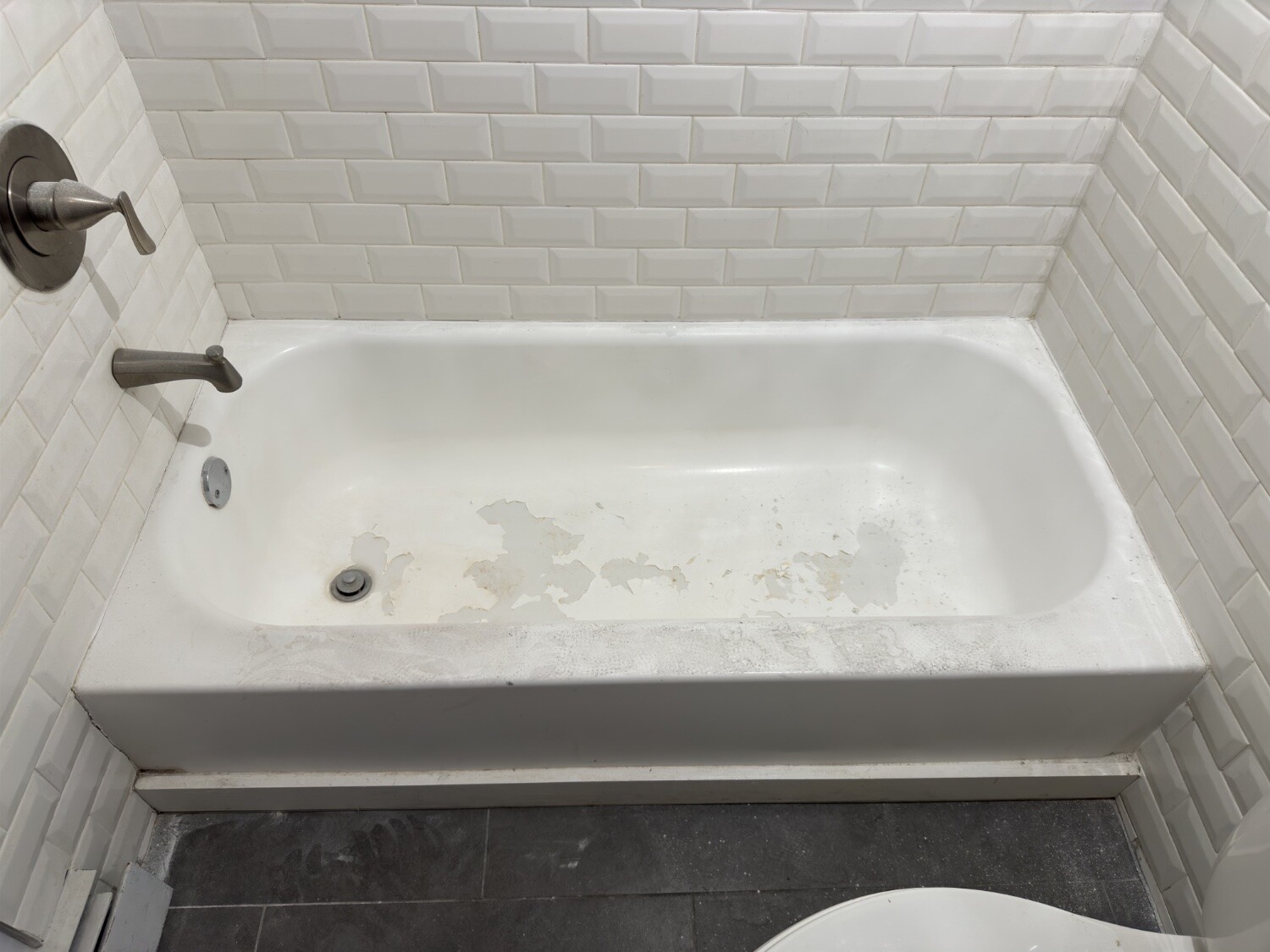
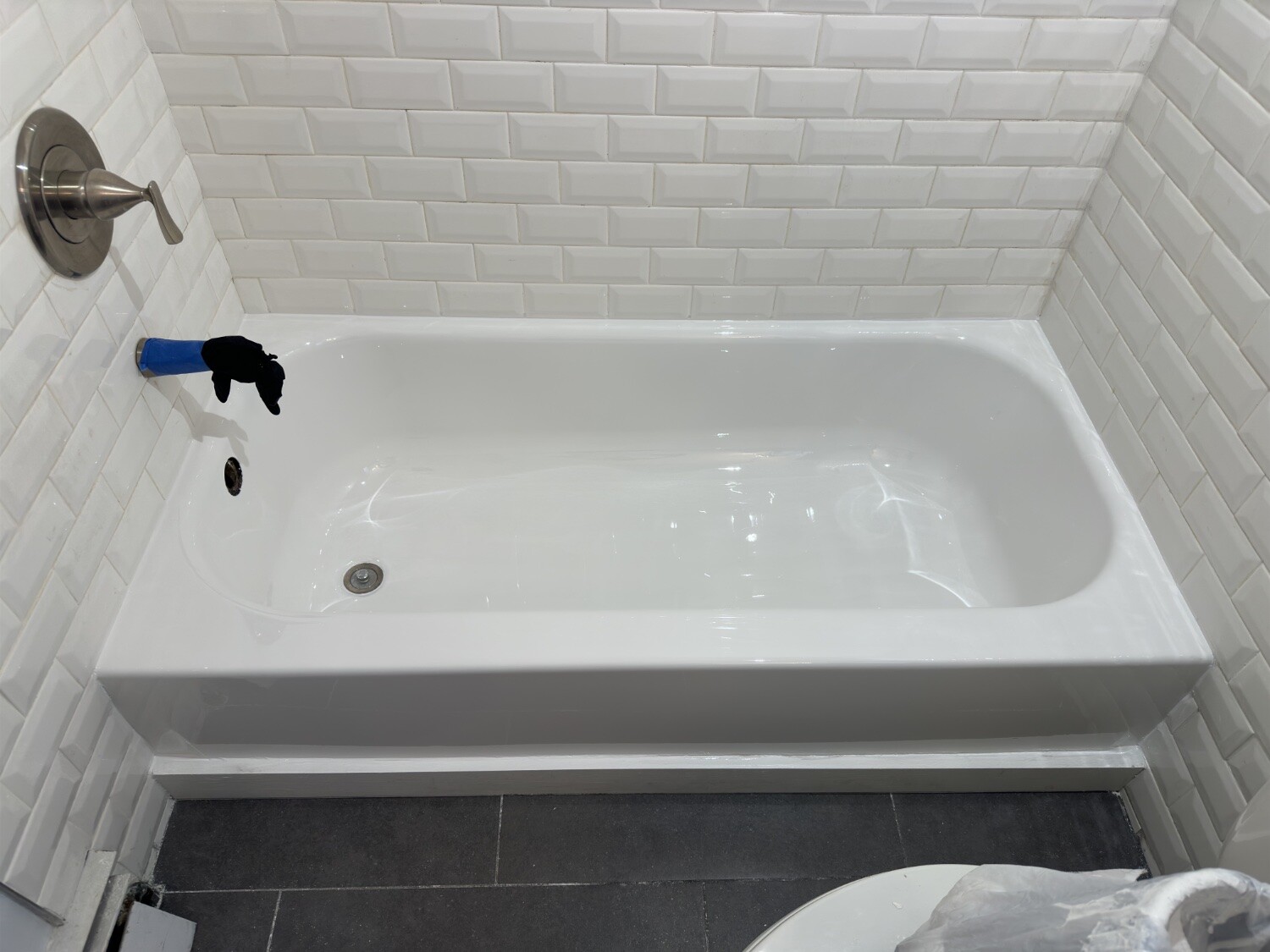
A smart alternative to replacement
Restoring peeling or chipped enamel with the pour-on method is an ideal option for property owners who want a fast, durable, and cost-effective alternative to replacement.
Is your bathtub finish peeling?
Professional reglazing can save up to 80% versus a new bathtub — with a long-lasting result. We restore cast iron and steel tubs across New York City: 3–4 hours of work, ready in about 24, 5-year warranty.