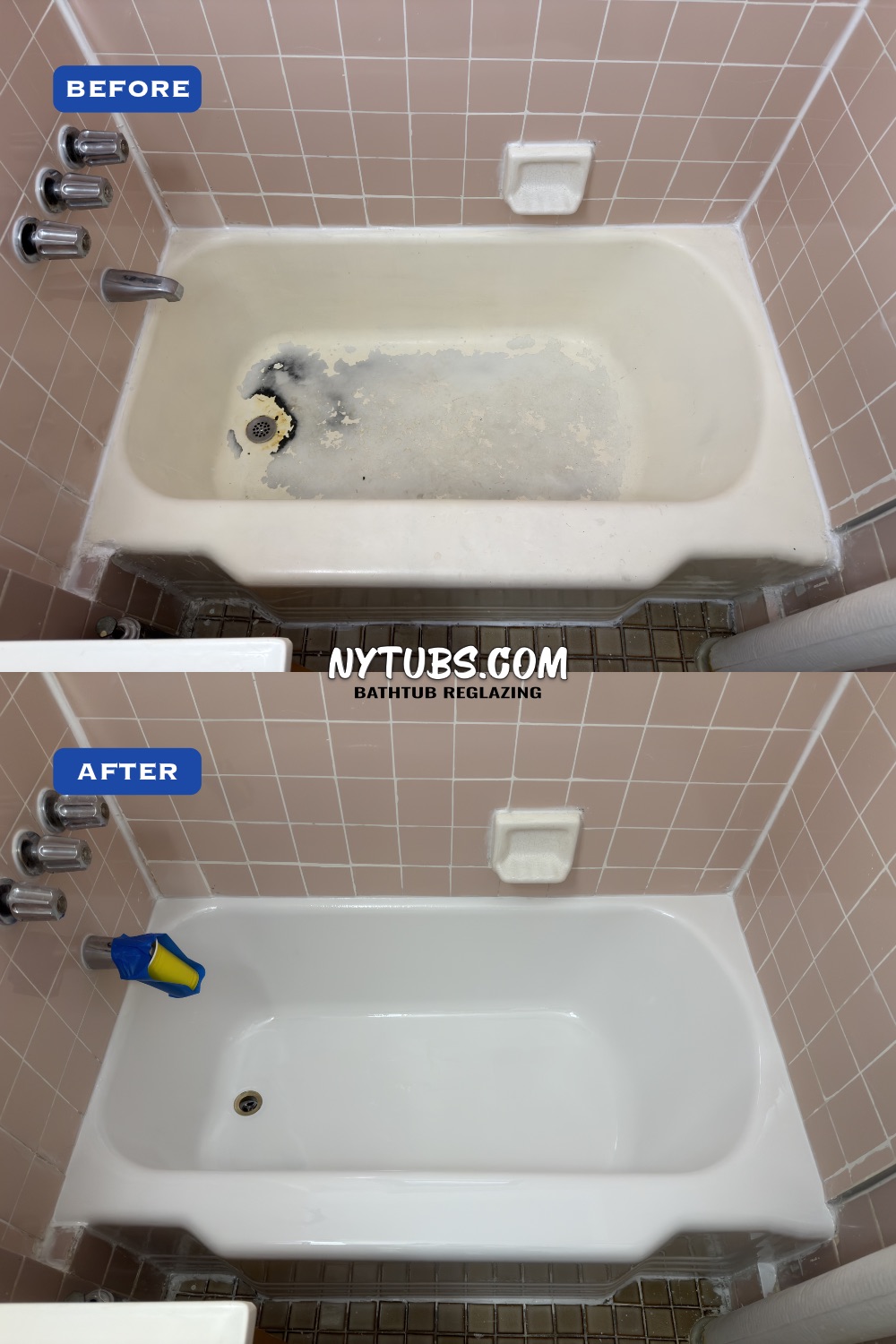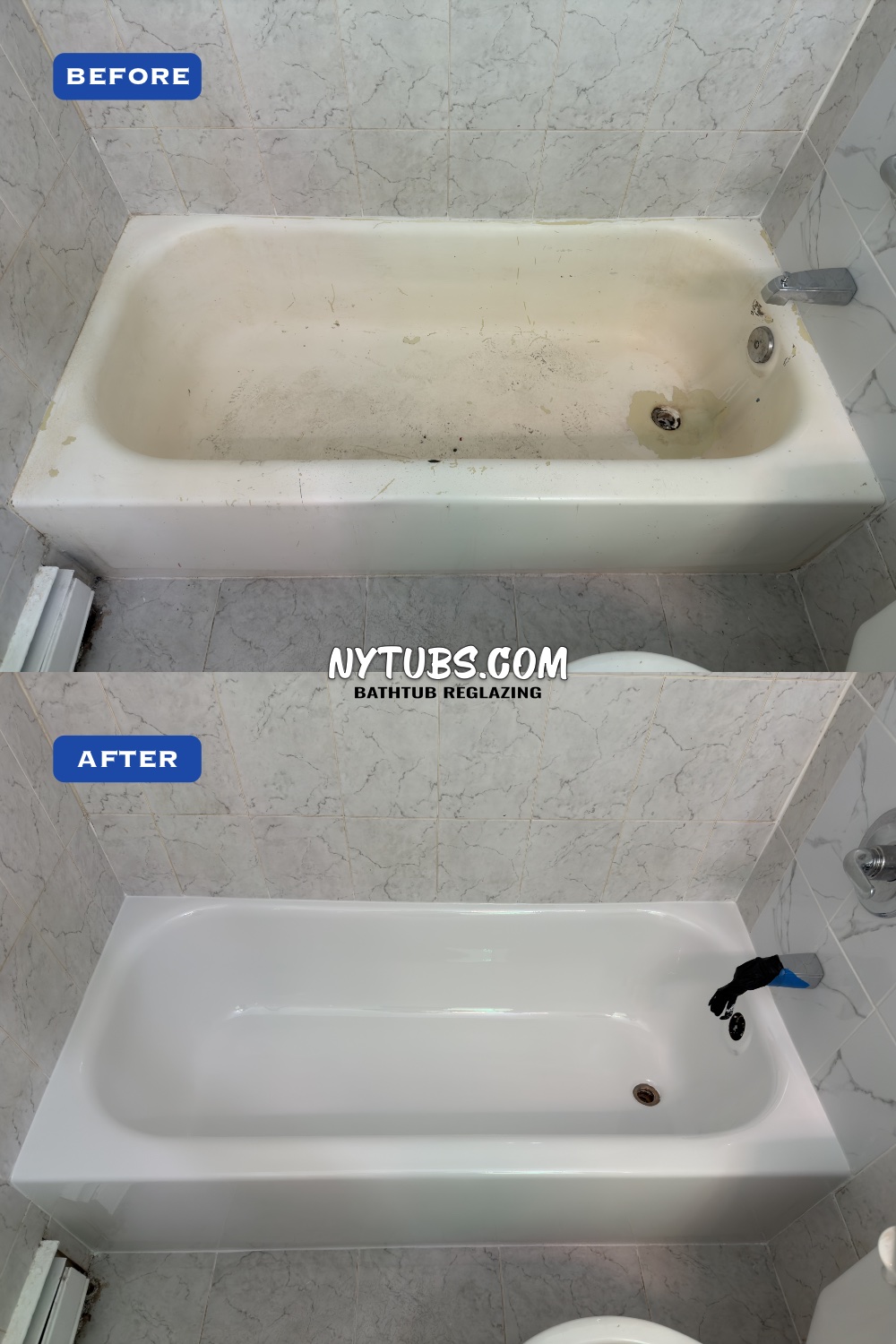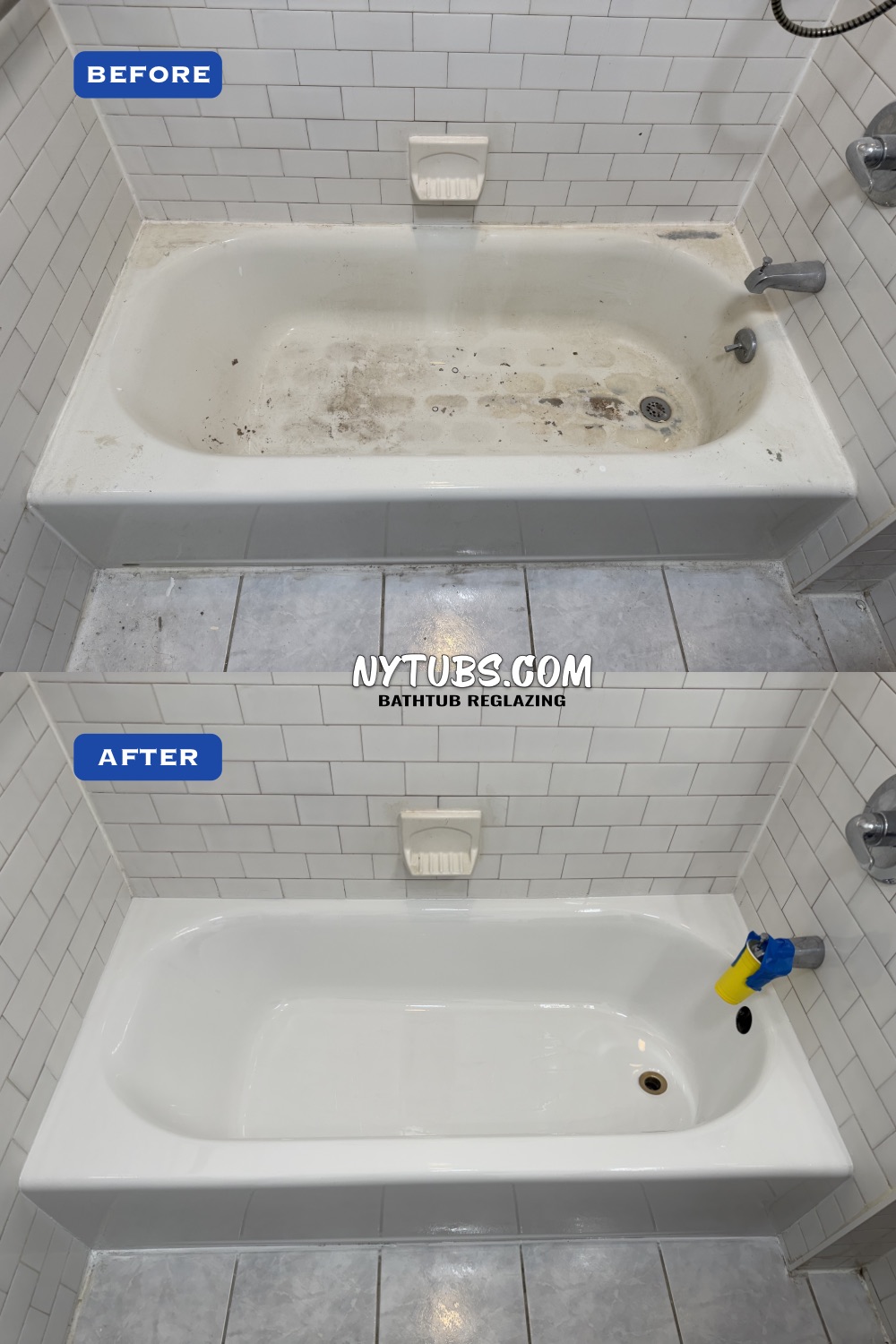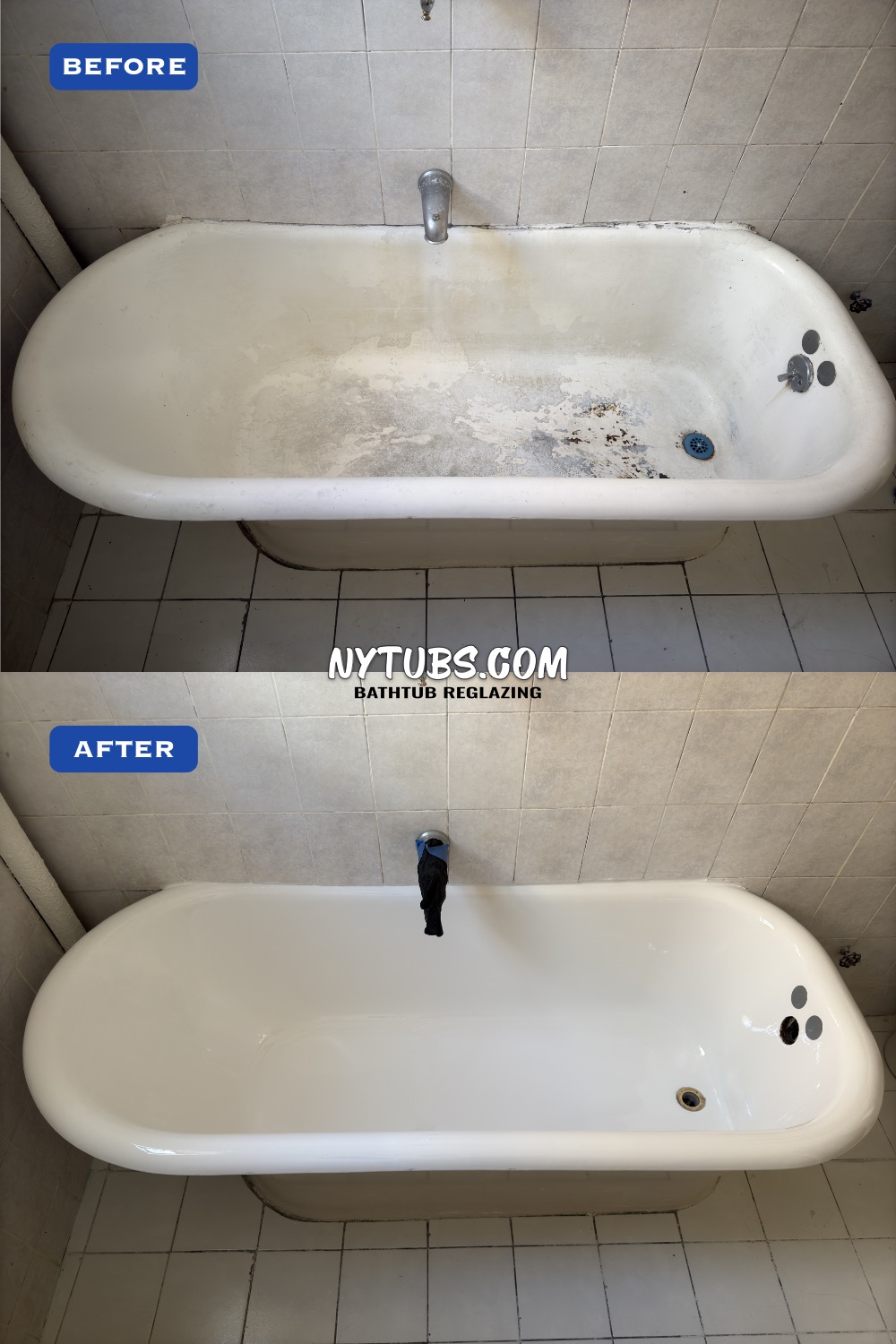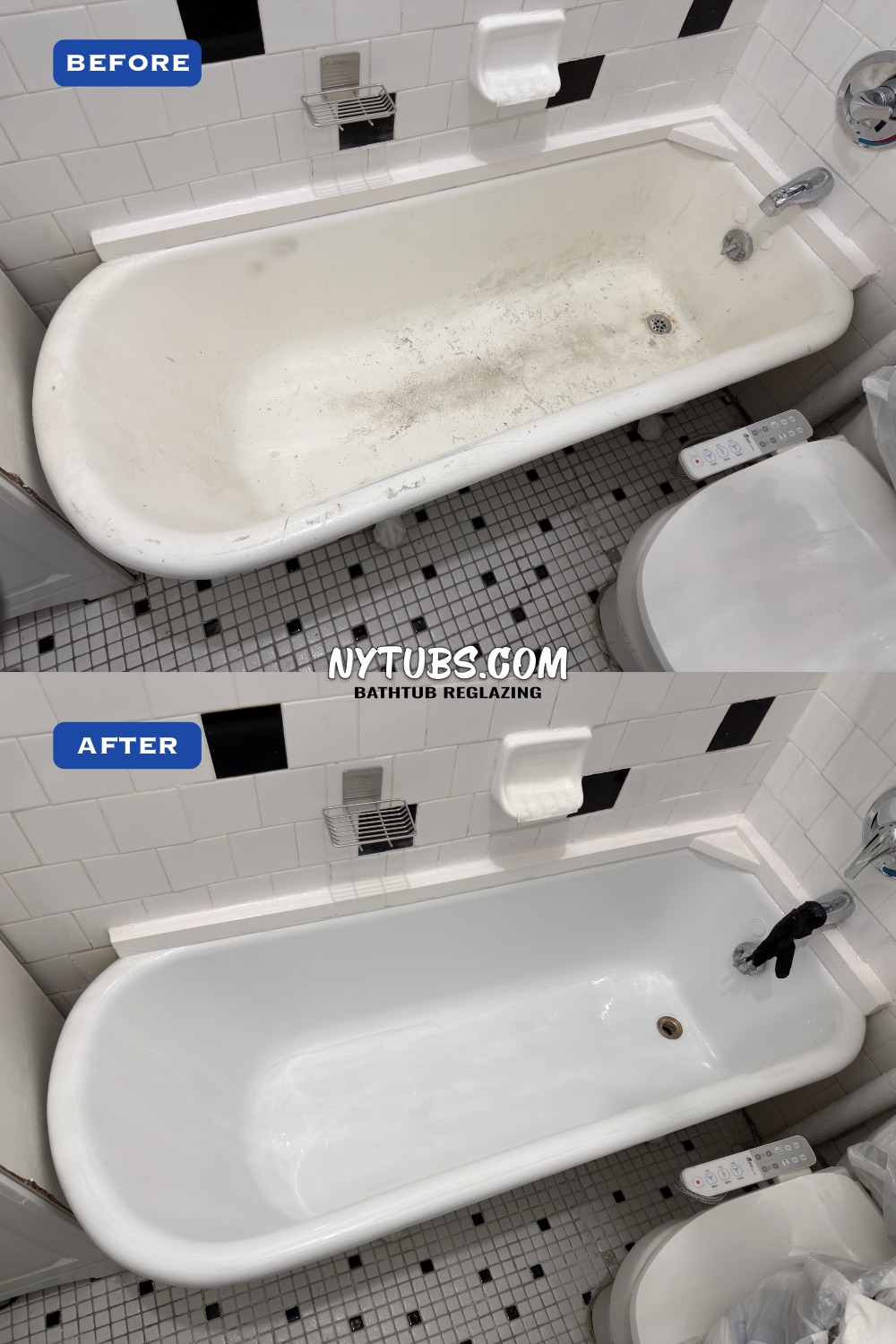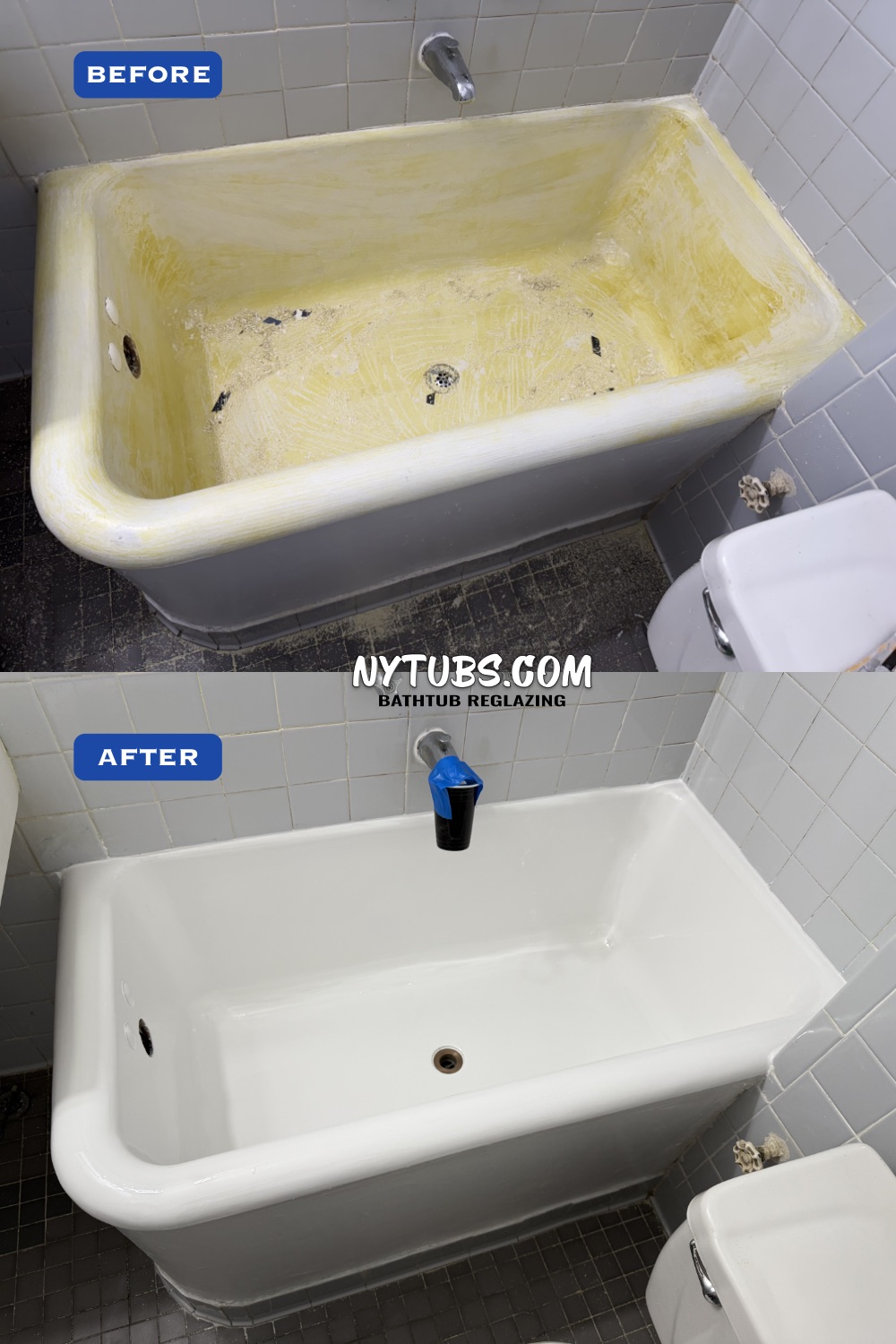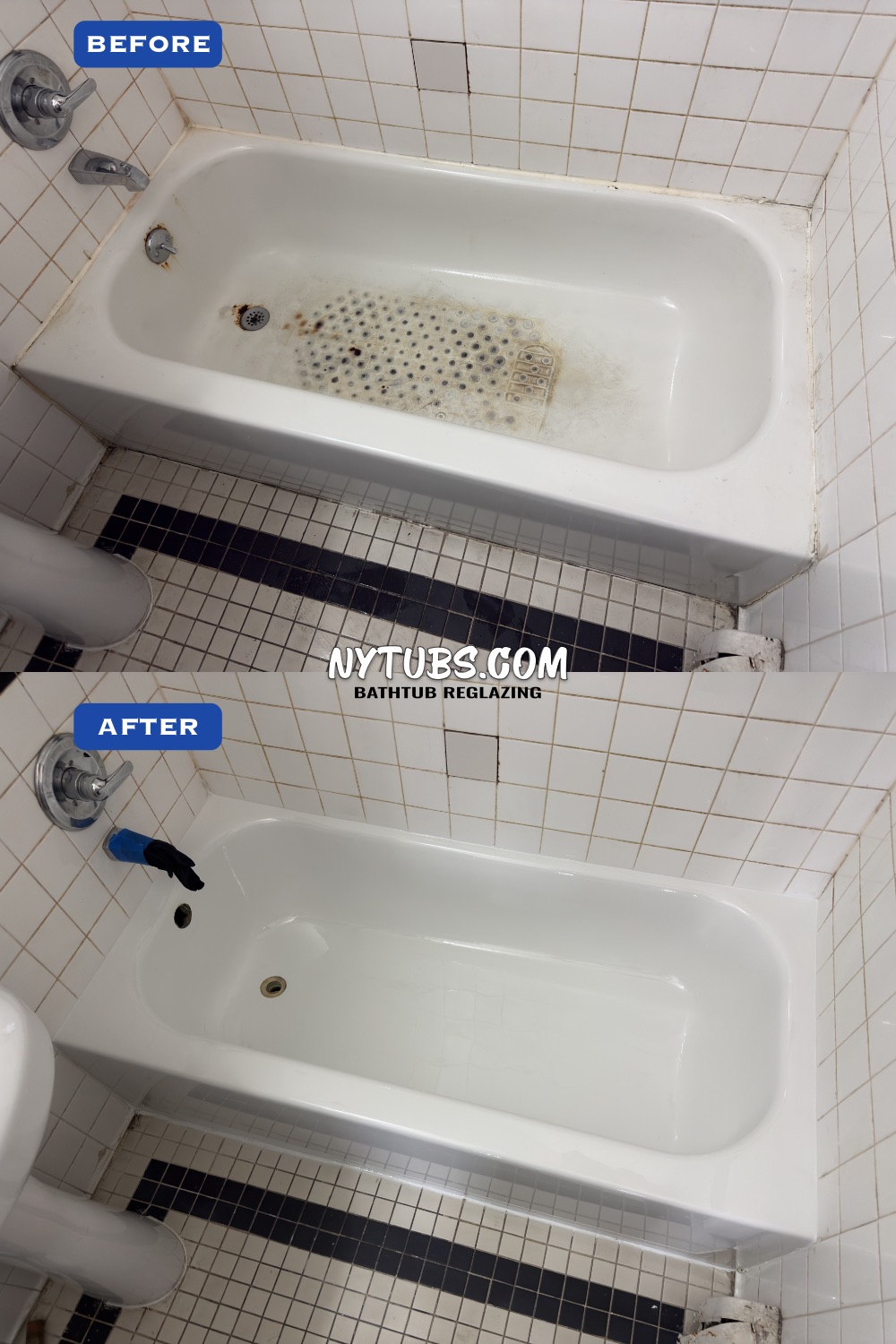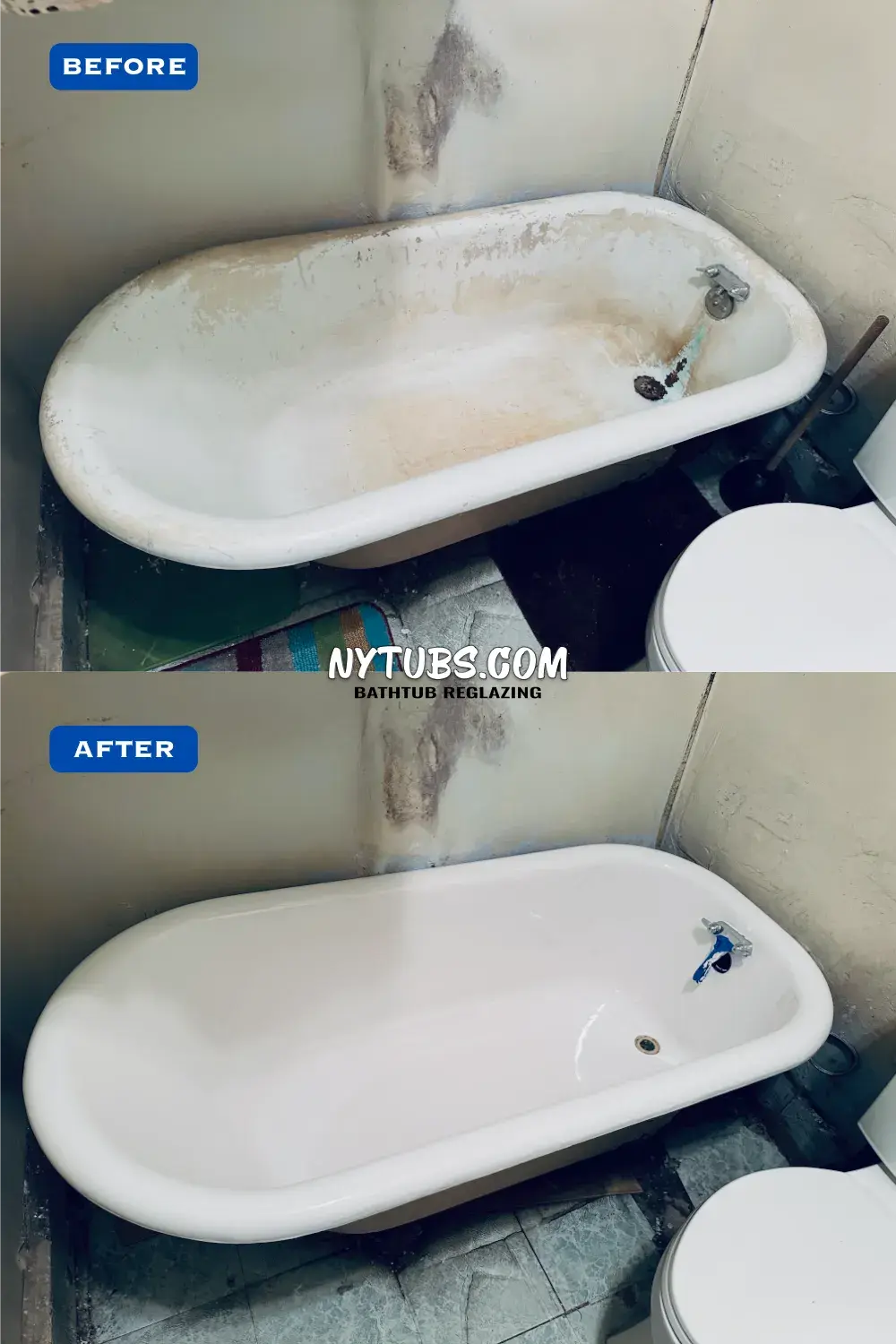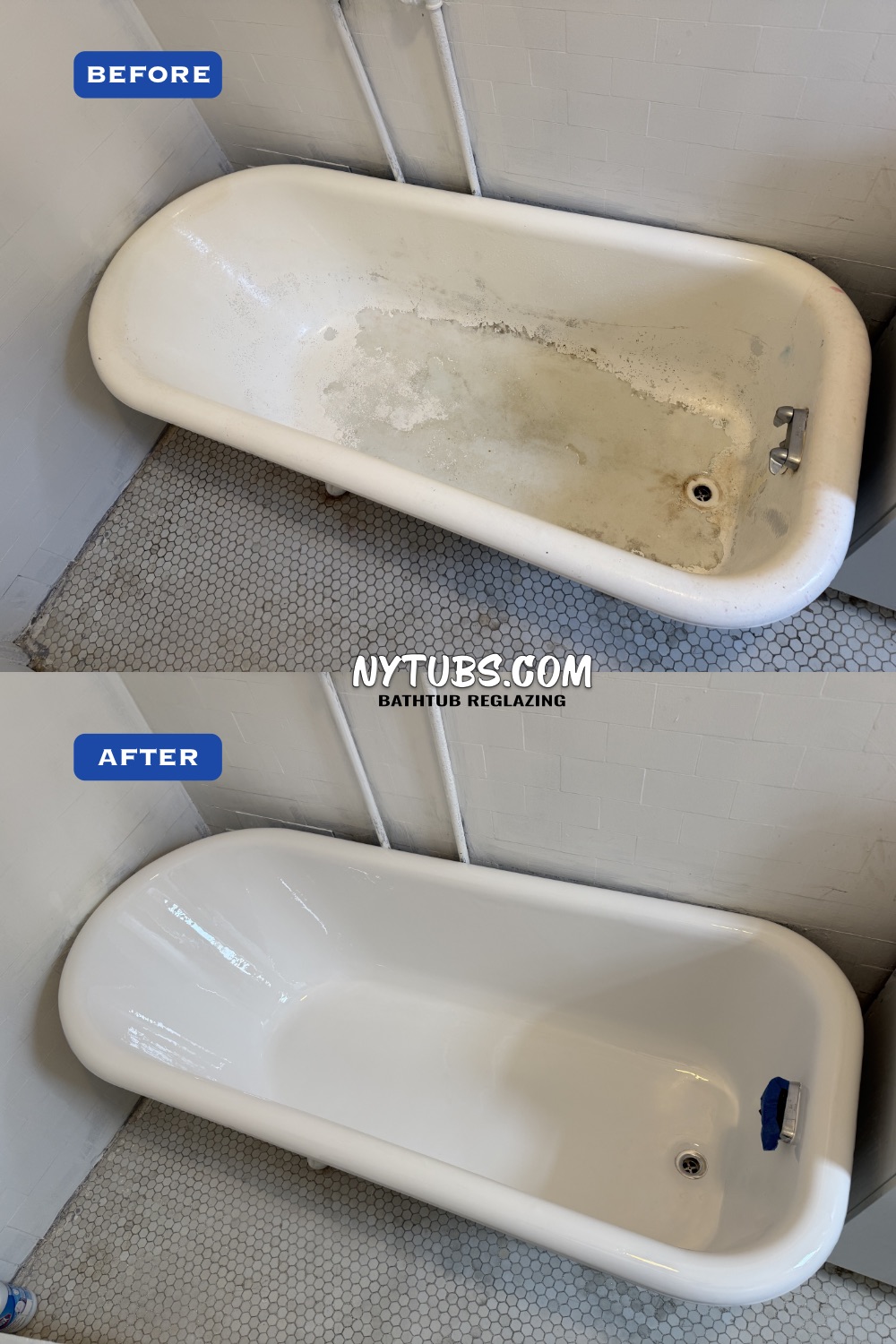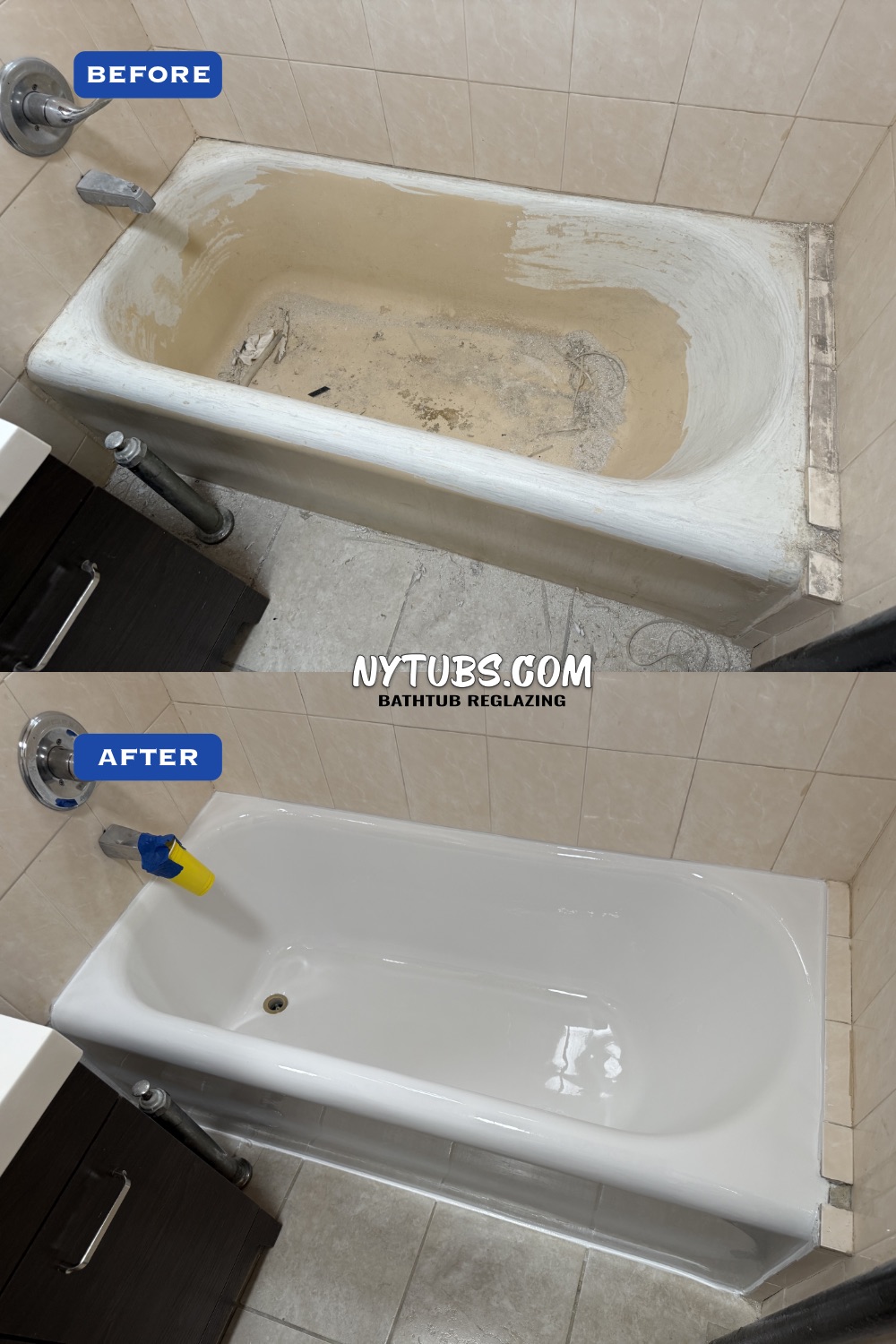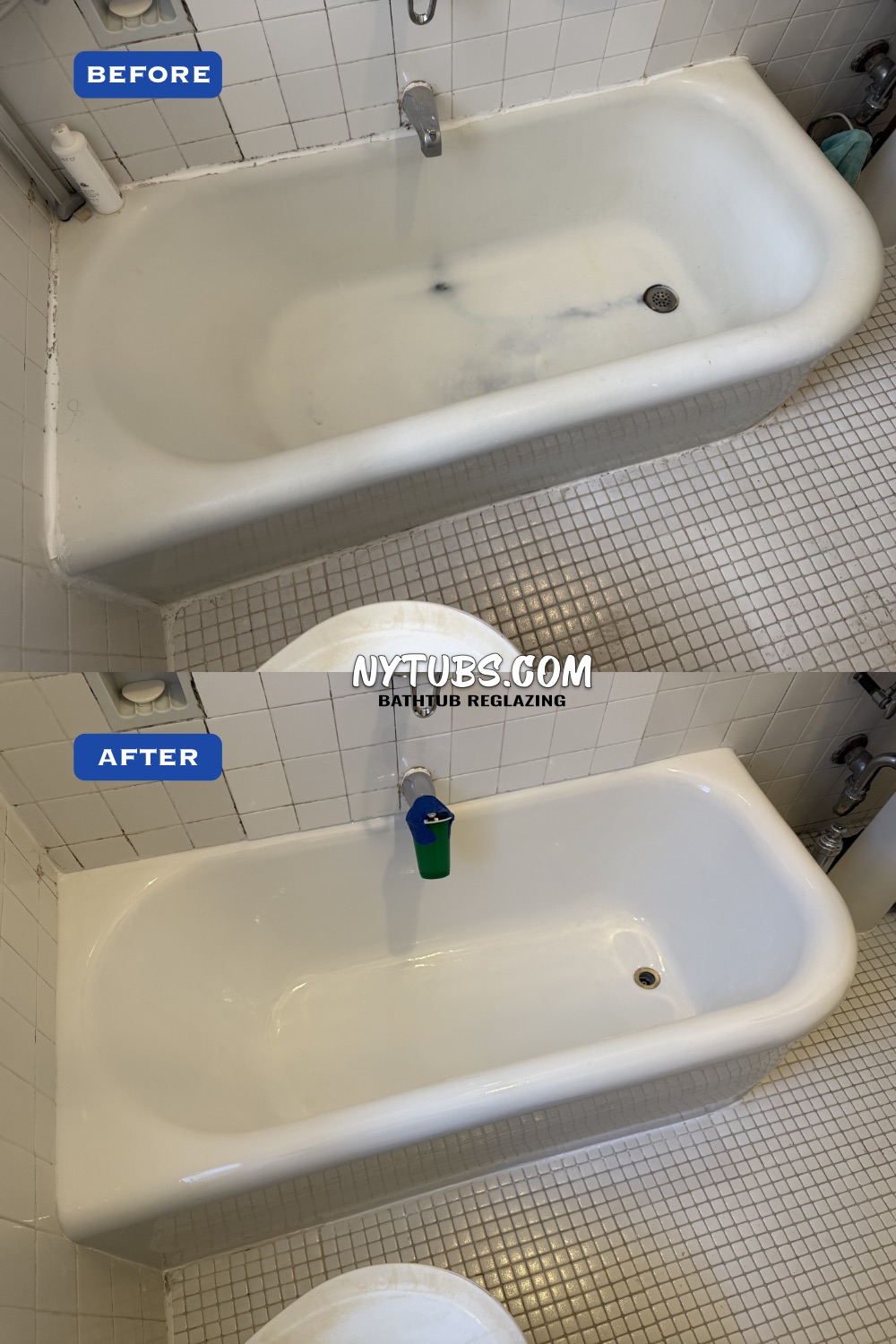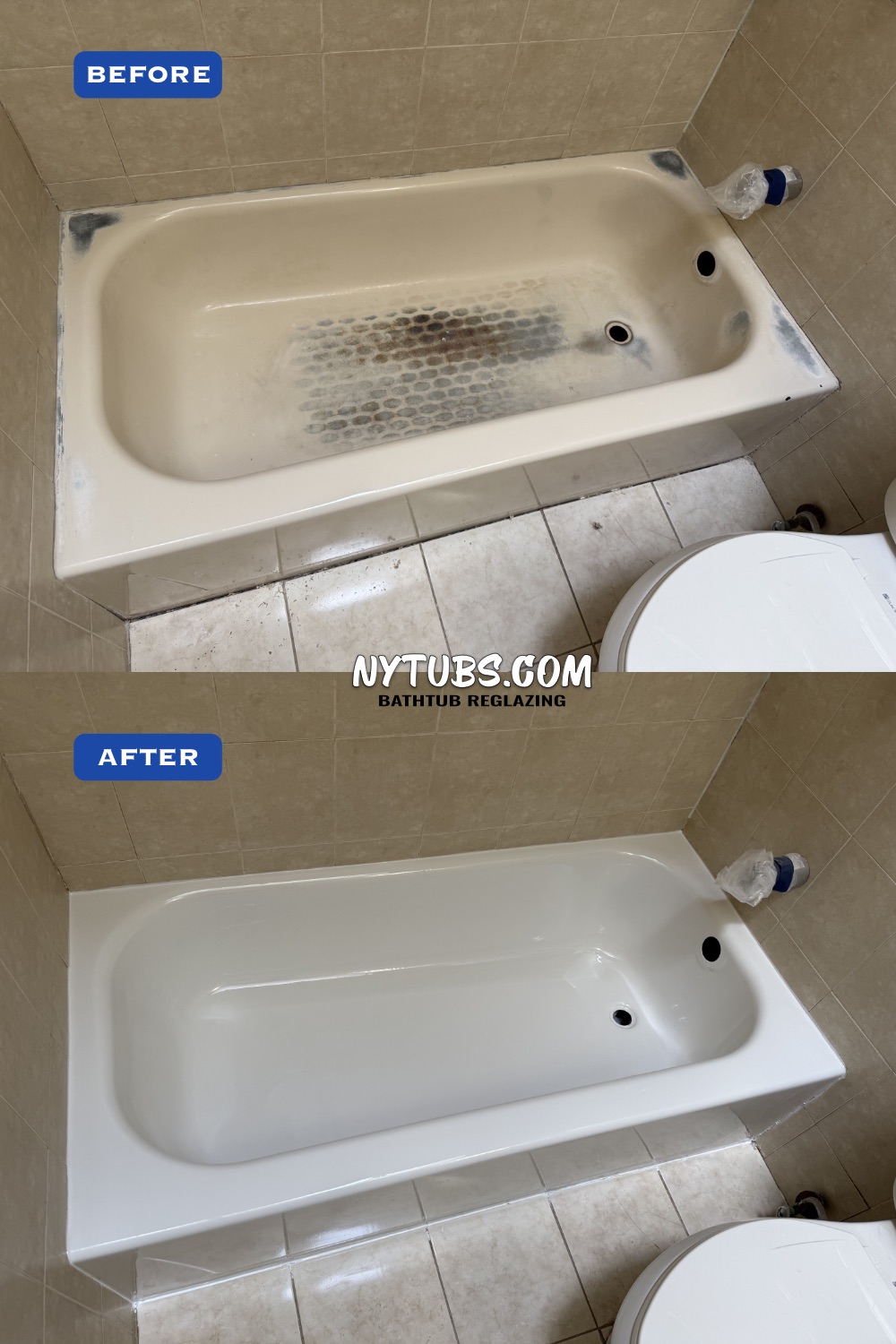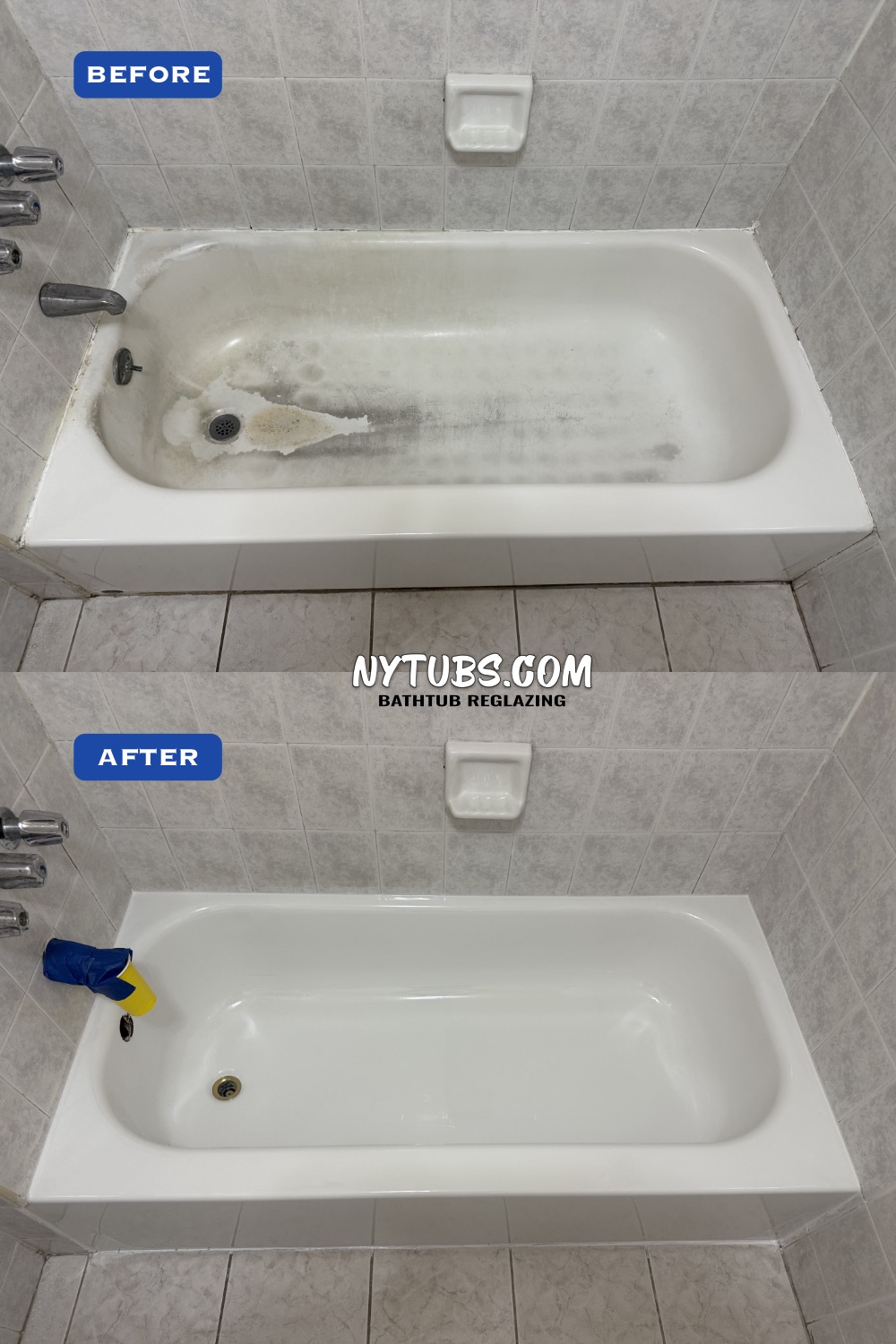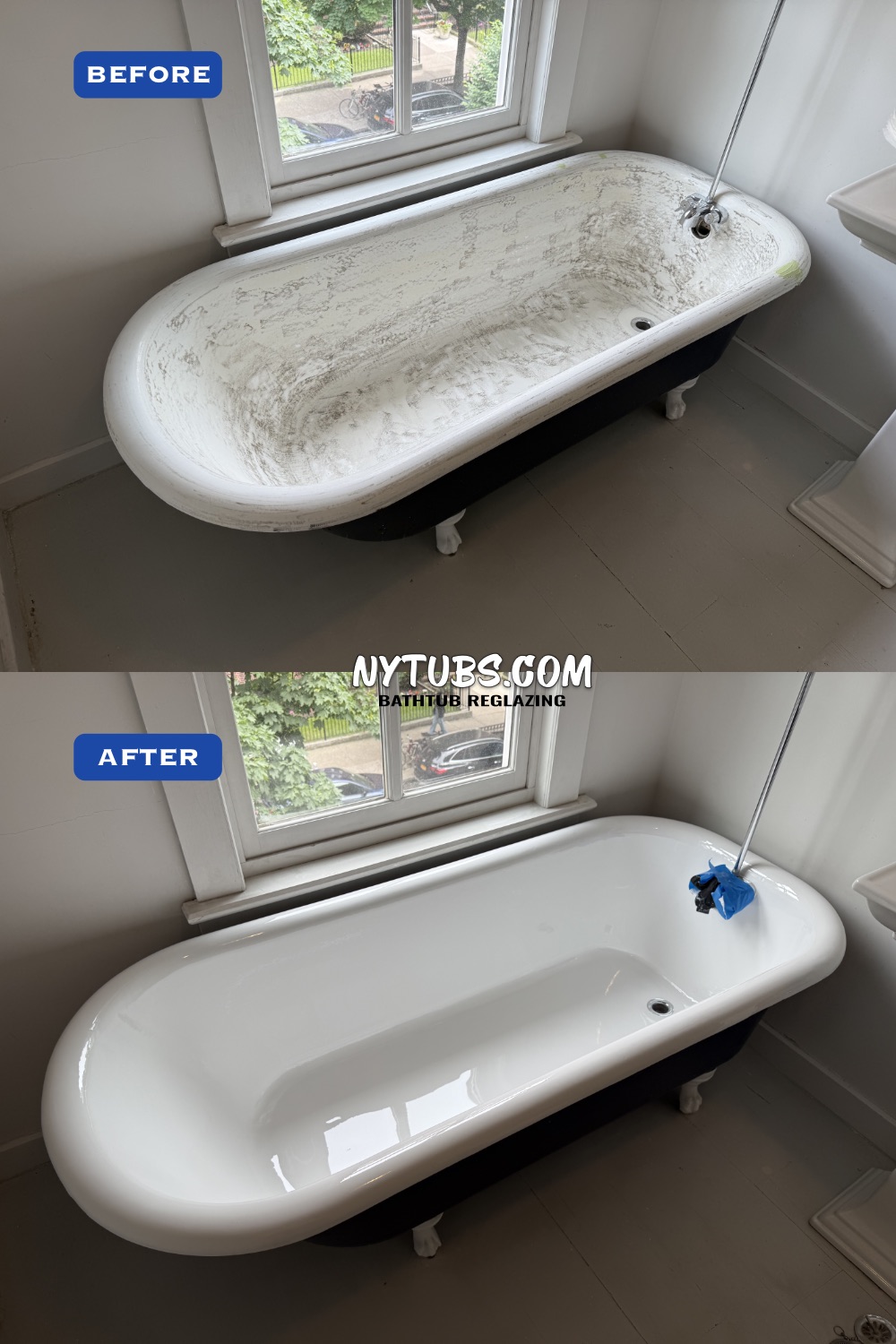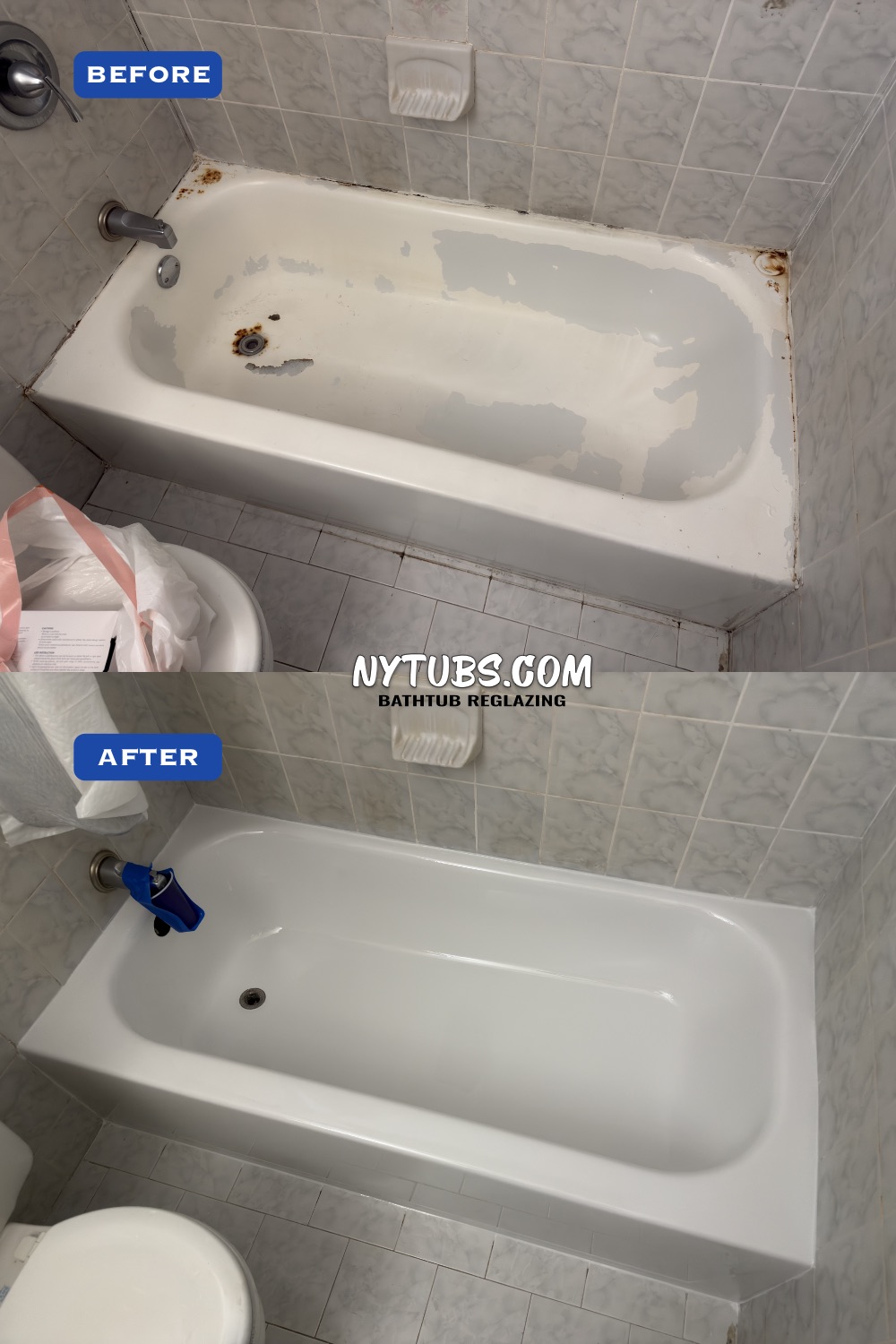

Cast iron (enameled)
Heaviest by far. Made until roughly the 1970s in standard residential. Tap the side — you’ll hear a dull, dense thud, not a hollow ring.
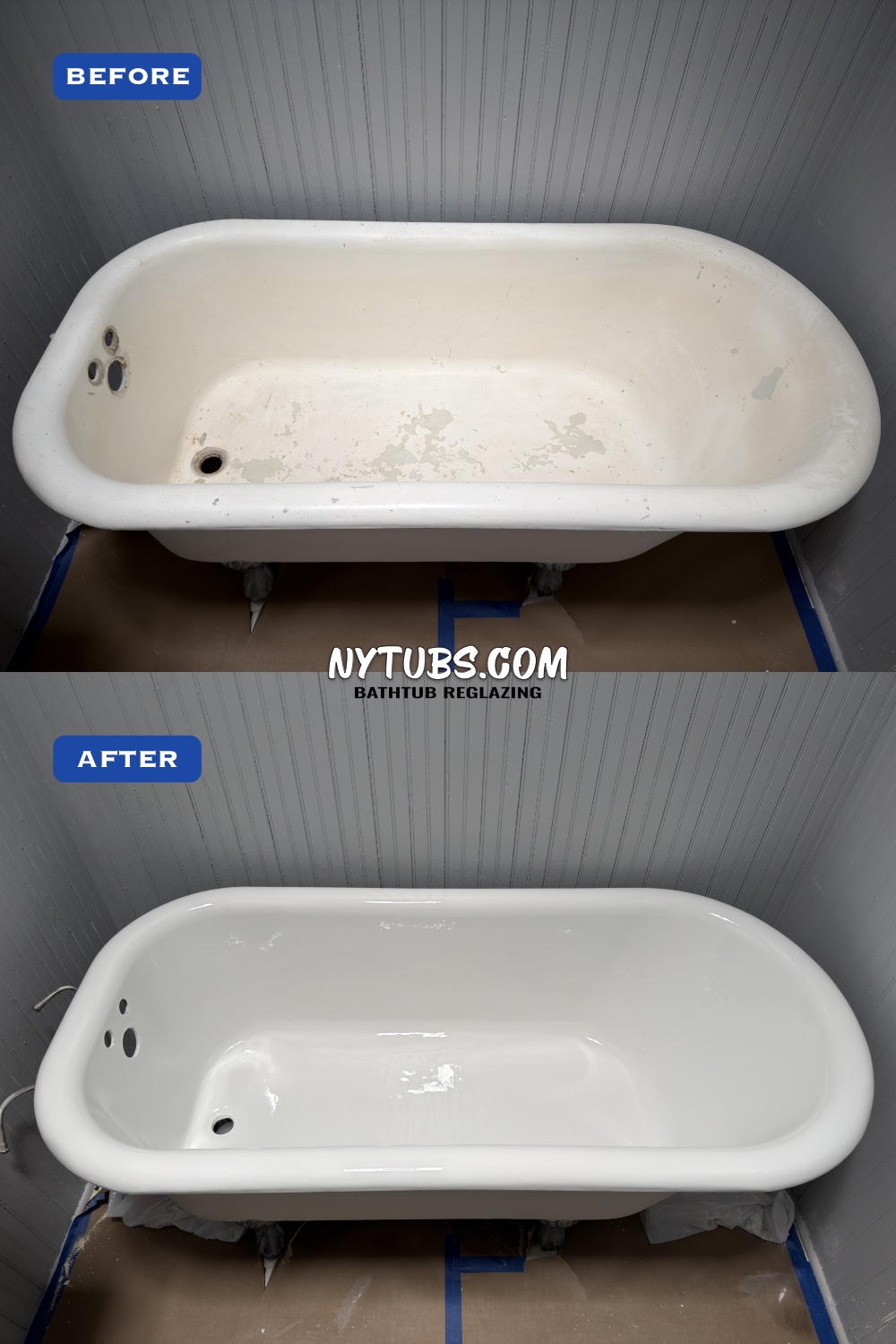
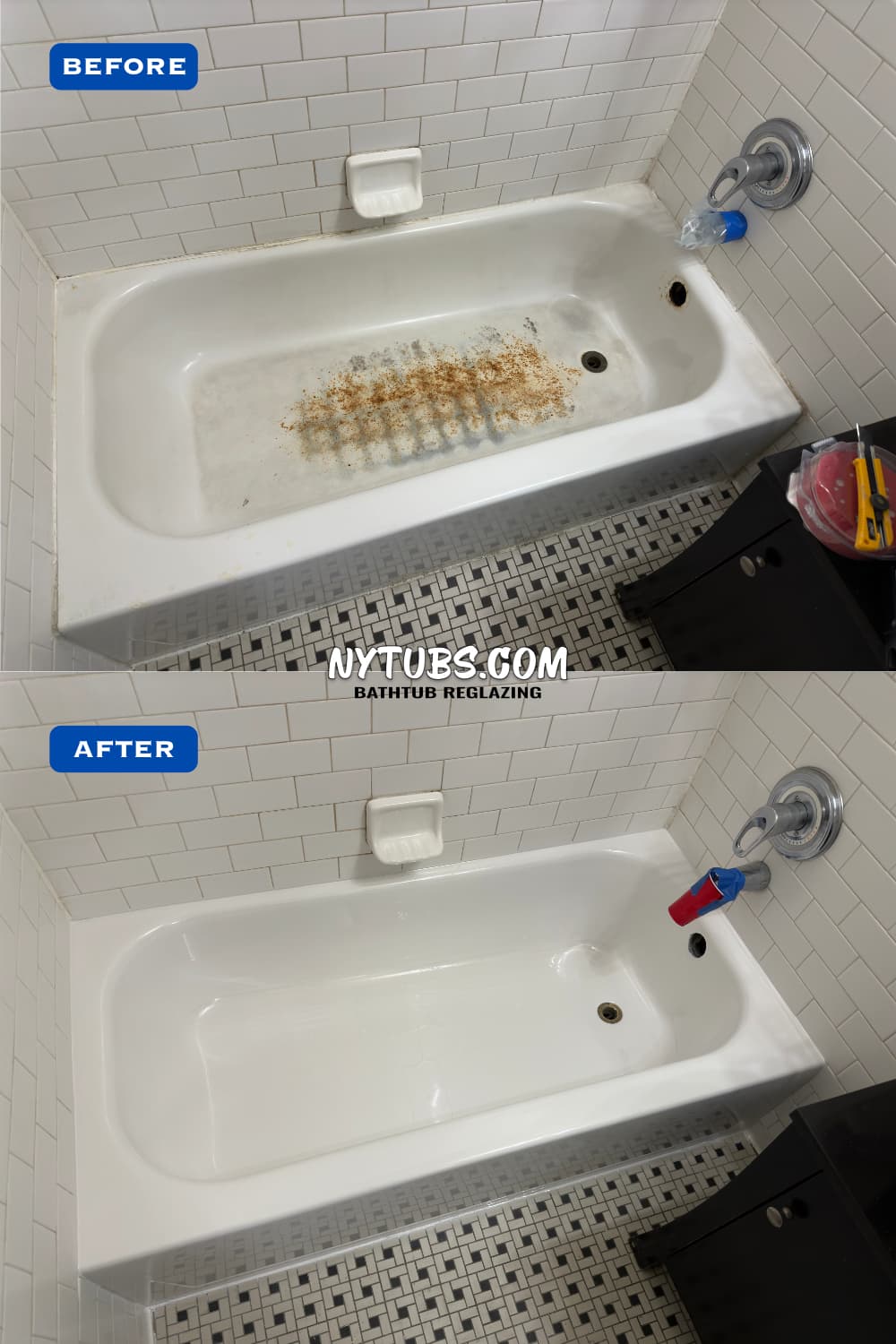
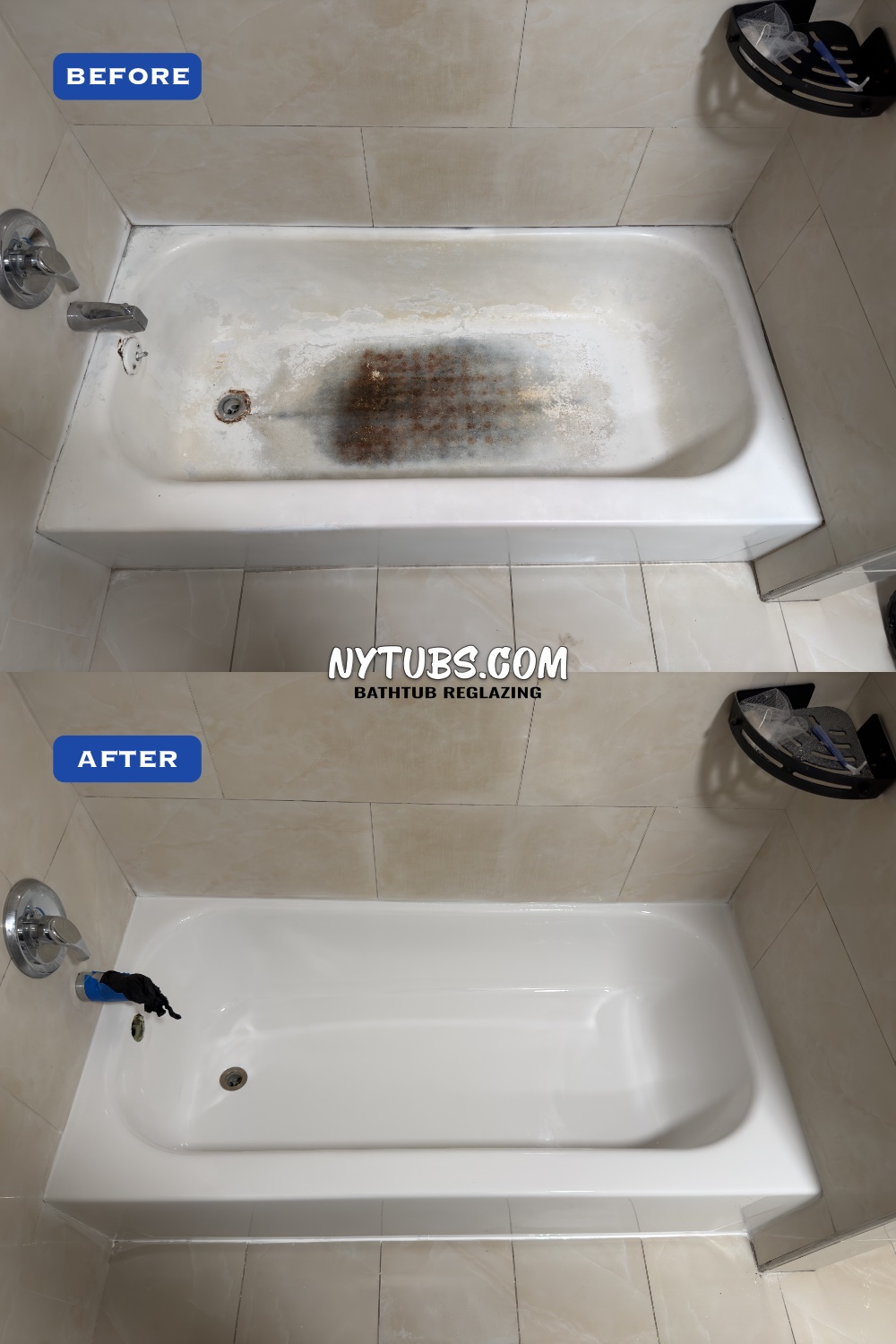
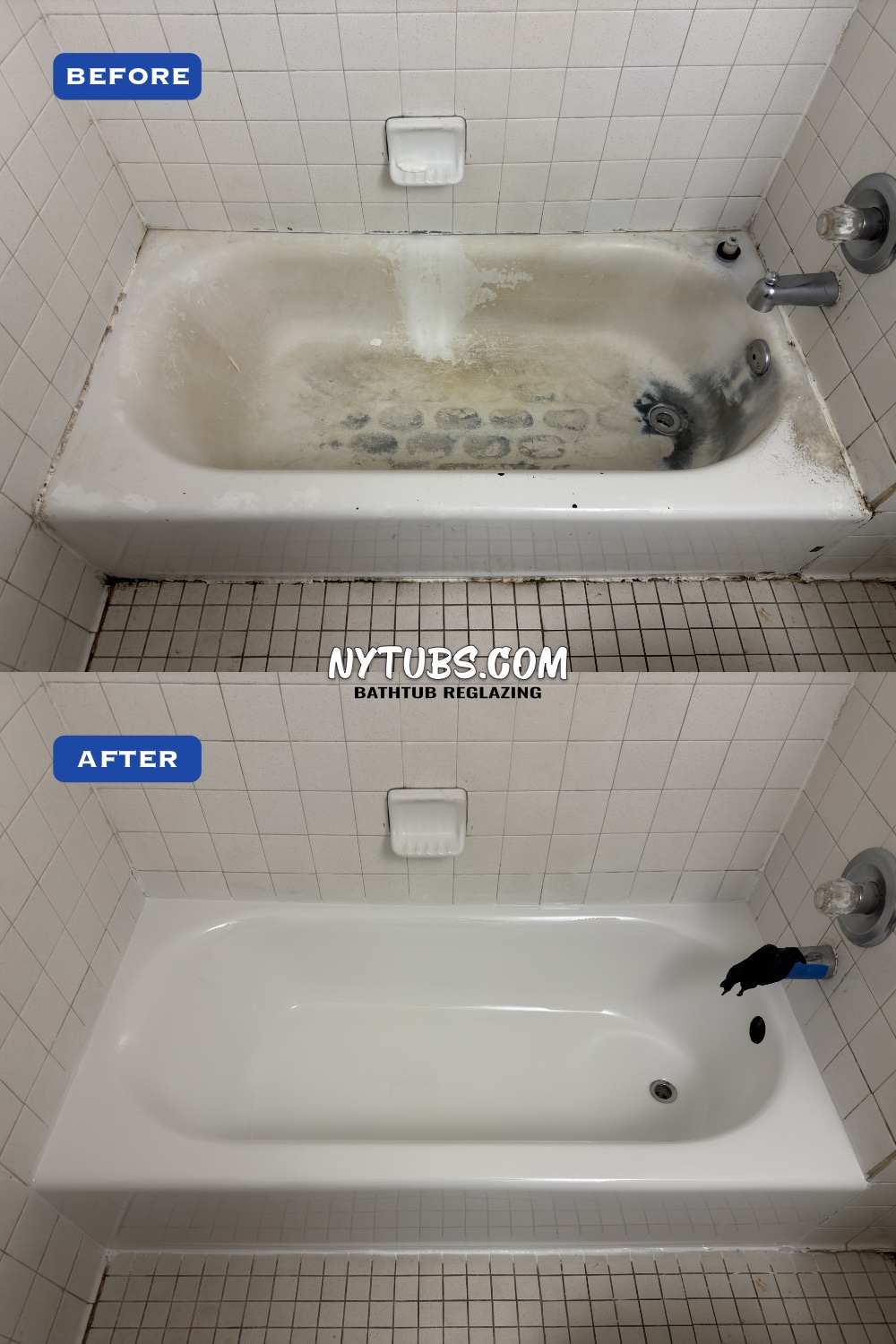
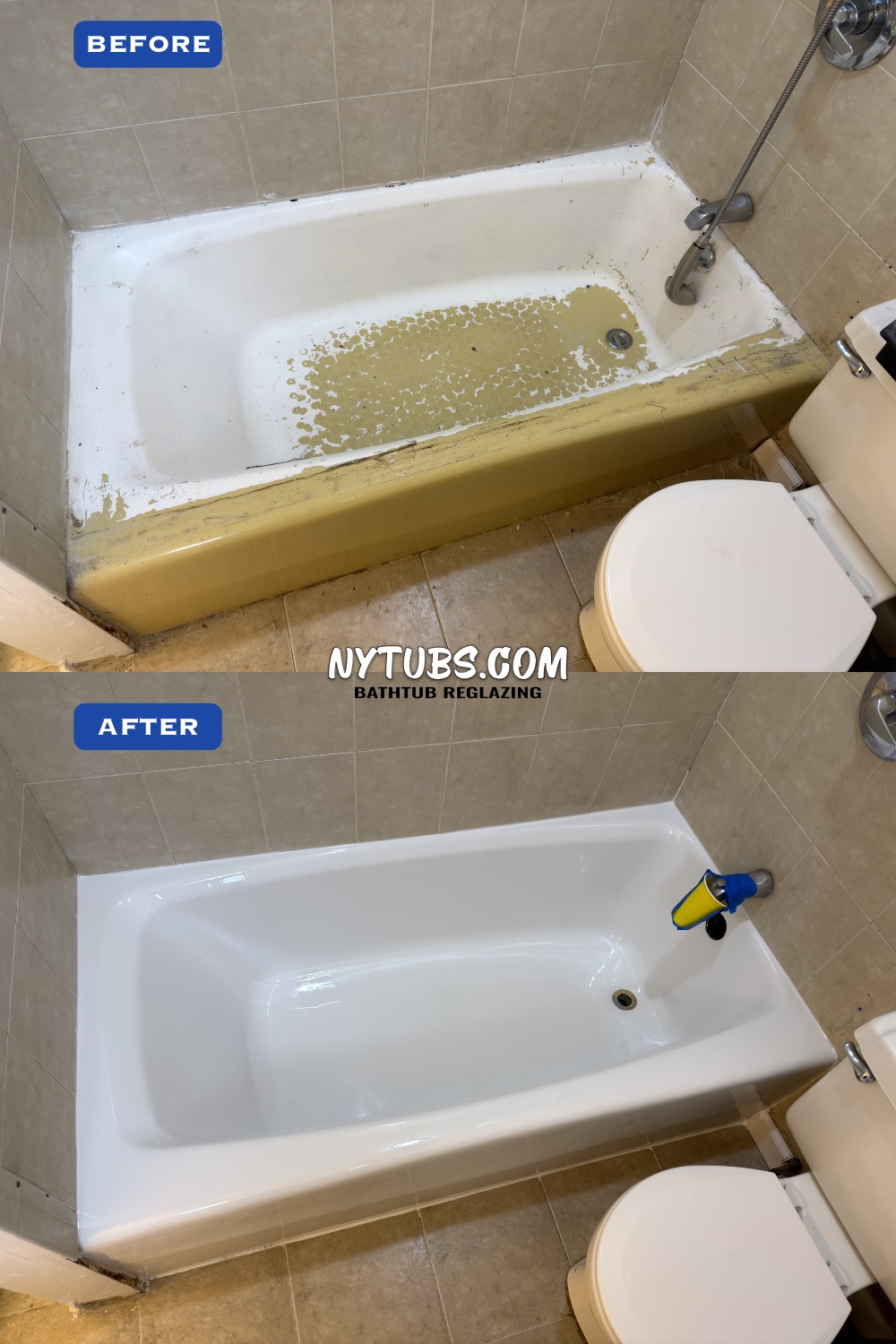
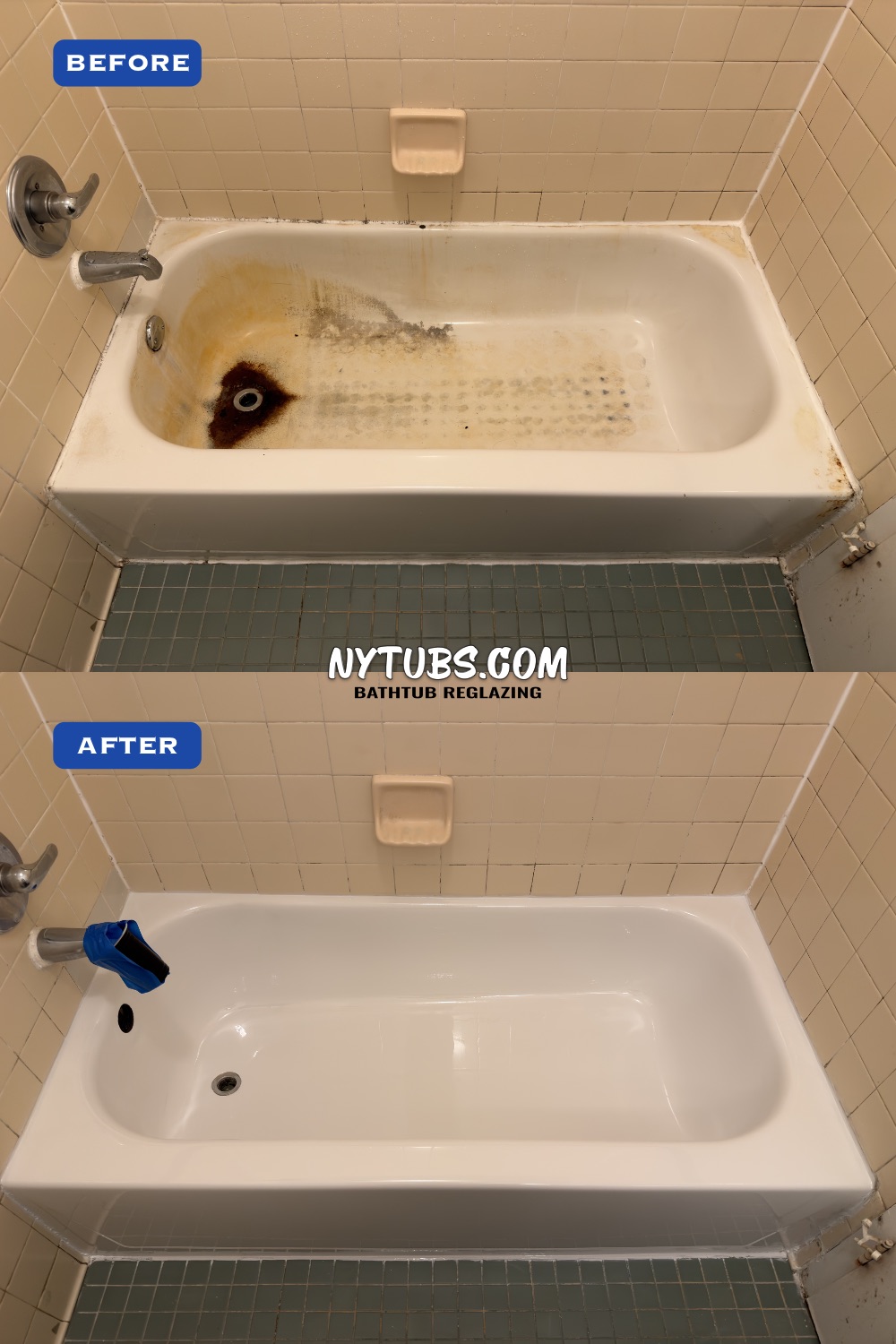
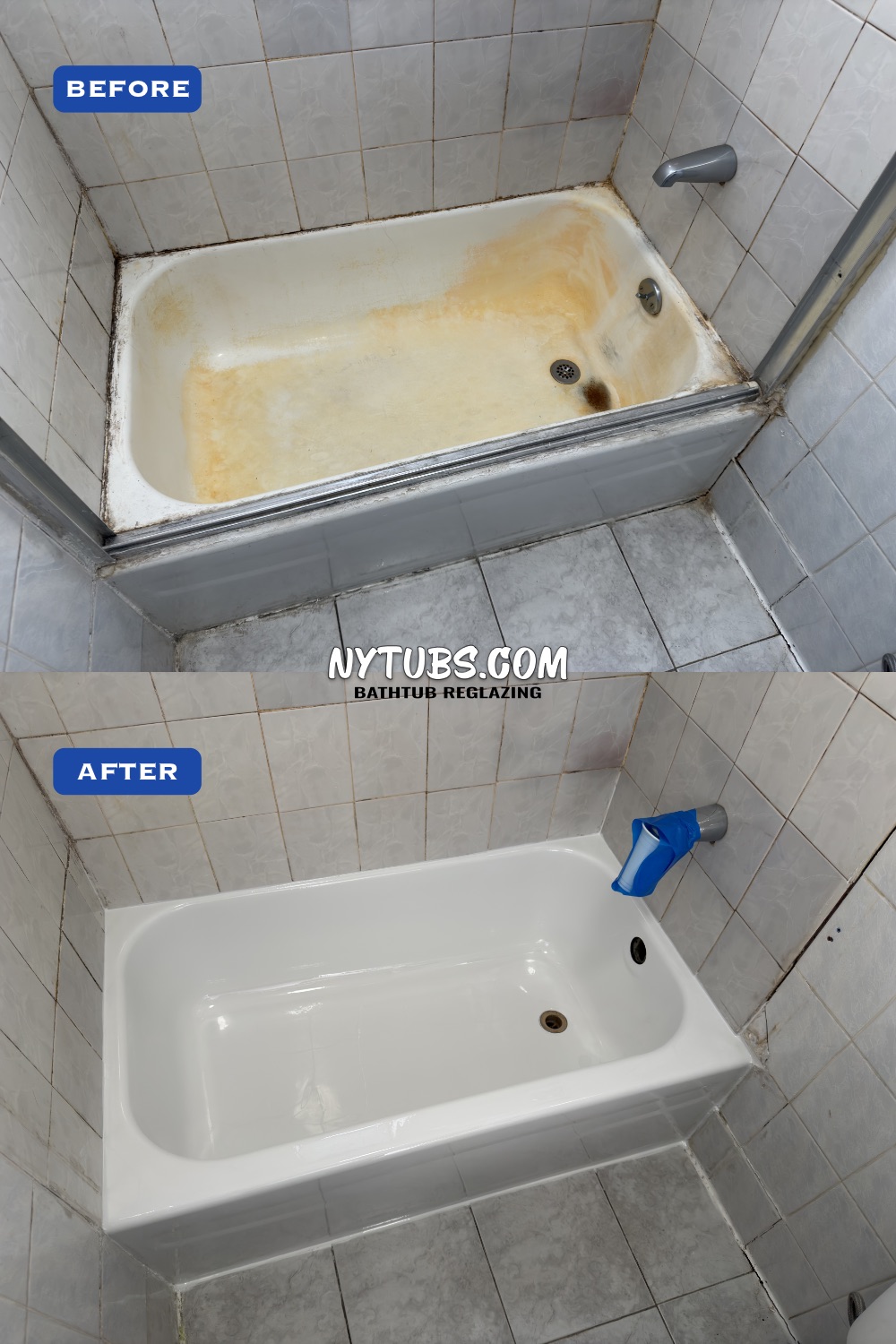
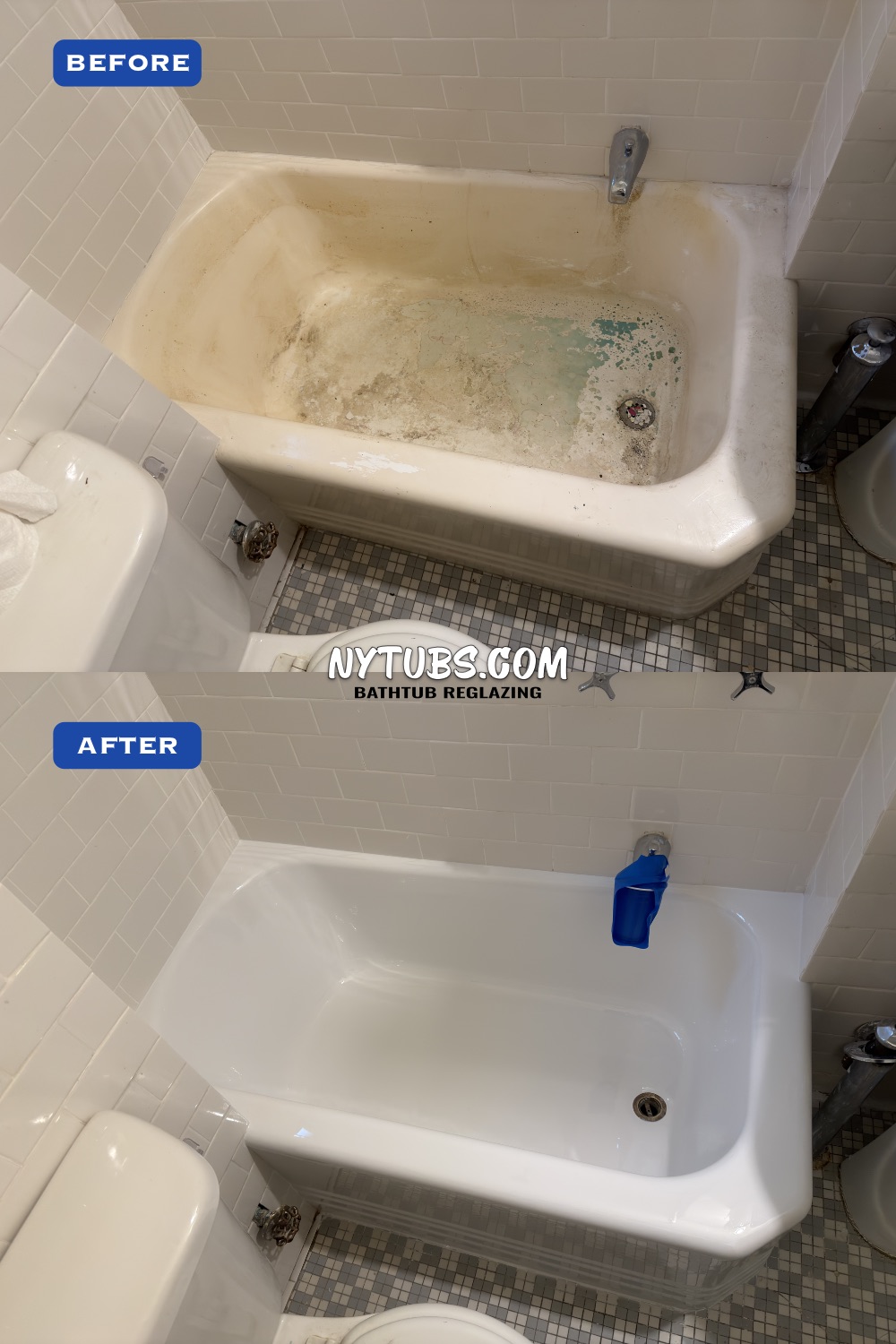
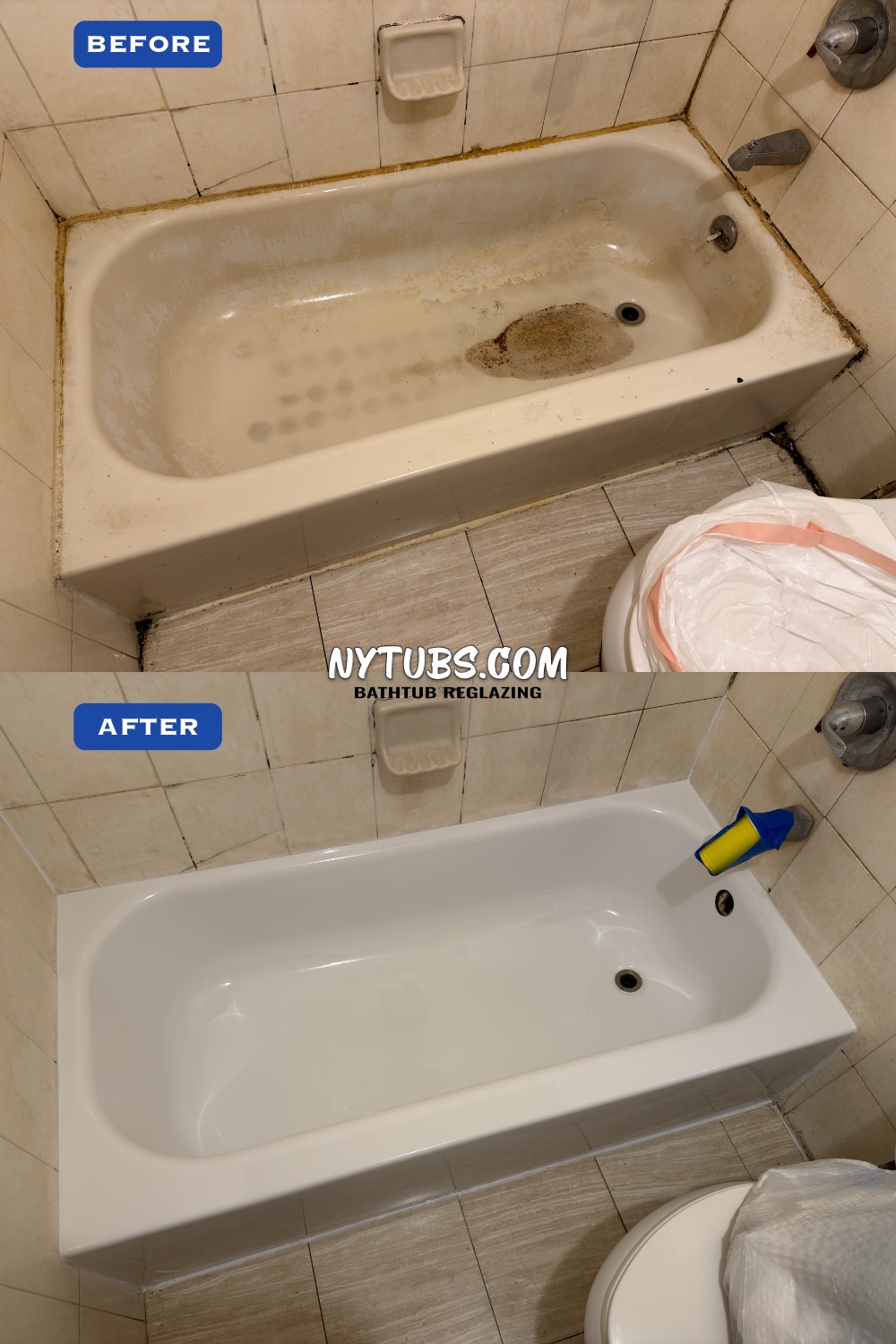
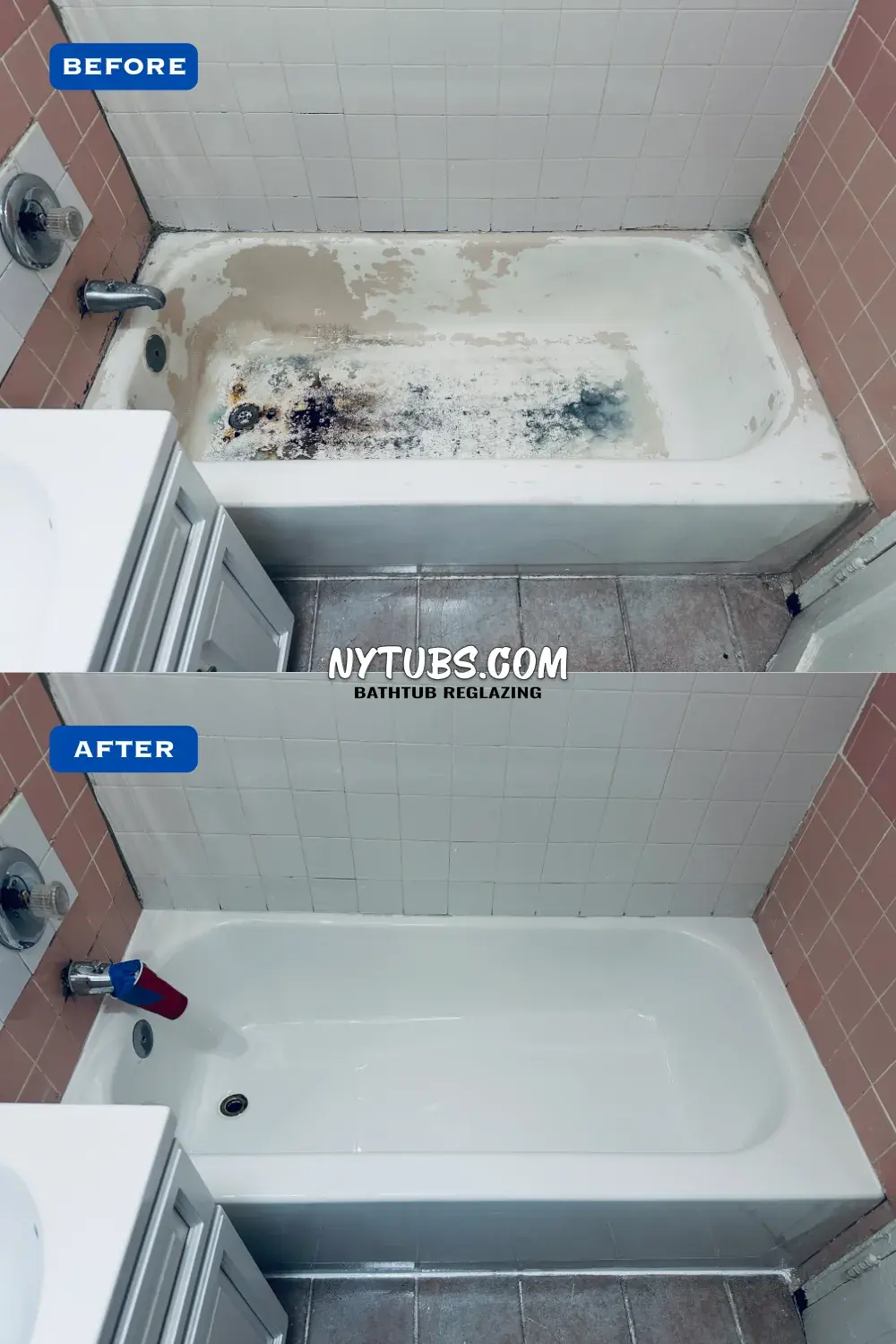
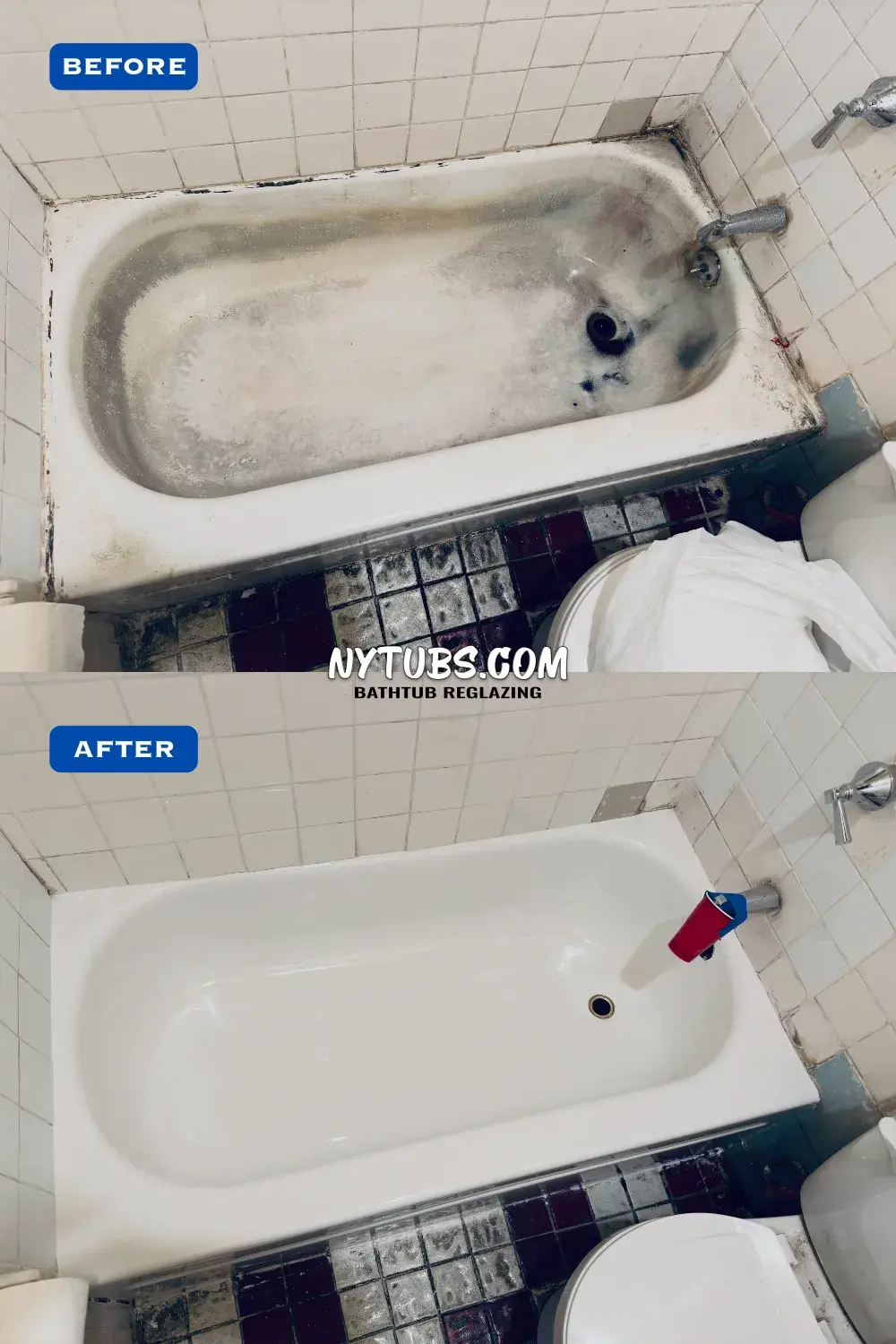
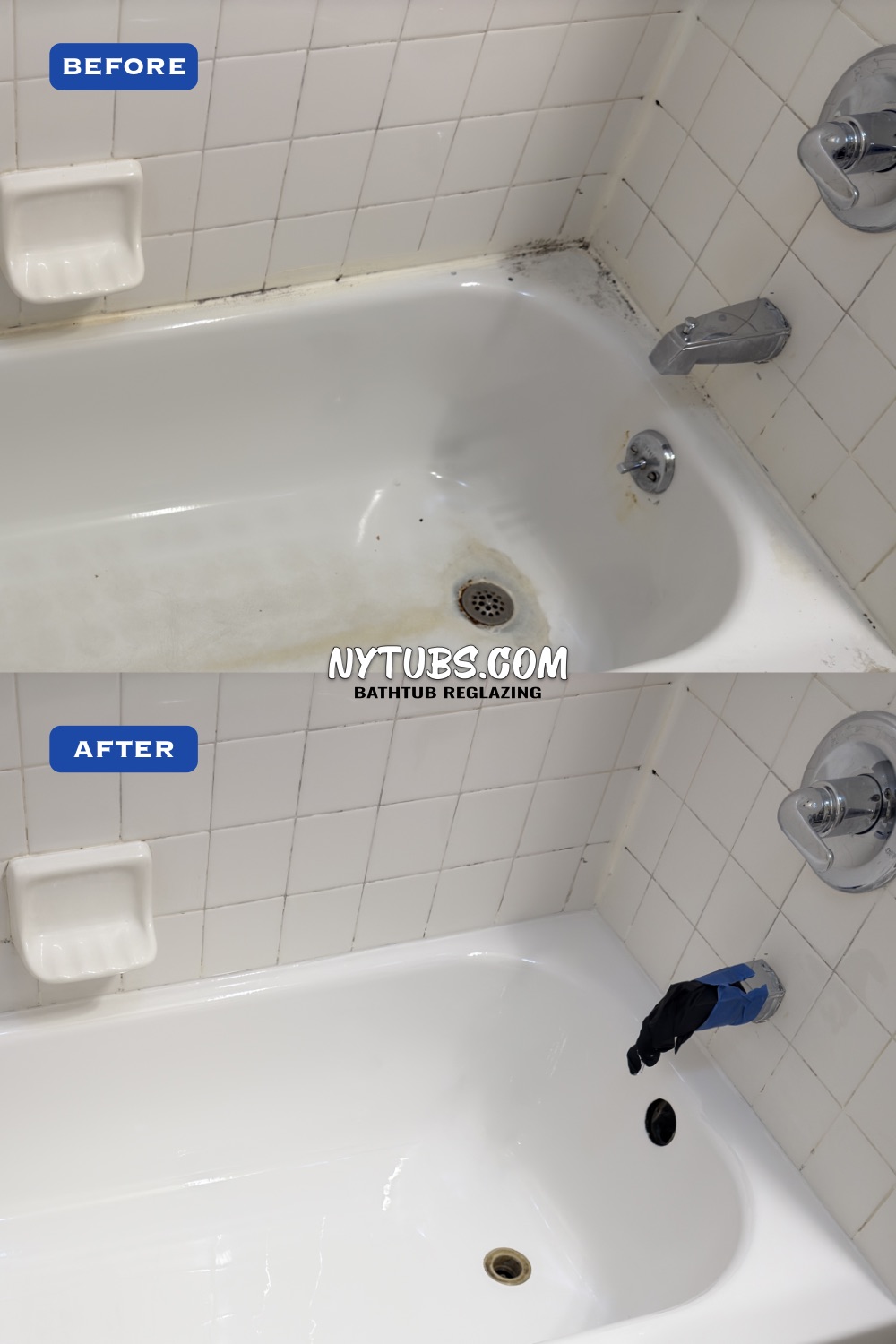
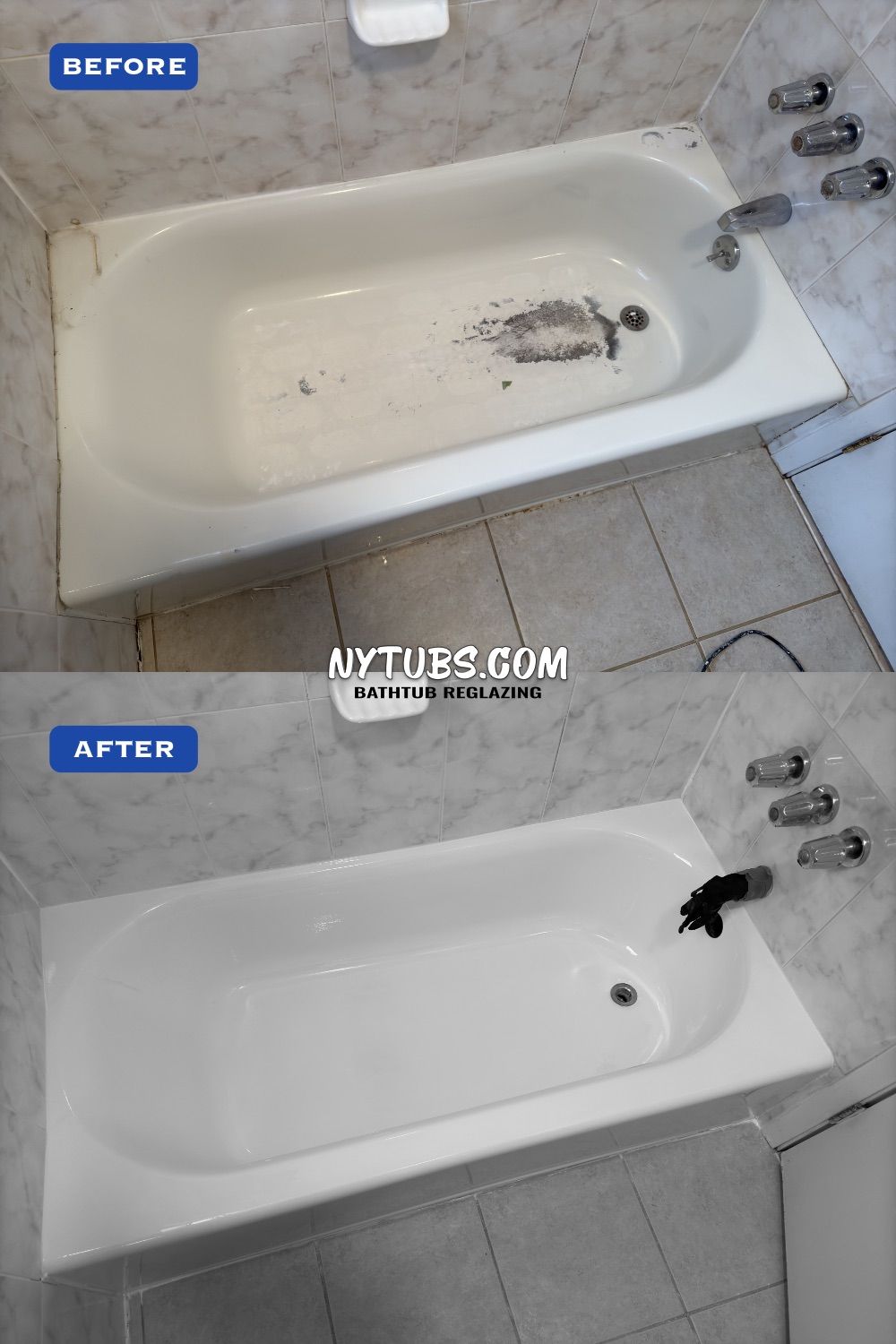
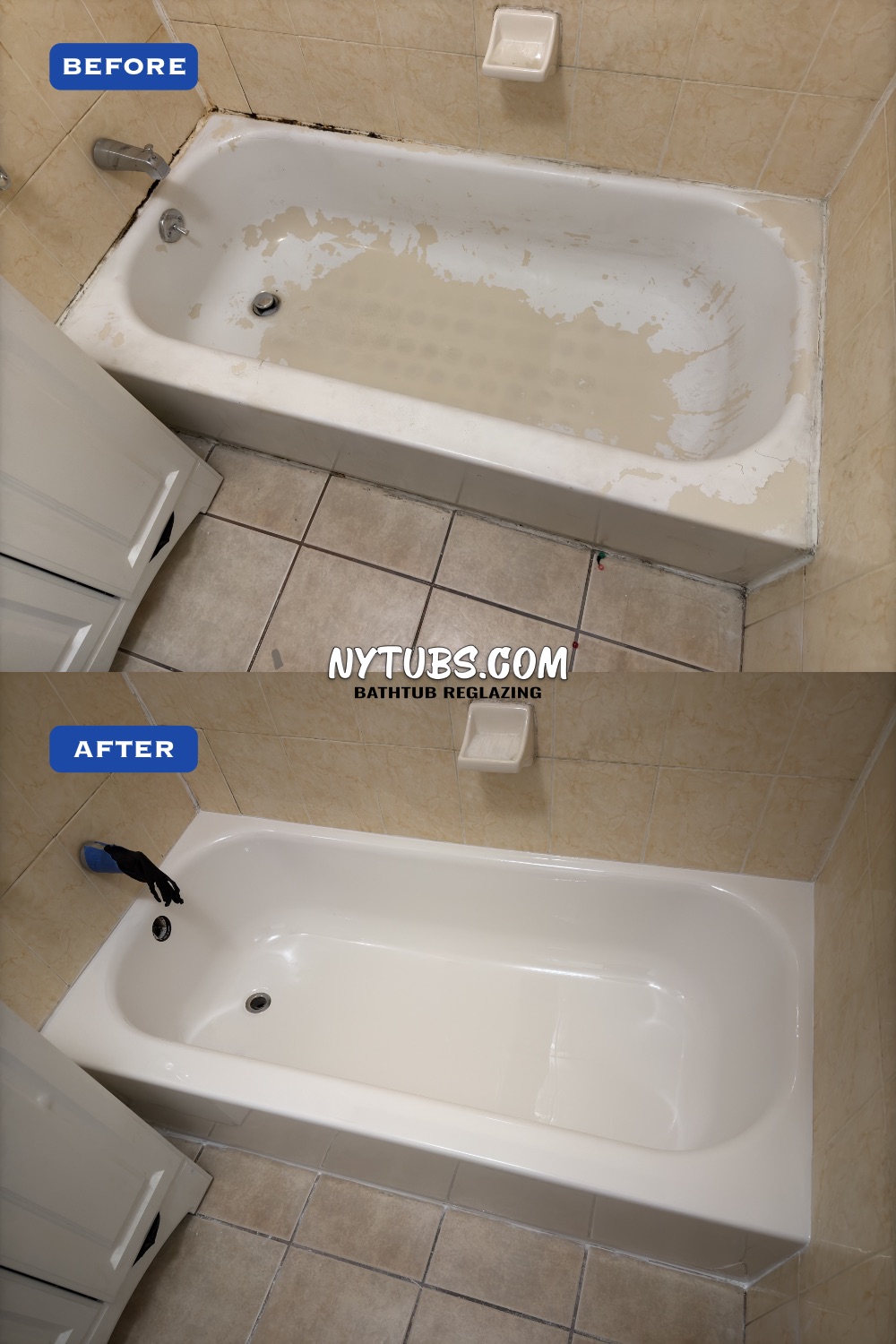
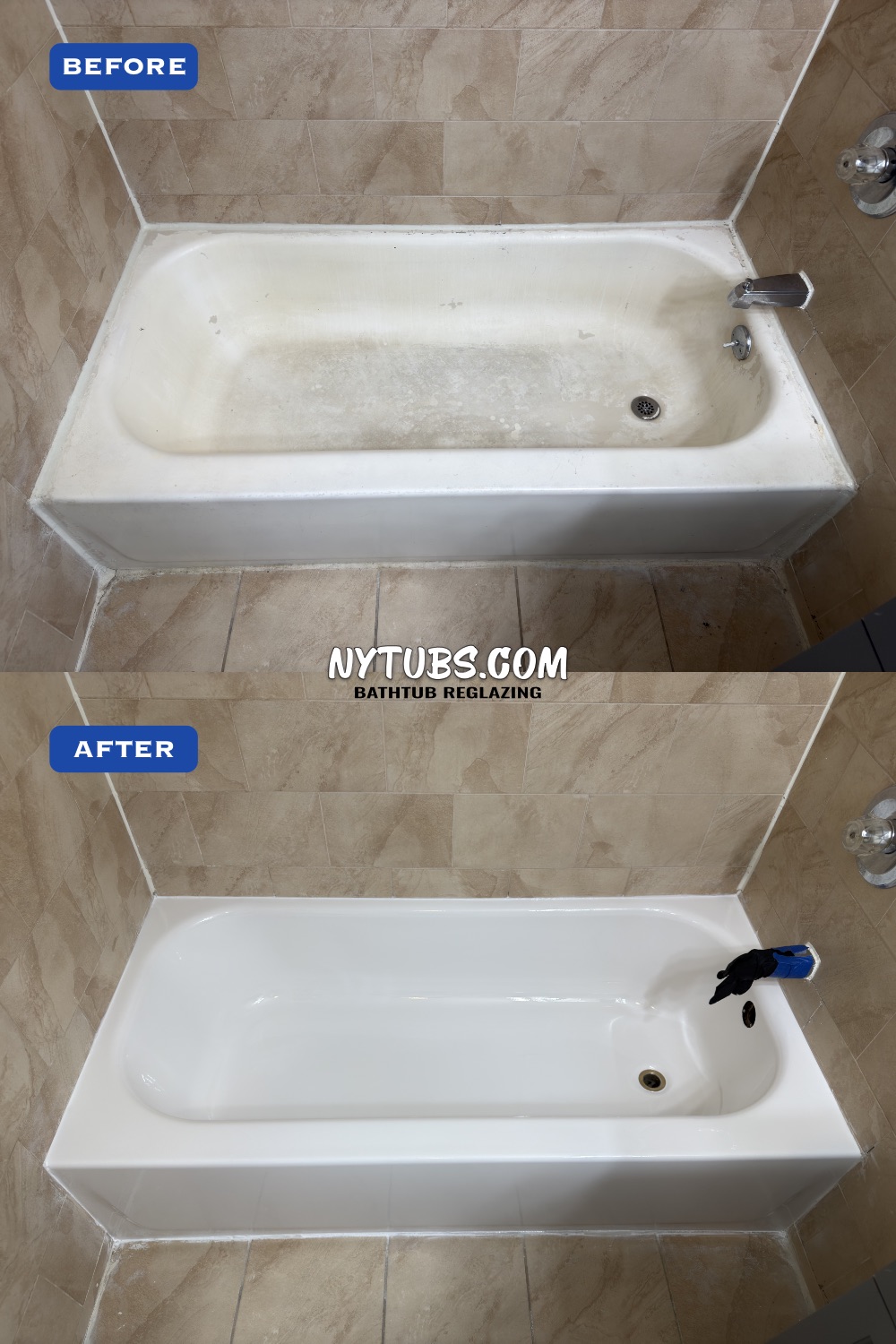
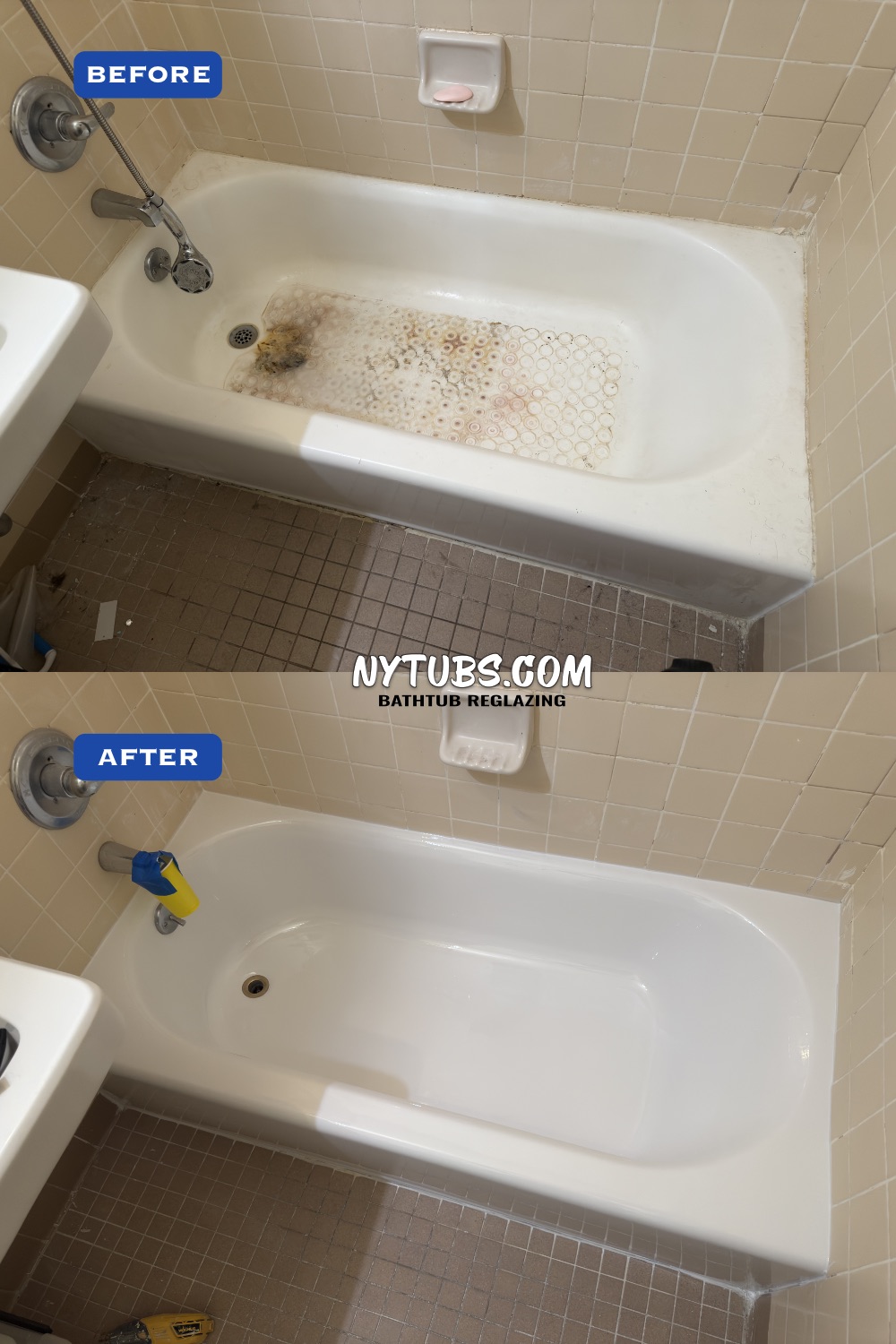
Most cast-iron bathtubs in NYC apartments were installed between 1900 and 1970, and most are still in use today. The iron body is essentially indestructible on the timescale of a building — what wears out is the porcelain enamel that gives the tub its smooth white surface. Refinishing restores that surface without touching the iron underneath.
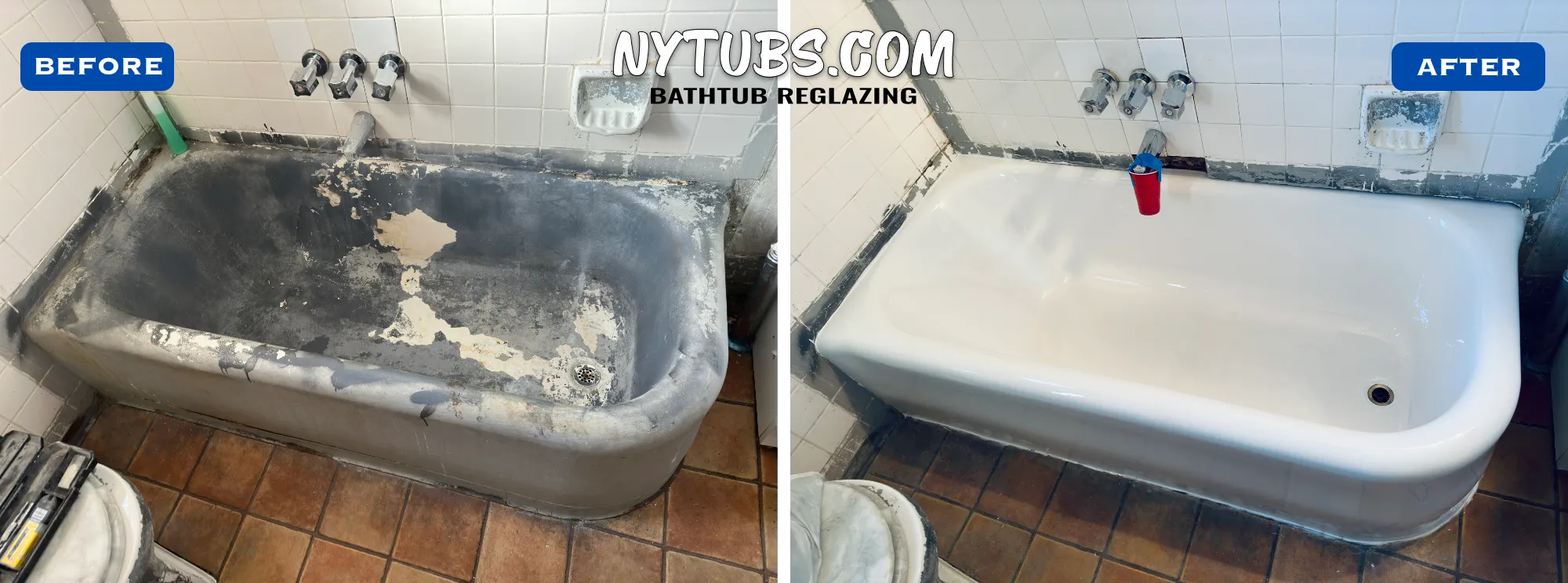
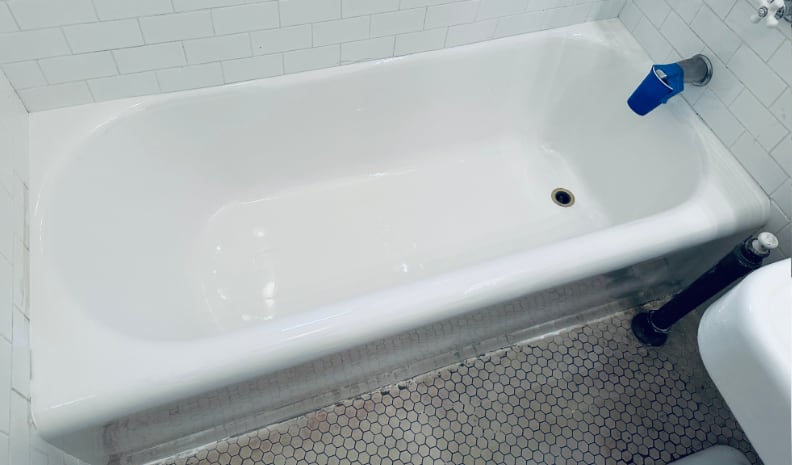 AFTER
AFTER
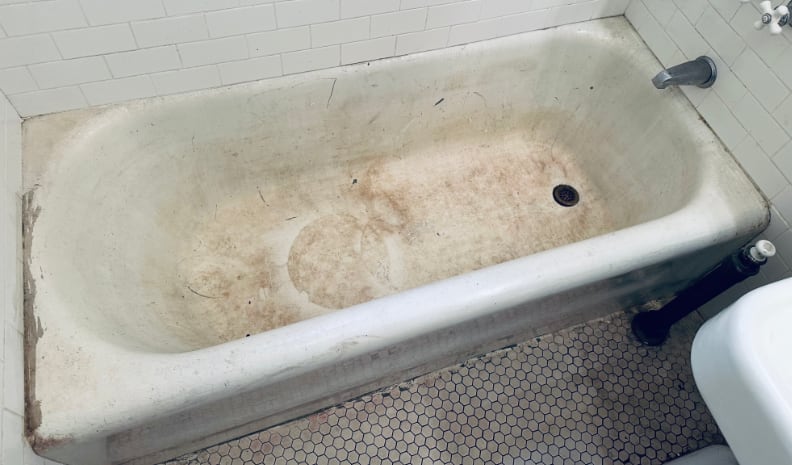 BEFORE
Replacing a cast-iron tub is rarely worth it once you understand the logistics. A standard 5-foot tub weighs 250–400 pounds, and the original installation was usually done before the bathroom walls and tile were finished — so the only way to remove it now is to cut it into pieces inside the bathroom. Refinishing takes one visit and preserves a fixture that, in most cases, will outlast the rest of the apartment.
Cast iron isn’t the only material bathtubs are made from, and people often aren’t sure what they have. These are the most common types in a NYC apartment.
Heaviest by far. Made until roughly the 1970s in standard residential. Tap the side — you’ll hear a dull, dense thud, not a hollow ring.

Most common in apartments built or renovated after 1960. Lighter than cast iron — you can usually lift one corner with one hand. Tapping gives a metallic ring.

The lightest. Has a slight flex if you push on the side, and feels warmer to the touch.
Not sure? A magnet sticks to both cast iron and porcelain-on-steel (both are iron-based), but only cast iron has the dense weight and dull sound. We can tell the moment we walk in — but you can check yourself by lifting one corner. If it doesn’t budge, it’s cast iron.
The cast iron body of a tub from 1925 is, almost without exception, still structurally sound today. What wears out is the porcelain enamel — the white surface fired onto the iron at the factory at very high temperatures. Original factory enamel was thinner than people think (typically 30–50 mils) and chips, cracks, or stains over decades of daily use.
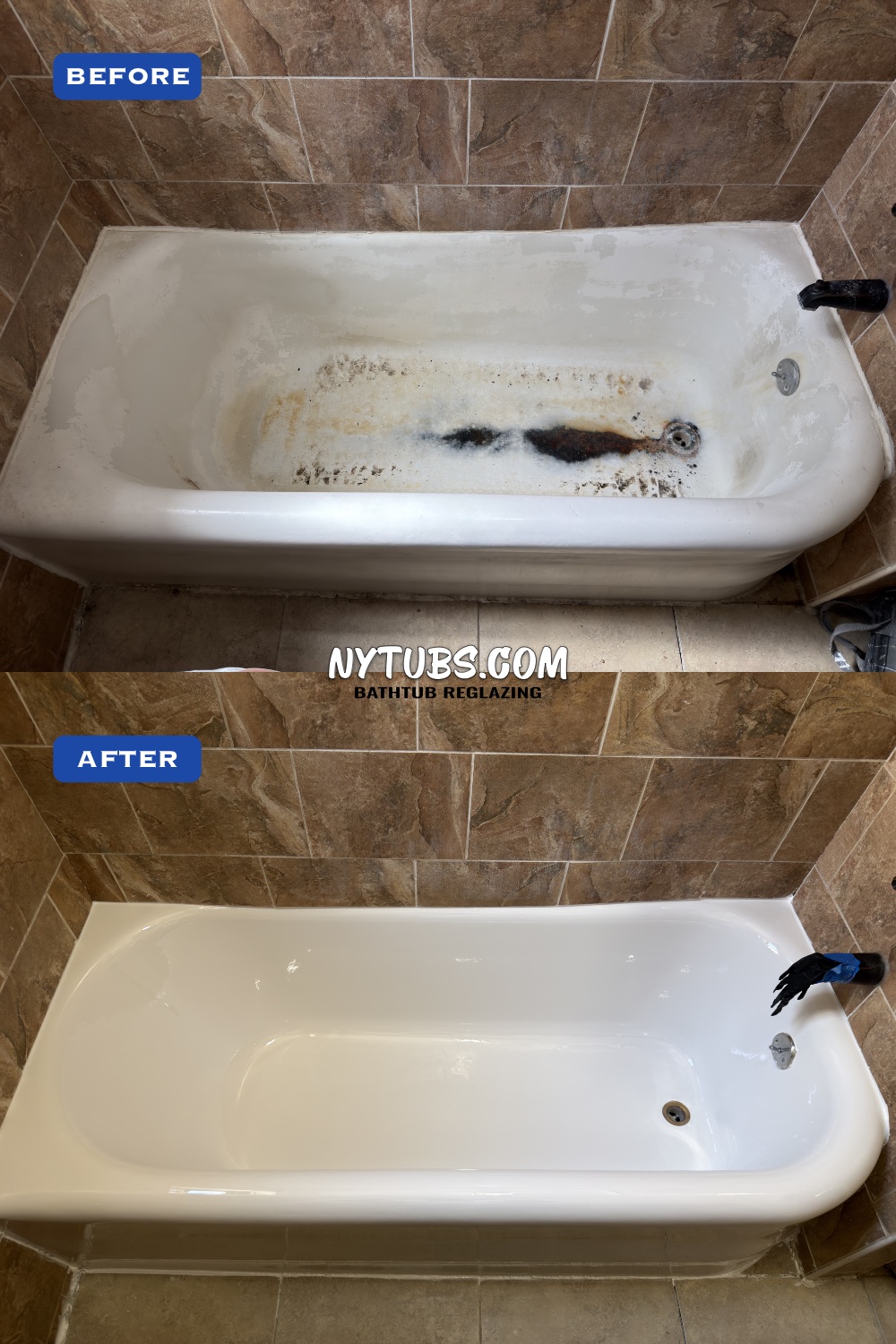
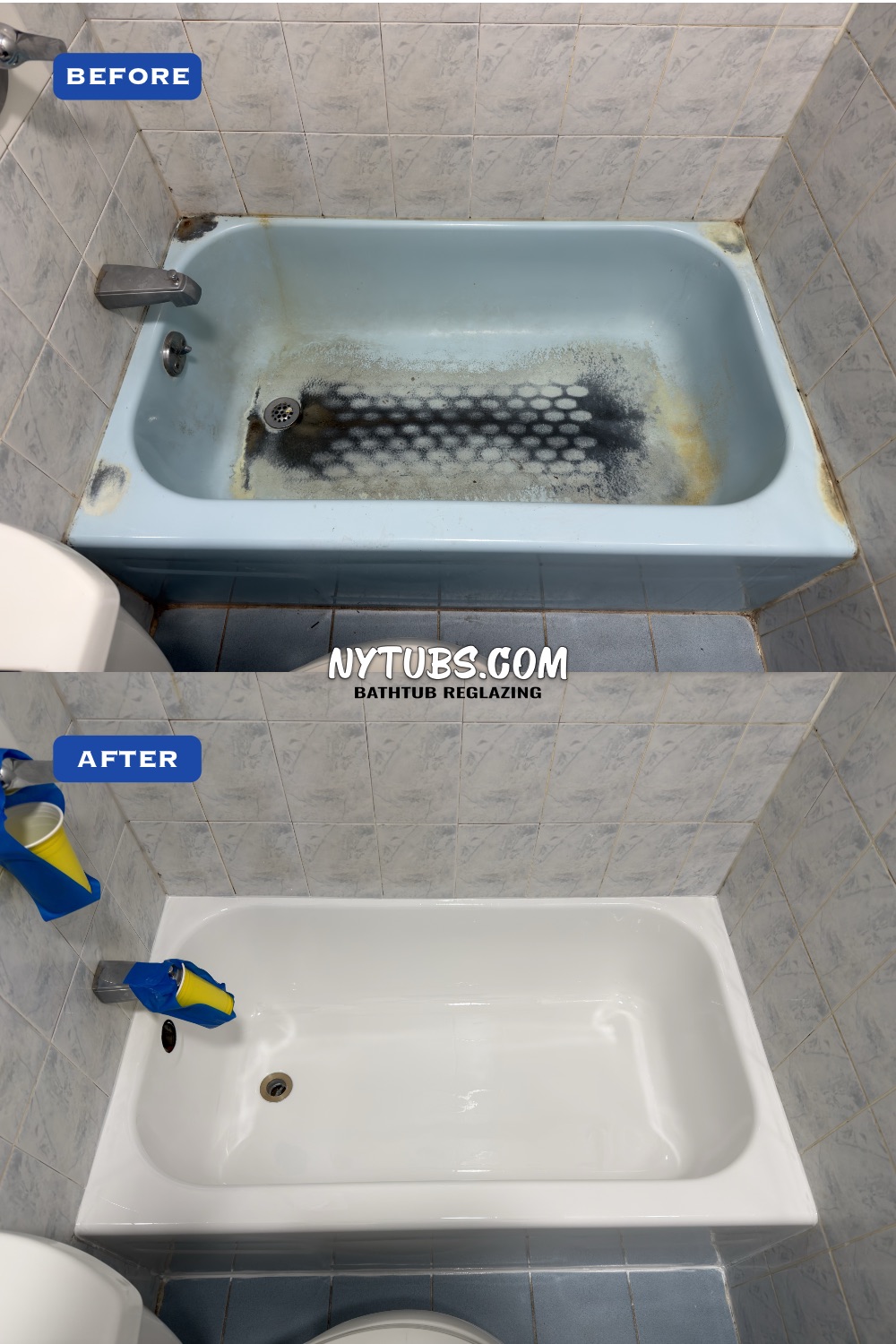
The most common failure point we see is around the drain, where dropped bottles and cleaning tools wear through the enamel over time. From there, water reaches the iron and rust begins to spread sideways under the surrounding enamel, lifting it.
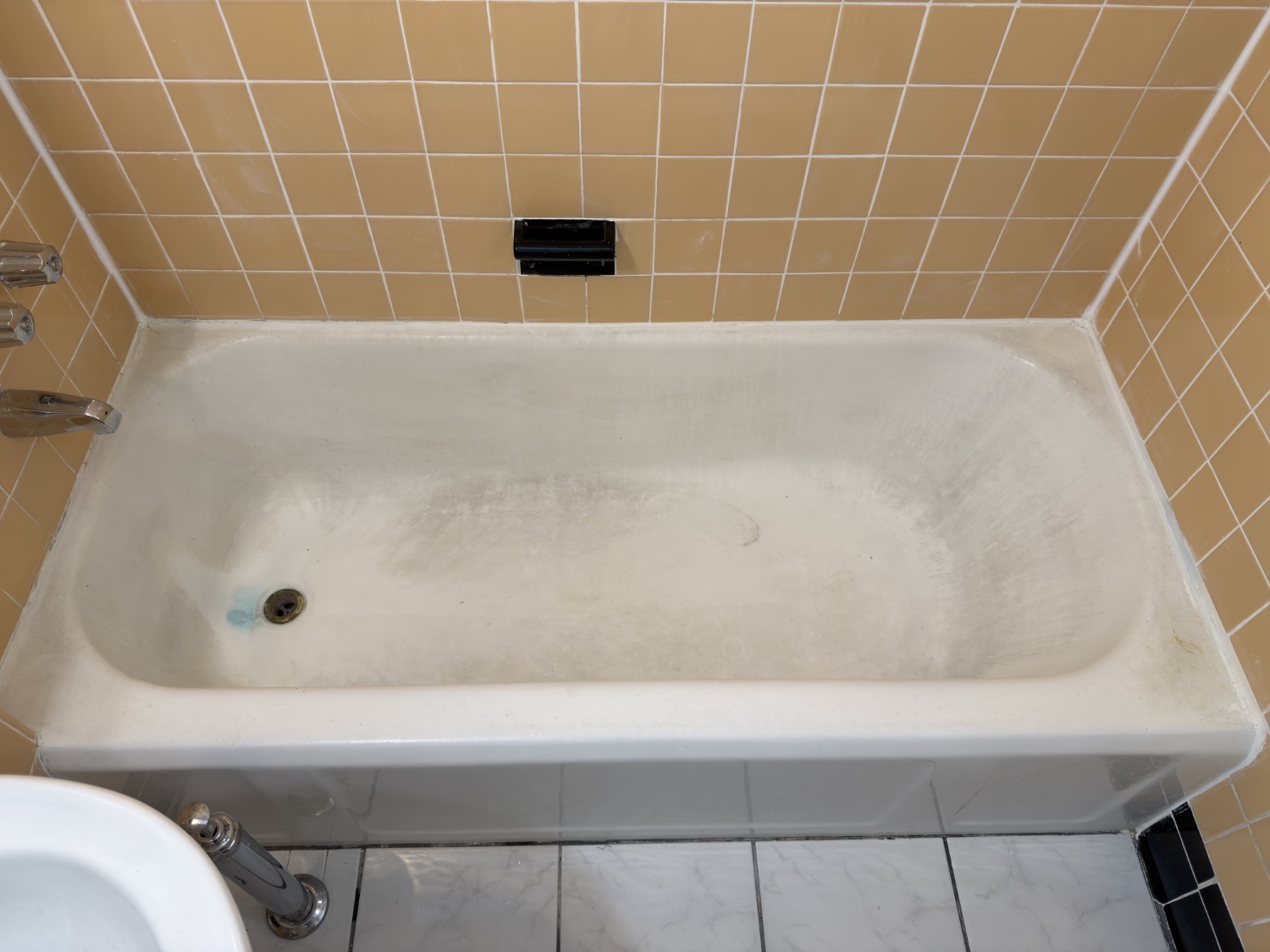
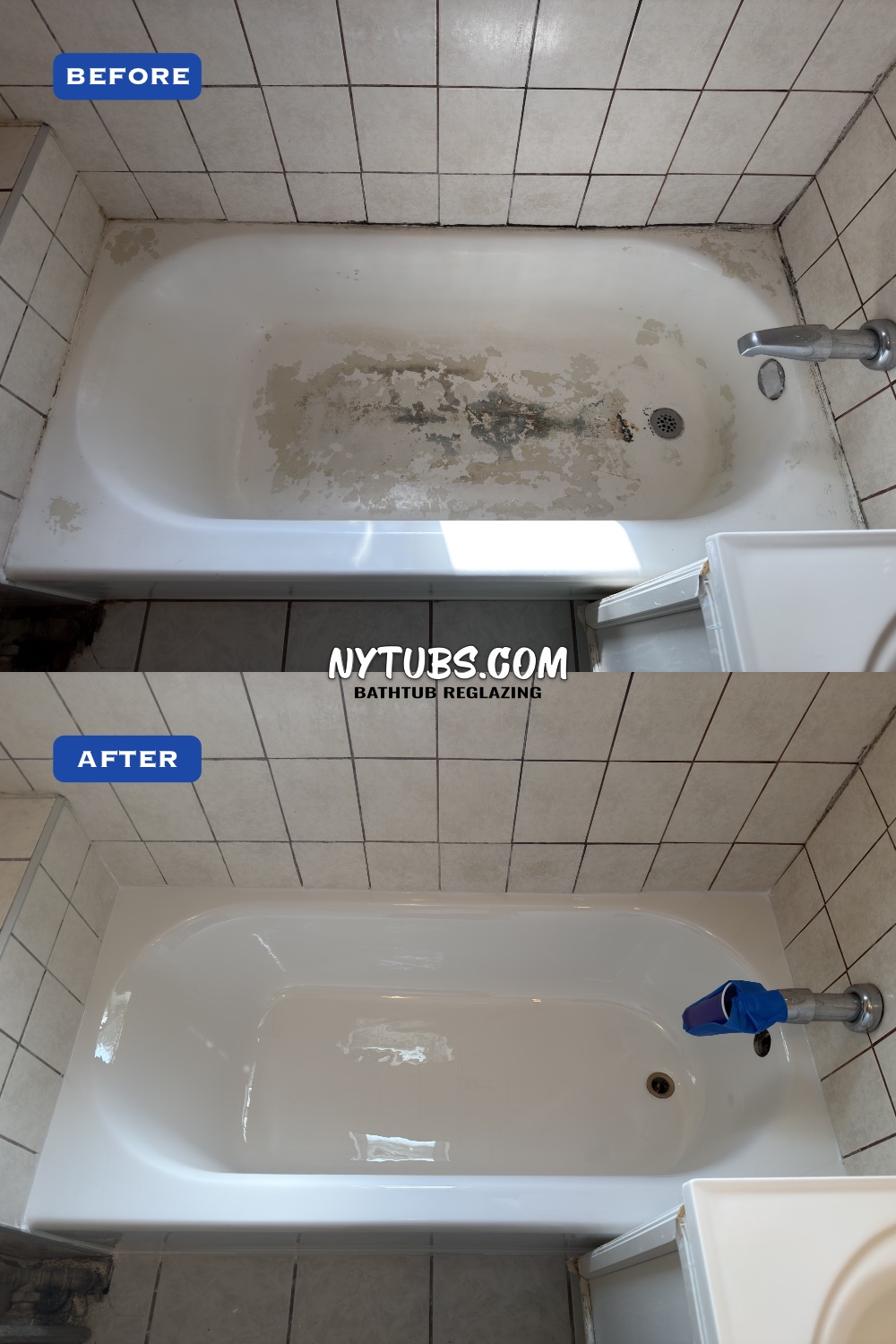
A cast iron tub in a NYC apartment has often been refinished at least once already — sometimes two or three times. The first thing we do on any job is figure out what’s on the surface: original enamel, a spray-on coating from ten years ago, or several layers stacked on each other. That decision shapes the rest of the work.
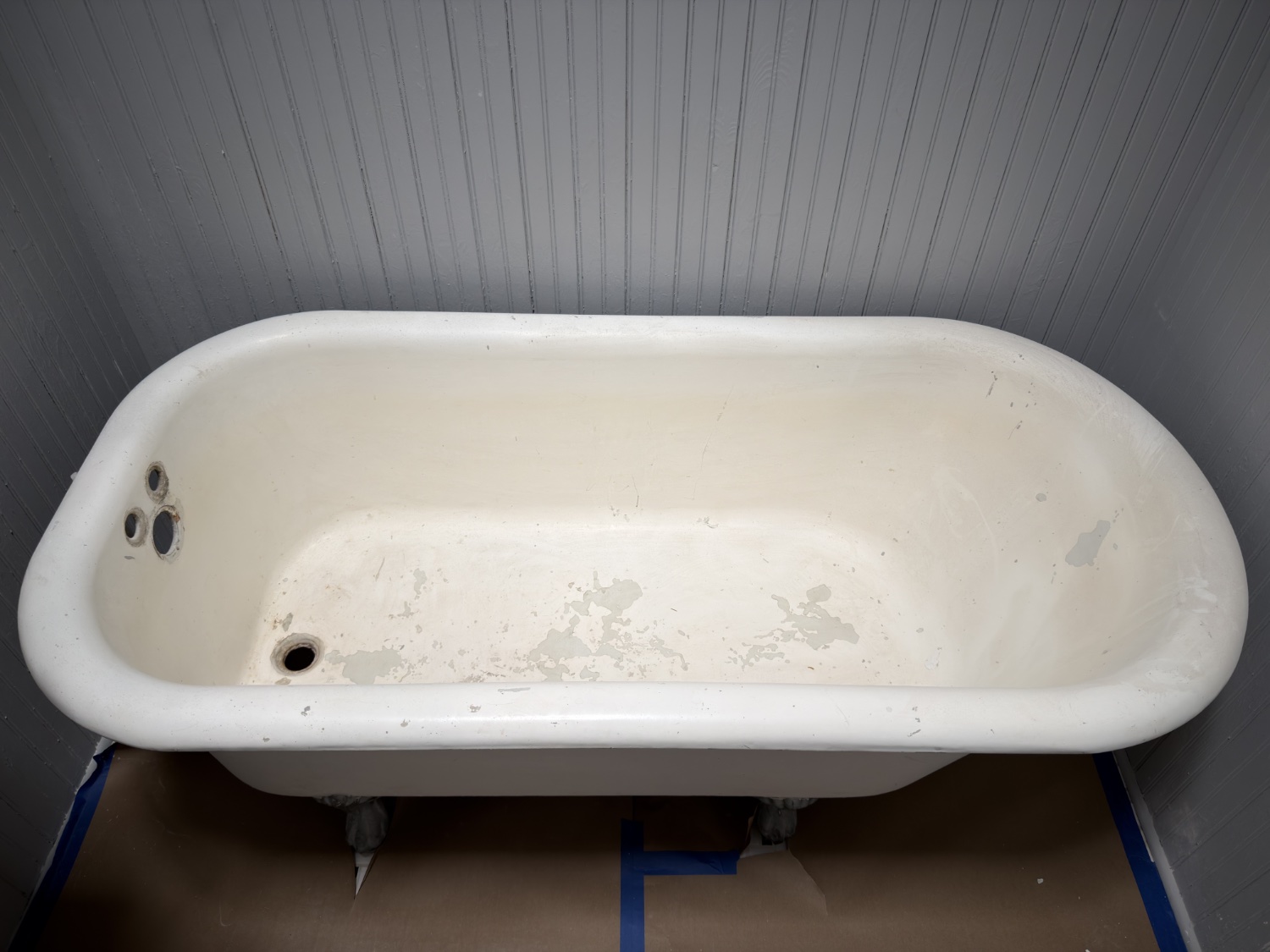
When previous coatings are failing — peeling, flaking, or lifting from underneath — we strip them to bare metal, neutralize any surface rust, and apply a fresh pour-on coat. A new coat bonds to clean, prepared metal far better than to a layer of failing material.
A new cast iron tub from a major manufacturer (Kohler, American Standard) runs $1,500–$3,000 before installation. Installing it in an existing apartment adds another $2,000–$5,000, largely because removing the old tub usually means cutting it apart inside the bathroom — these tubs were set in place before the tile and walls went up.
A full replacement usually takes a week or more and shuts down the bathroom the whole time. Refinishing takes one visit, costs a fraction of a replacement, and doesn’t touch the tile, plumbing, or walls.
The only time replacement is the right call is when the iron itself has rusted through from the back (rare, usually from a chronic leak underneath) or when the tub has a structural crack deeper than the enamel. We’ll tell you straight if that’s what’s going on — we don’t take work that’s going to fail.

When you book with New York Tubs, you aren't getting a random sub-contractor. You're getting a master refinisher with over a decade of experience.
For over a decade I've worked in tub refinishing, and I've personally refinished hundreds of tubs — every job done by me, start to finish. My reputation is built on durable, long-lasting results, a clean process with no solvent fumes, and full respect for your home.

 AFTER
AFTER
 BEFORE


| Criteria | Traditional Spray-On Method | OUR METHOD Pour-On Application |
|---|---|---|
| Typical lifespan | 1-3 years |  10-15 years 10-15 years |
| On-Site Work Time | ~5 hours | 3-4 hours |
| Coat thickness | 10 mils | 60–100 mils (up to 10× thicker) |
| Odor during work | Strong solvent smell, lingers | No solvent smell |
| VOC content | High | Low |
| Safe to stay home | No — residents usually vacate | Yes |
| Ready to Use | ~48 Hours | 24 hours |
| Long-Term Value | Spray-on has a lower up-front cost, but the coating usually needs to be redone every couple of years. | A pour-on coat lasts long enough that most clients replace or sell the tub before the finish needs to be redone. |
Depends on the size and how much surrounding enamel is compromised. A clean chip the size of a coin with sound enamel around it can be repaired in place — see our chip repair page. Multiple chips, spreading chips, or chips that have started to rust at the bottom usually mean it’s time for a full refinish, since the underlying issue (worn-out enamel) is going to keep producing new chips.
Usually yes. Surface rust comes from water reaching the iron through cracks in the enamel — but the rust is usually shallow and doesn’t compromise the structural metal. We sand back to bare iron, neutralize the rust, and apply a fresh coat. The only time this doesn’t work is when the iron itself has rusted all the way through (you’d see this as actual holes or visible deformation), which is very rare.
Starting at $435 for a standard 5-foot built-in tub. Manhattan, Queens, the Bronx, and Staten Island jobs include a travel fee of $25–$60. Brooklyn jobs are at the standard rate. Full pricing details on our pricing page.
Different durability profiles. Factory enamel is harder but more brittle — it’s why drops chip it. A pour-on coat is softer but more flexible, so it absorbs impact better. In practical terms, a properly applied pour-on coating lasts 10–15 years before showing wear, which is comparable to how long original enamel typically goes without major damage. We back it with a 5-year warranty.
Three to four hours on site. The coating then needs 24 hours to cure before the tub can be used.
Yes, this is common. We see two scenarios. (1) The previous coat is still bonded but worn — we can prep over it and apply a new coat. (2) The previous coat is peeling or lifting — we strip it down to bare metal first, then apply the new coat. Both scenarios are routine work for us.
People do try. The materials are available online, and the process looks straightforward on YouTube. In practice it almost always goes wrong — we get called to strip and redo failed DIY jobs more often than to refinish a tub that’s never been touched.
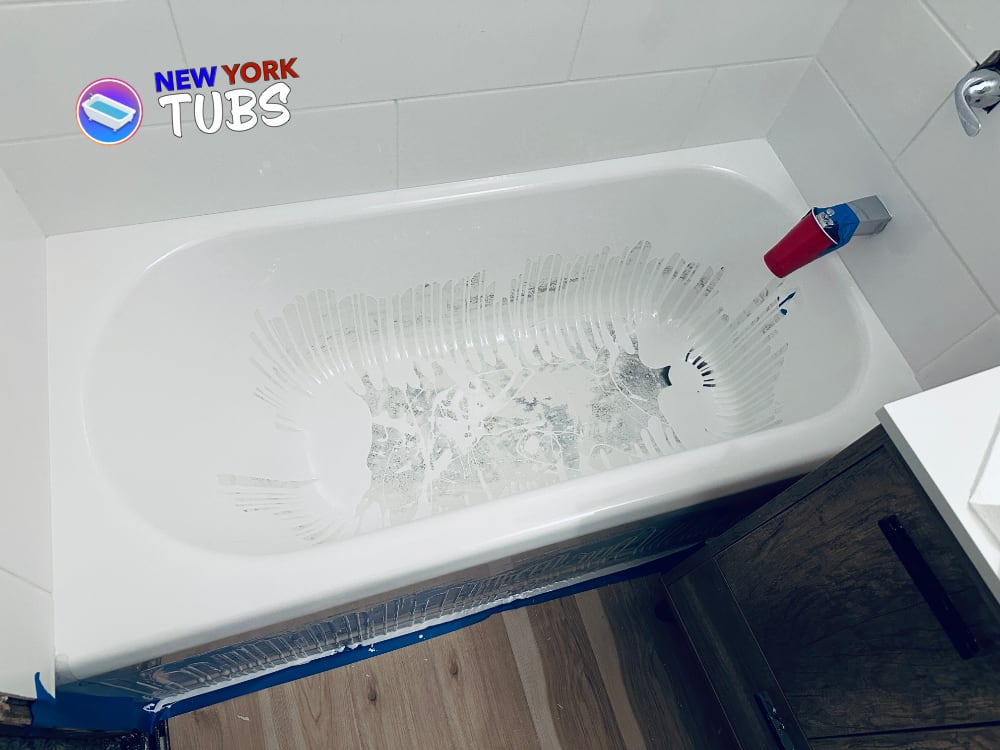
If you’ve never done it before, the realistic outcome is a tub that looks OK for a few months and then visibly fails — at which point you’ll need a professional to strip it before any second attempt. The professional cost ends up being the same or higher than just doing it right the first time.
One method — pour-on, self-leveling coating — applied to the tubs New York apartments actually have.