
Clawfoot Tub Refinishing
Replacing a clawfoot is a major project. They weigh 200 to 400 pounds, often need to be cut into pieces to remove from a finished bathroom, and a comparable new tub from a quality maker costs $2,000–$5,000 before installation. Refinishing typically runs around 10% of that, takes one visit, and preserves the original tub.
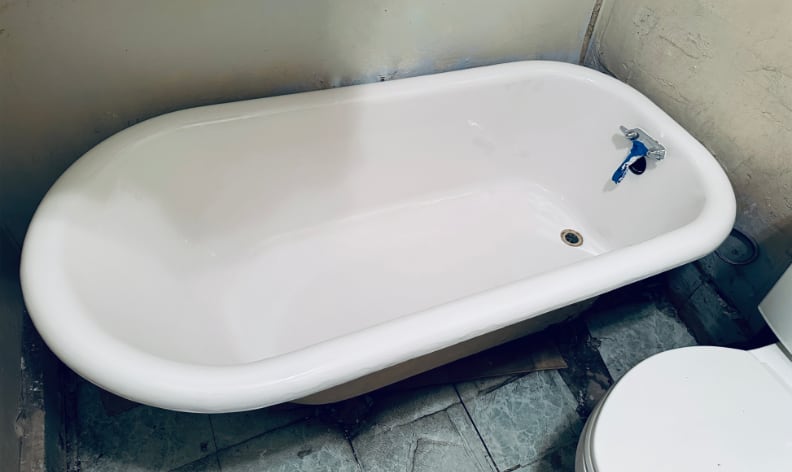 AFTER
AFTER
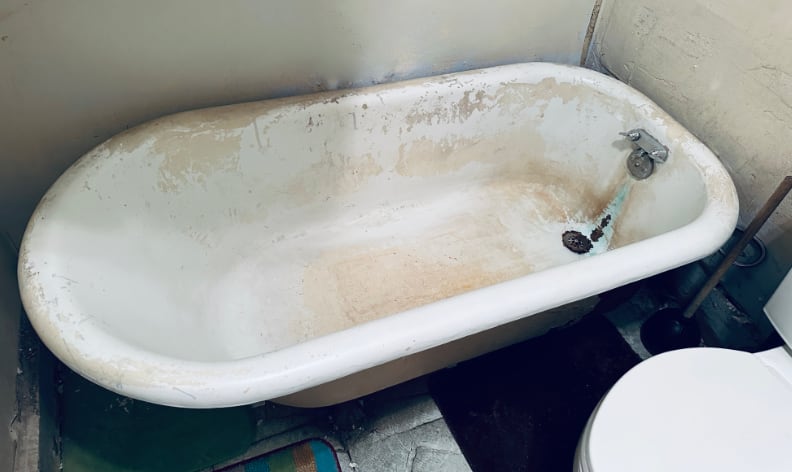 BEFORE
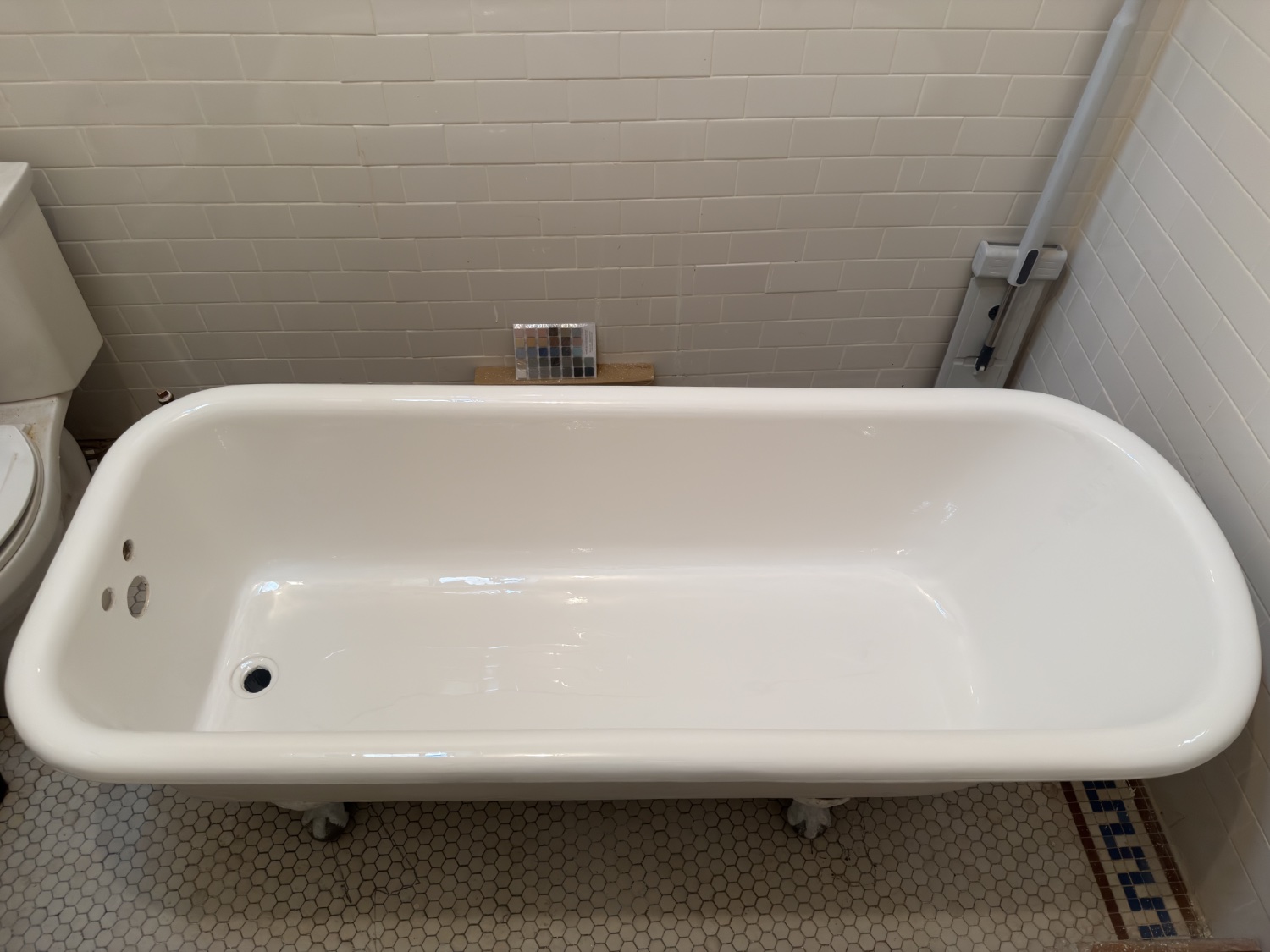
We refinish the interior — the bathing surface
The pour-on method works on the bathing surface — the interior of the tub. That’s what gets daily use, and that’s where the wear happens: yellowing, chips around the drain, scratches, sometimes a previous refinishing that’s starting to peel.
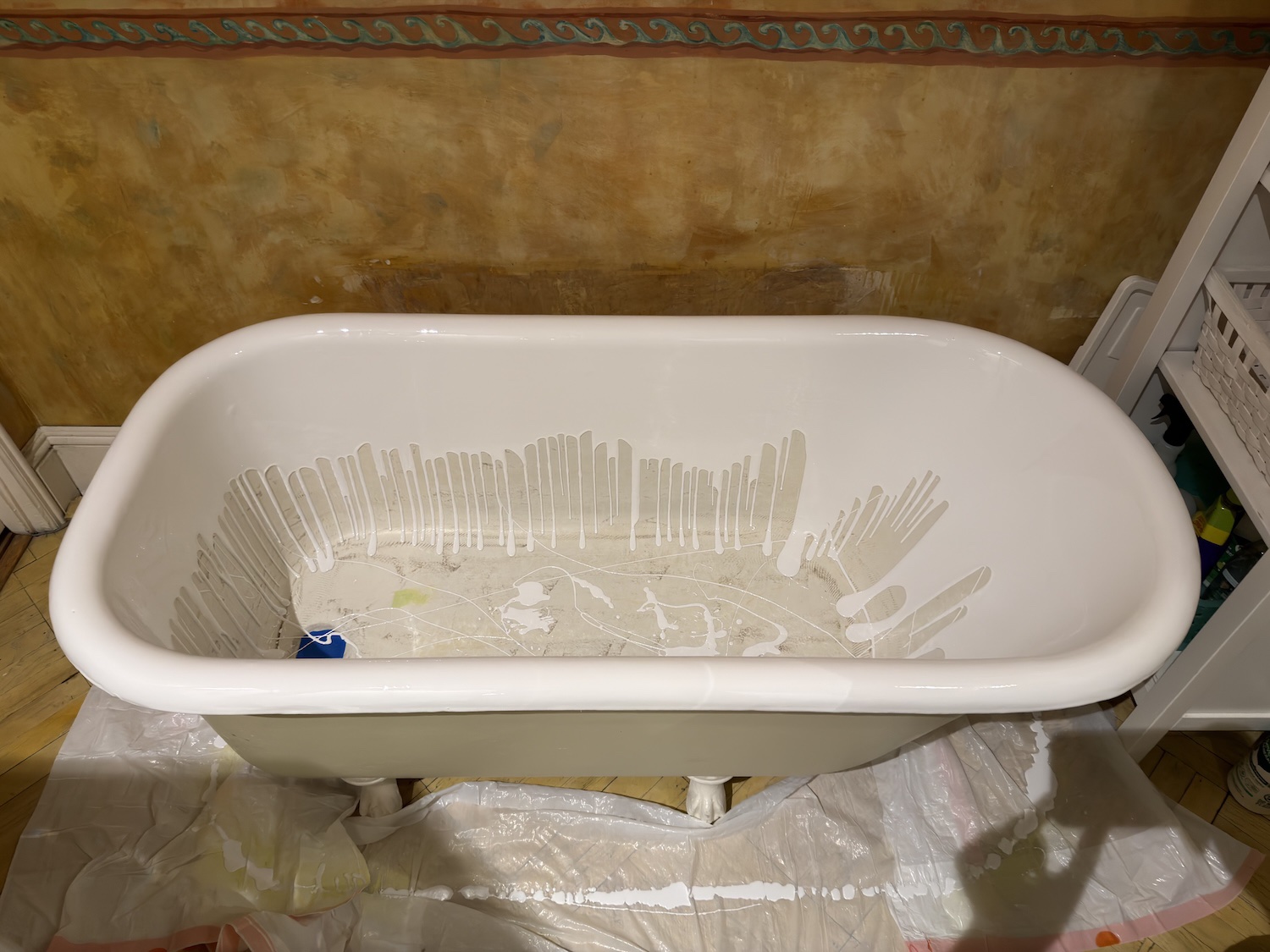
The exterior — a painter’s job
We don’t refinish the exterior. The outside of a clawfoot tub was originally painted enamel, and after a hundred years it usually shows wear — but it requires a different process (sanding, priming, repainting with a different material system). For that, a regular painter is the right choice. Most clawfoot owners get the exterior repainted once every 5–10 years if they care about its appearance.
The ornate feet — usually left as-is
We don’t refinish the ornate feet either — for the same reason as the exterior, they need a different paint system than the pour-on coating we use on the interior. Most clients leave them as-is; the patina on old metal feet is often part of the tub’s character. If the feet are in rough shape and you want them touched up, a painter or restoration specialist can handle them separately.
Most clawfoots have been refinished before
A clawfoot tub in a NYC apartment has almost always been refinished at least once already. After 100+ years of use, the original enamel is long gone.
We identify every layer first. When we start prep on a clawfoot, the first thing we do is figure out what’s on the surface — original enamel, one previous refinishing, three previous refinishings? Each layer has to be either bonded to or stripped, and that decision shapes the rest of the job.
We strip failing coatings to bare metal. In most clawfoot projects we take on, the tub has been refinished at least once — sometimes two or three times. When previous coatings start to peel, we strip them down to the bare metal before applying the new finish. This is one of the reasons clawfoot jobs usually take longer than standard built-in tubs.
A thicker pour-on coat holds up. It’s one of the reasons the pour-on method works better than spray-on for these tubs — a thicker coat over a properly prepared surface holds up where thinner coats have repeatedly failed.
Clawfoot shapes we see in NYC
Clawfoot tubs come in several shapes. The most common ones we see:
Roll-top (or “double-ended”). Symmetric profile, gentle curve on both ends. About 60% of what we see.
Slipper. One end is higher and sloped — designed for reclining. Beautiful but takes more material to refinish because of the extra surface area.
Double-slipper. Both ends are raised. The most elaborate style and the rarest — usually in restored brownstones and high-end Brooklyn lofts.
Pedestal-base. Technically not a clawfoot (no feet) but often grouped with them — round or oval freestanding tub on a solid base.

Hi, I'm Artem.
When you book with New York Tubs, you aren't getting a random sub-contractor. You're getting a master refinisher with over a decade of experience.
For over a decade I've worked in tub refinishing, and I've personally refinished hundreds of tubs — every job done by me, start to finish. My reputation is built on durable, long-lasting results, a clean process with no solvent fumes, and full respect for your home.
- 10+ Years of Professional Experience
- Fully Licensed & Insured
- Backed by a 5-Year Warranty

 AFTER
AFTER
 BEFORE
Bathtub Reglazing
- Pour-On Method — 10× thicker
- 5-year written warranty
- Ready in 24 hours
- Cast iron & steel only
- Odorless
Additional Services


Why the Pour-On Method Wins — Every Time
| Criteria | Traditional Spray-On Method | OUR METHOD Pour-On Application |
|---|---|---|
| Typical lifespan | 1-3 years |  10-15 years 10-15 years |
| On-Site Work Time | ~5 hours | 3-4 hours |
| Coat thickness | 10 mils | 60–100 mils (up to 10× thicker) |
| Odor during work | Strong solvent smell, lingers | No solvent smell |
| VOC content | High | Low |
| Safe to stay home | No — residents usually vacate | Yes |
| Ready to Use | ~48 Hours | 24 hours |
| Long-Term Value | Spray-on has a lower up-front cost, but the coating usually needs to be redone every couple of years. | A pour-on coat lasts long enough that most clients replace or sell the tub before the finish needs to be redone. |
Frequently asked questions
Can my 100-year-old clawfoot tub really be saved?
 In most cases, yes. The body of a clawfoot from 1900 is usually structurally sound a hundred years later — these tubs were built like furniture, with the bathing surface protected by enamel. What wears out is the enamel surface, which is what we restore.
The only time refinishing won’t work is if the underlying metal has rusted through (rare, but it happens with tubs that sat in damp basements for decades) or if there are cracks deeper than the enamel layer.
My clawfoot has been refinished before and it's peeling. Can it be done again?
 Yes. We see this often. We strip the failing layer down to the bare metal, neutralize any surface rust, and apply a fresh coat. The result holds up better than the previous attempt — most failed refinishings we see were spray-on coatings that weren’t thick enough to last. The pour-on coat we use is several times thicker.
Can the outside of the tub be refinished too?
 We refinish only the interior — that’s the bathing surface, and where the pour-on method works. The exterior is a different paint system and needs to be done by a regular painter.
Most clawfoot owners get the exterior repainted once every 5–10 years if they care about its appearance. If your exterior is in rough shape and you want both done, you can schedule the painter before or after our work.
How long does a clawfoot refinishing job take?
About 3 hours on site, because clawfoot tubs are accessible from all sides and that adds prep area. The coating then needs 24 hours to cure before the tub can be used.
Do I need to move the tub for the work?
No. We work on the tub in place. Moving a 300-pound tub to refinish it is unnecessary and risks damaging the floor and the tub. We do drape and protect everything around it.
Can the feet be restored too?
We don’t refinish the ornate feet — they need a different paint system than what we use on the interior. Most owners leave them as-is; the patina on old metal feet is often part of the character. If they’re in rough shape and you want them touched up, a painter or restoration specialist can handle them.
How long will the new finish last on a clawfoot?
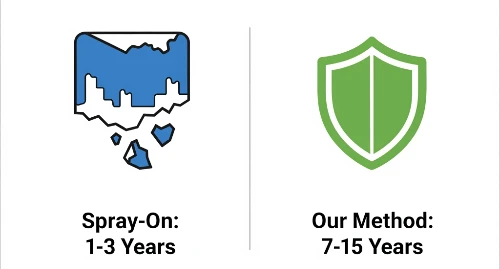 With proper care, your professionally reglazed bathtub will look brilliant for 7 to 15 years.
10 to 15 years with normal care. The pour-on coat is several times thicker than spray-on — typically 30-40 mils versus 6 mils — which is why it lasts so much longer. Backed by a 5-year warranty.
Caring for your refinished clawfoot tub
The coating is durable and easy to care for, but a few habits will keep it looking new for the full 10–15 years:
Clean with a soft cloth or sponge. No abrasive scrubbers, no steel wool, no scouring pads. The coating is harder than the original enamel, but it can still be scratched by aggressive cleaning tools.
Use a mild cleaner. A regular non-abrasive bathroom cleaner is fine. Avoid powdered cleansers (like Comet or Ajax), oven cleaners, drain cleaners, and anything labeled “heavy duty” or “industrial.”
Don’t leave standing water for days. If you leave the tub filled with water for a week (which happens sometimes in unused vacation apartments), some staining can occur. Normal daily use is no issue at all.
Don’t use a suction-cup bath mat that stays in place. The pour-on surface has a slight texture that provides natural slip resistance. If you prefer a mat anyway, take it out between uses so the surface can dry. Suction mats left in place can soften any bathtub finish, including factory enamel.
No sealers or “refinish protectors.” These don’t exist as legitimate products. The coating itself is the sealant.
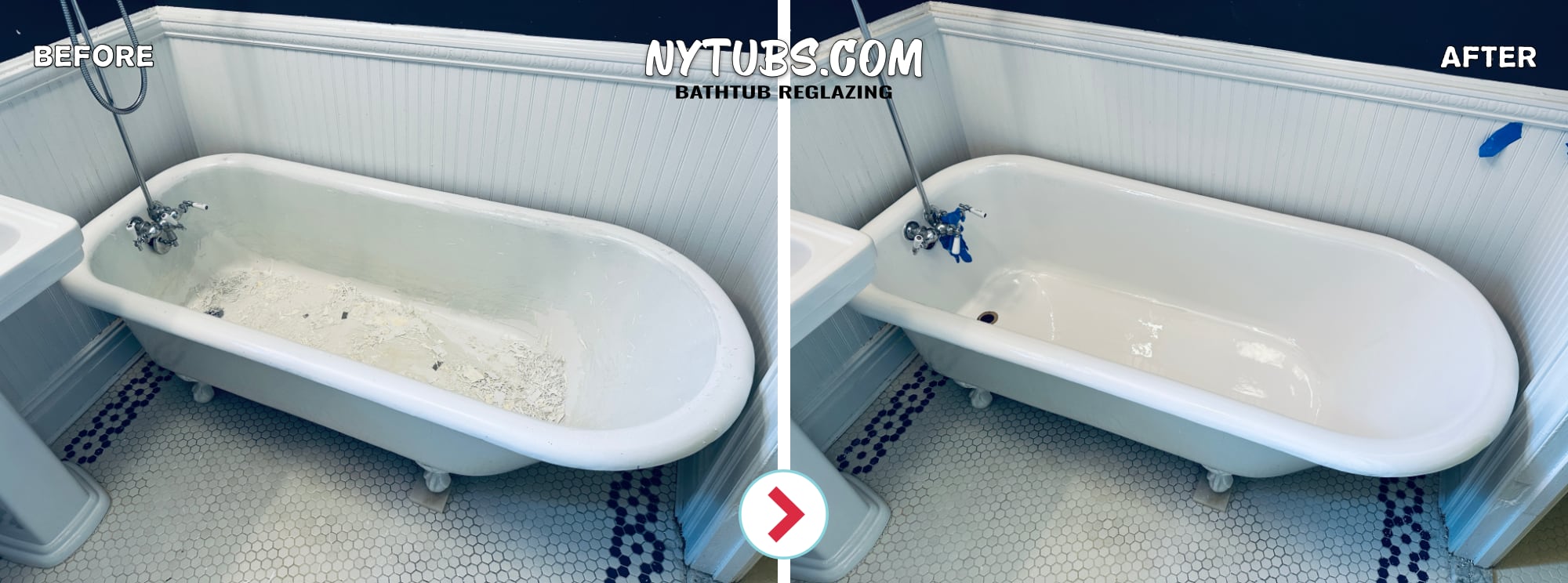
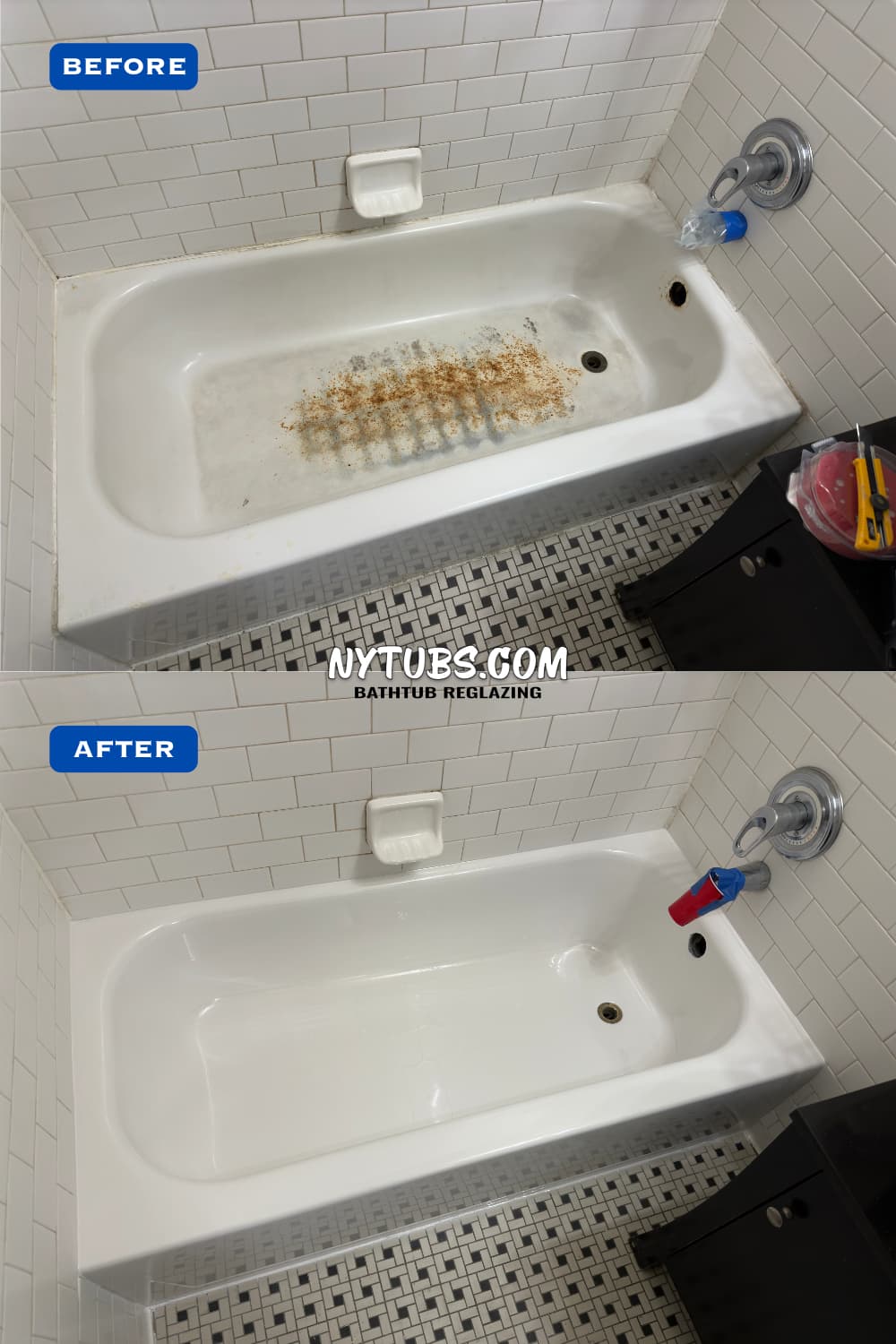
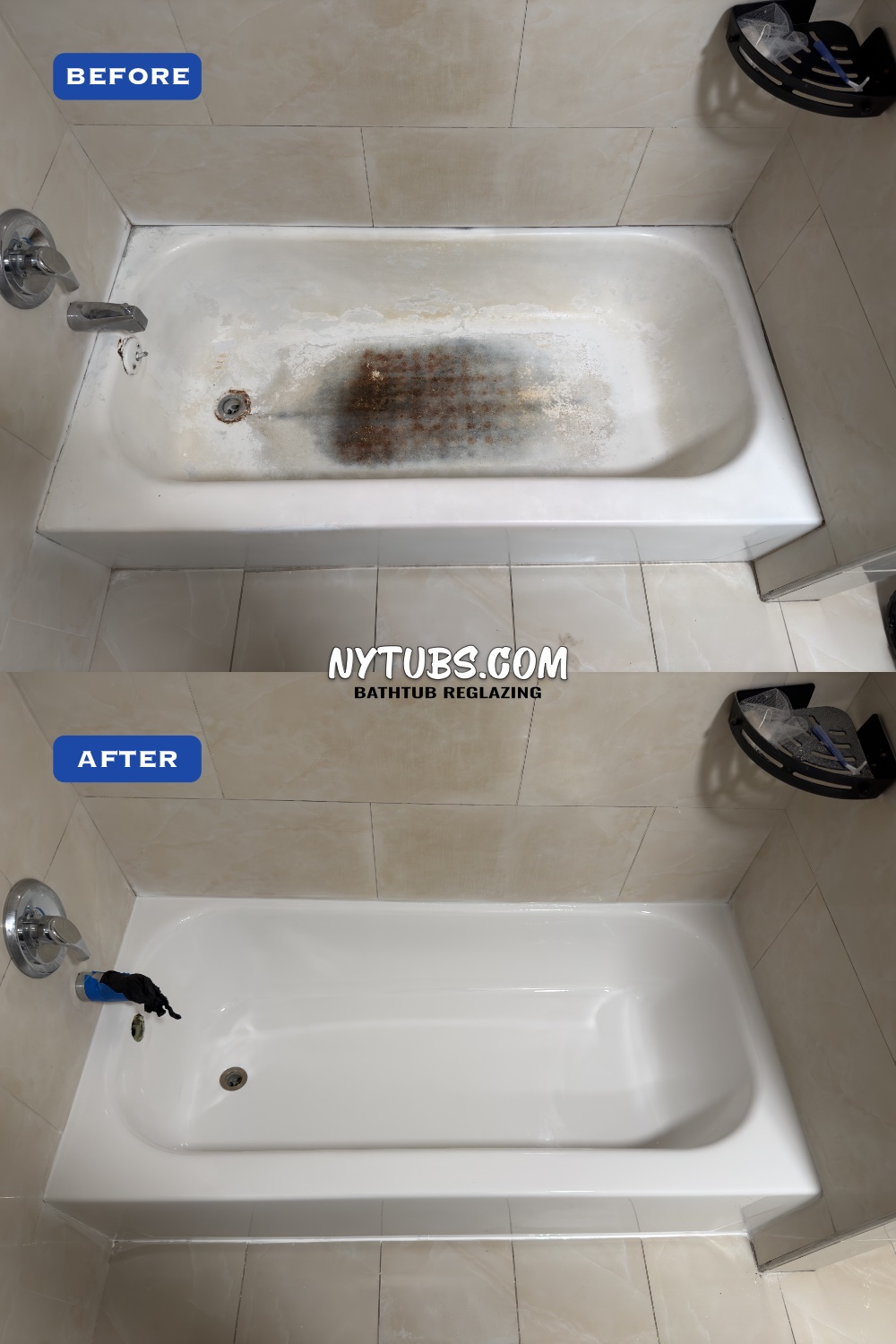
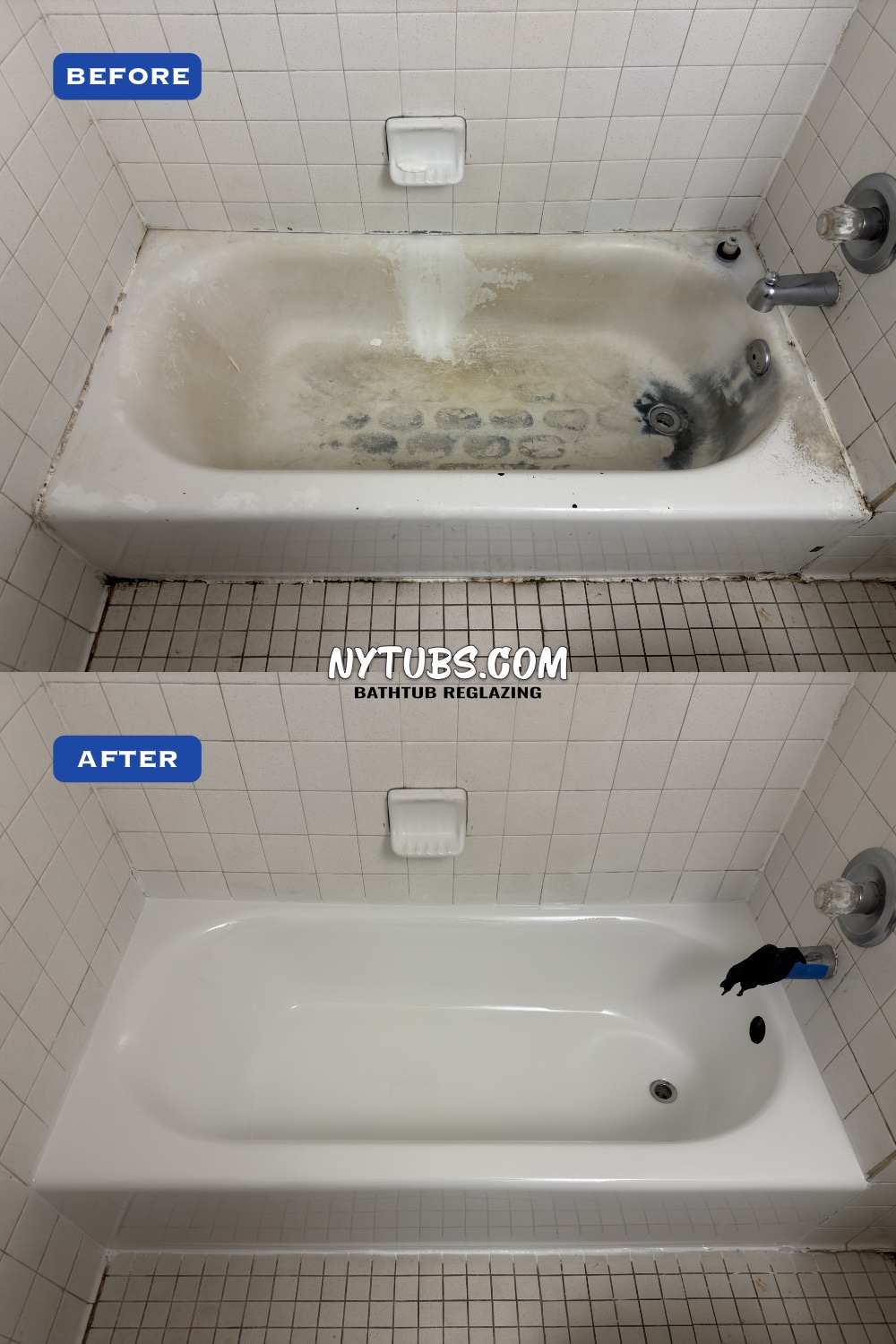
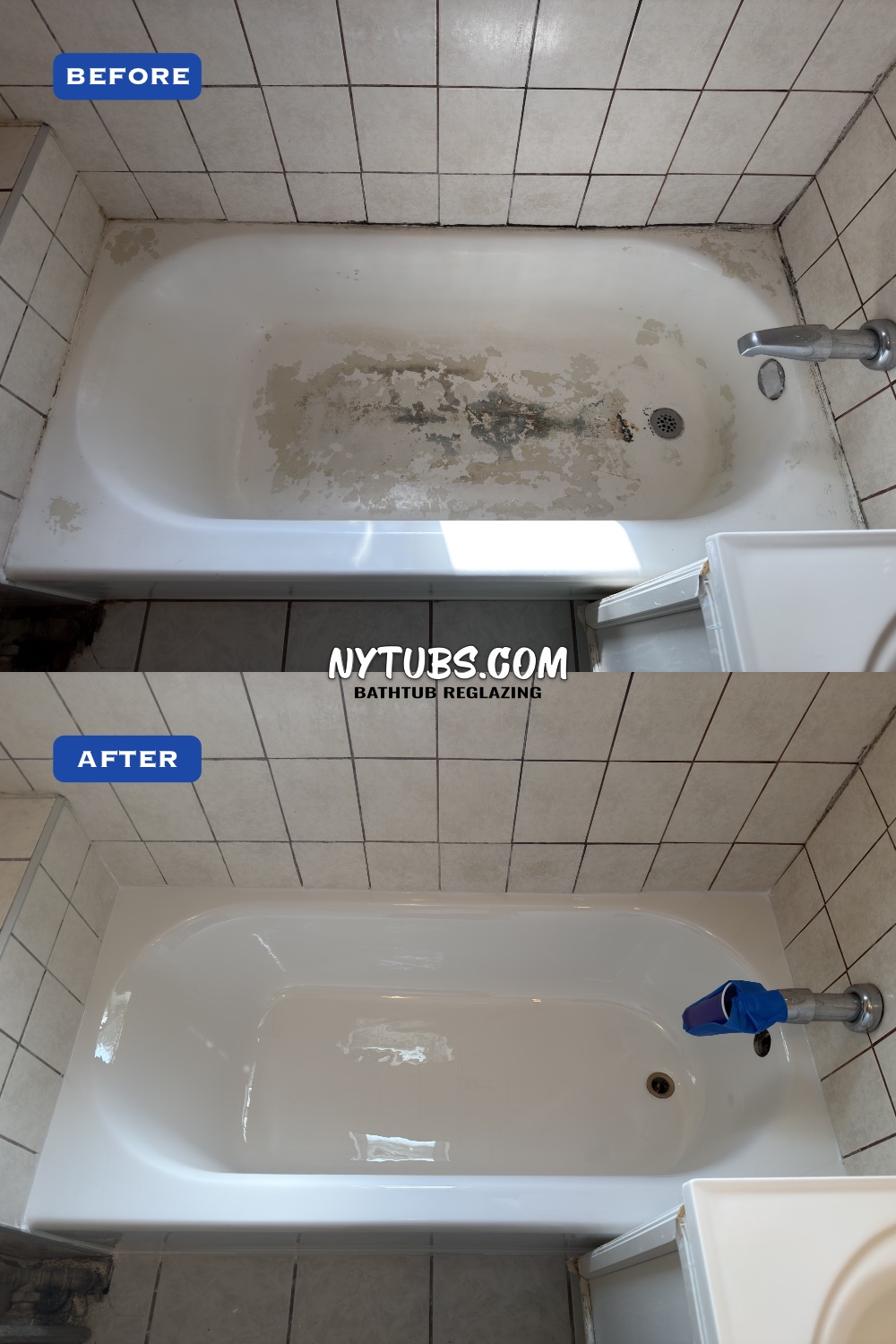
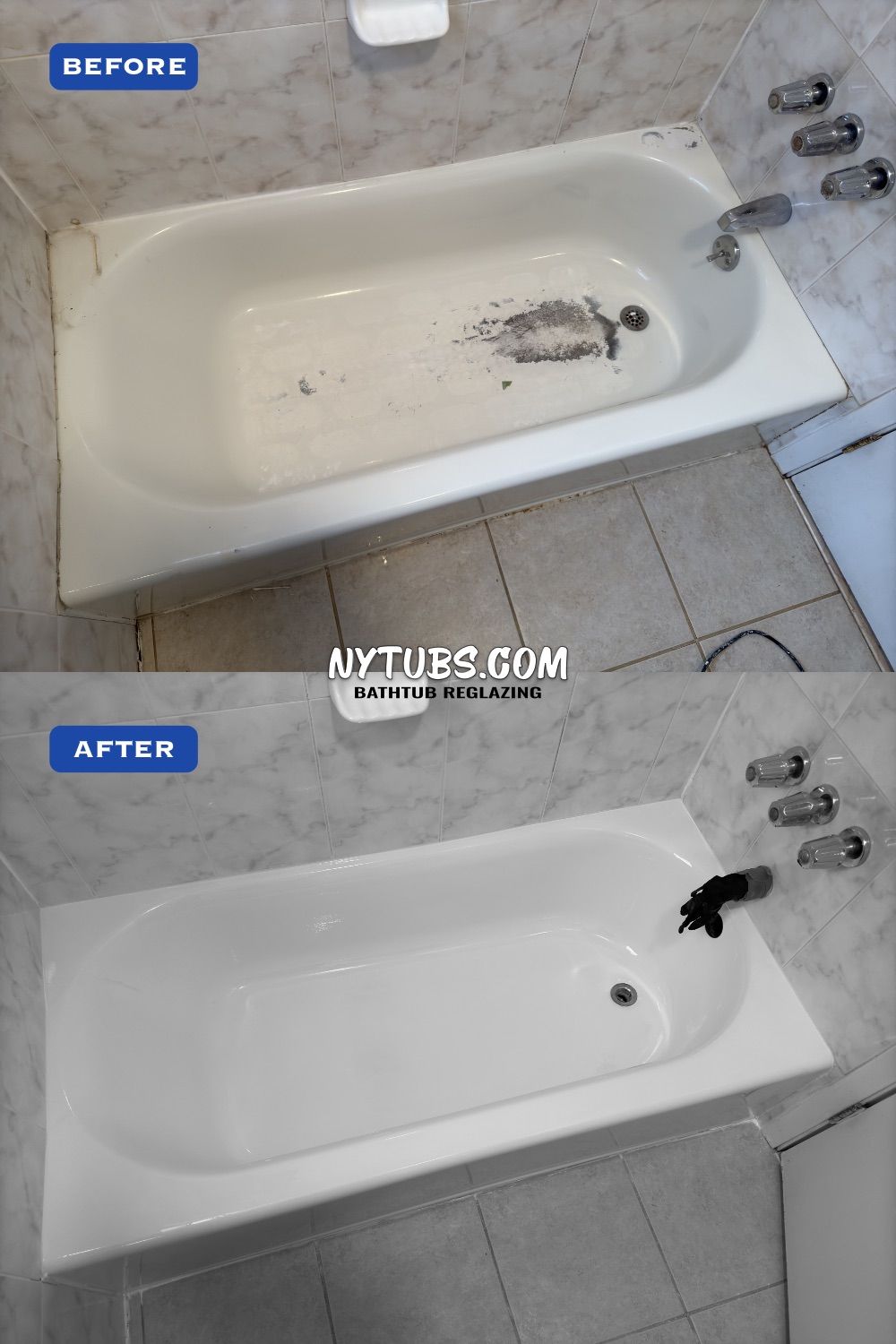
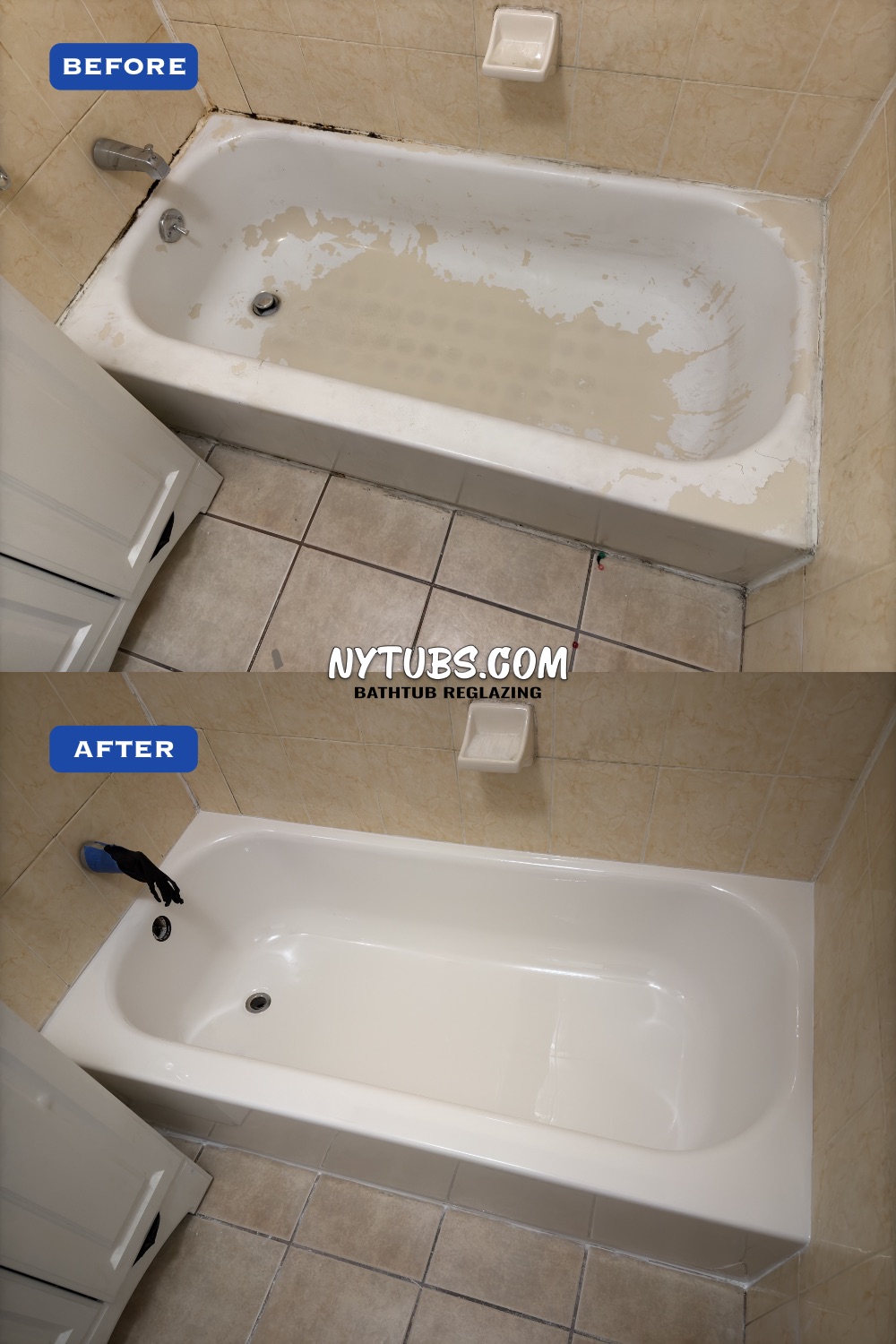
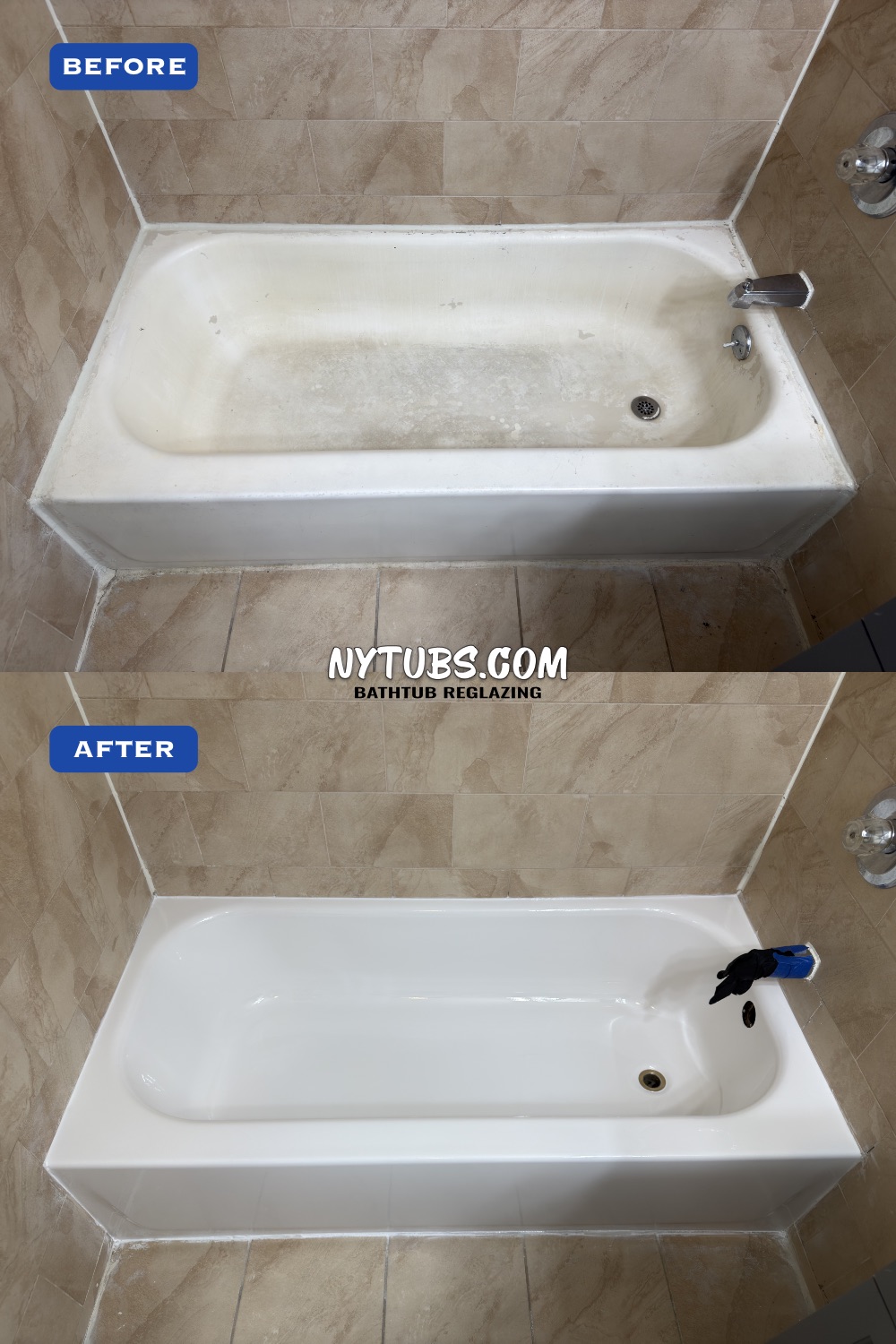
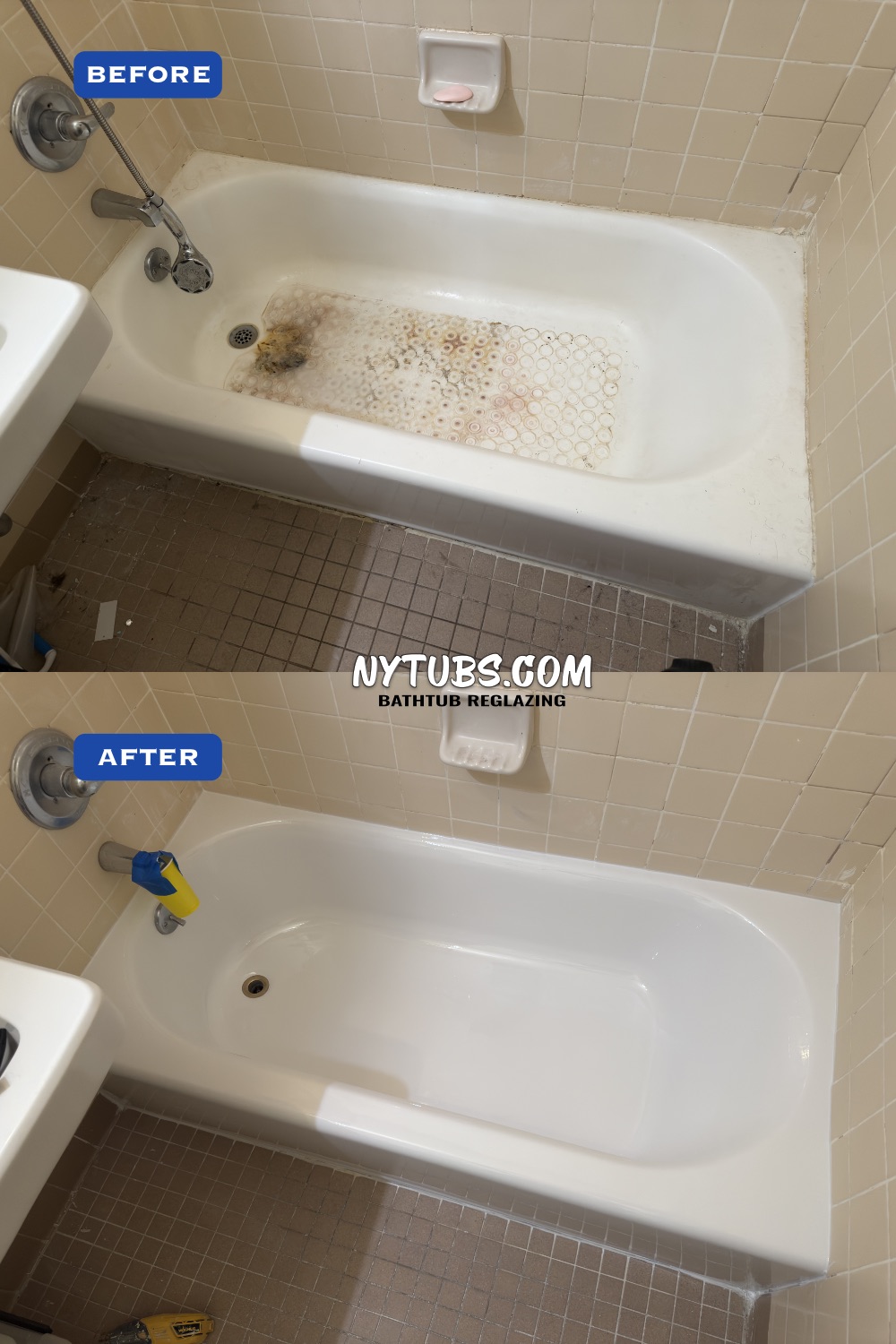
Before and after
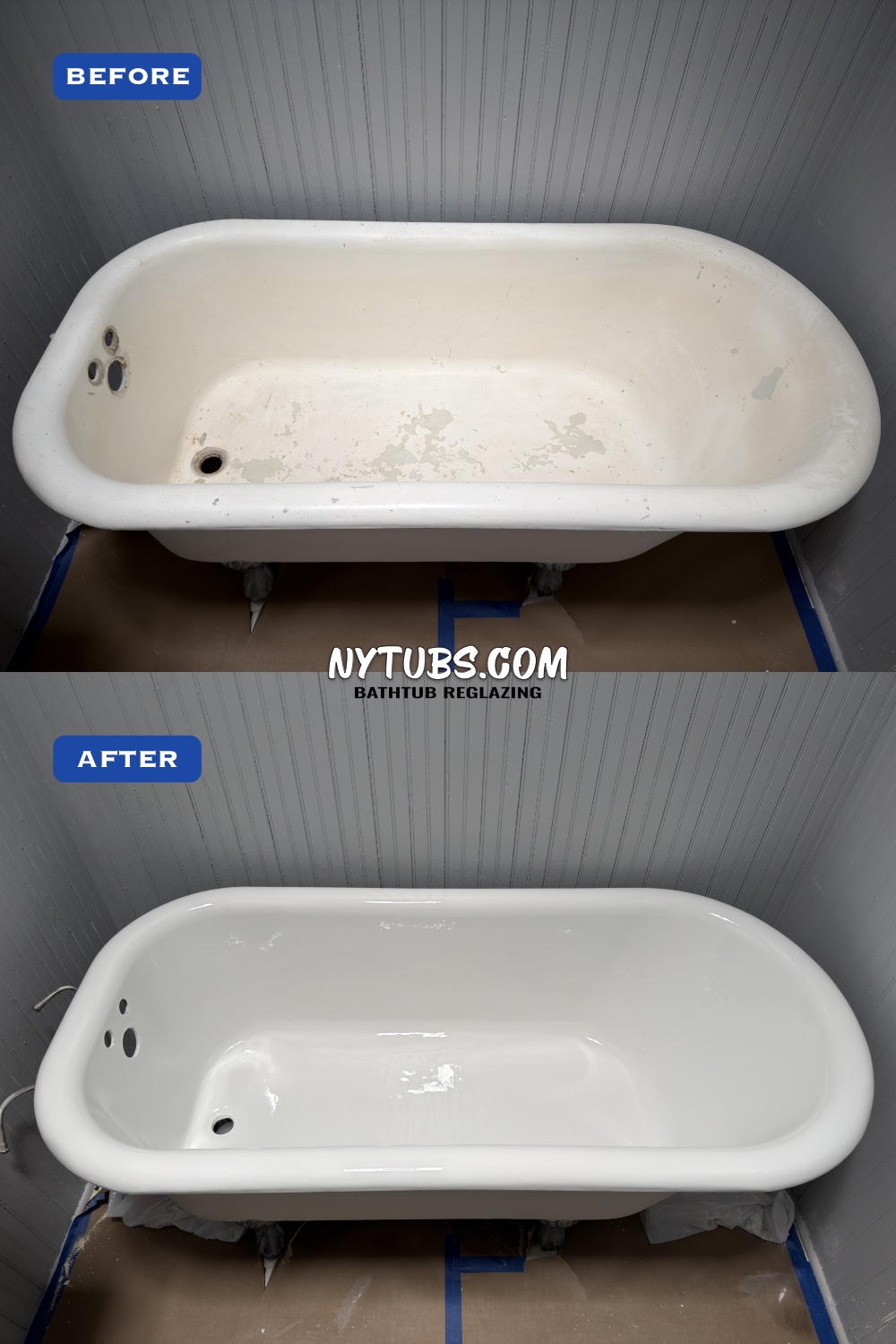
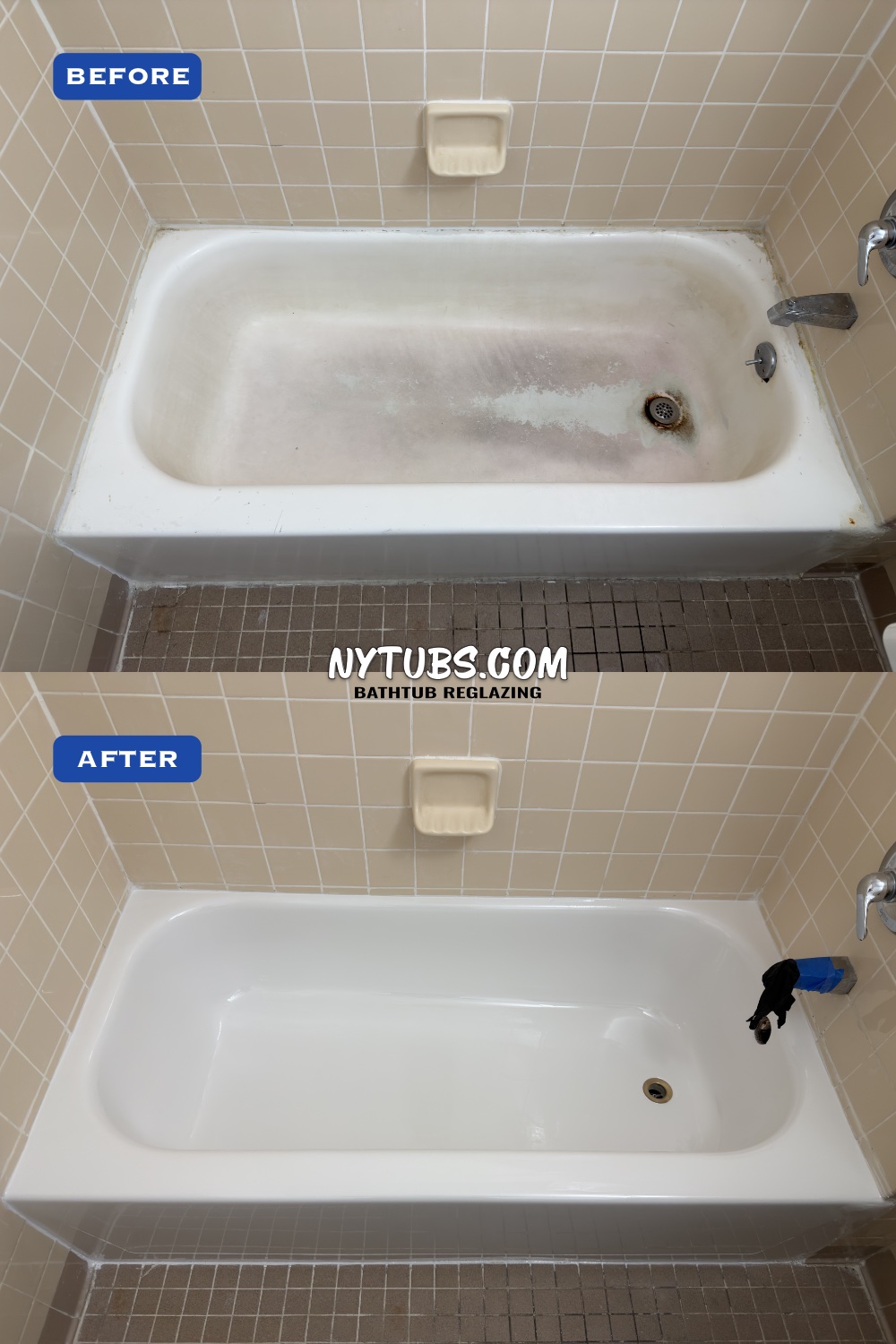
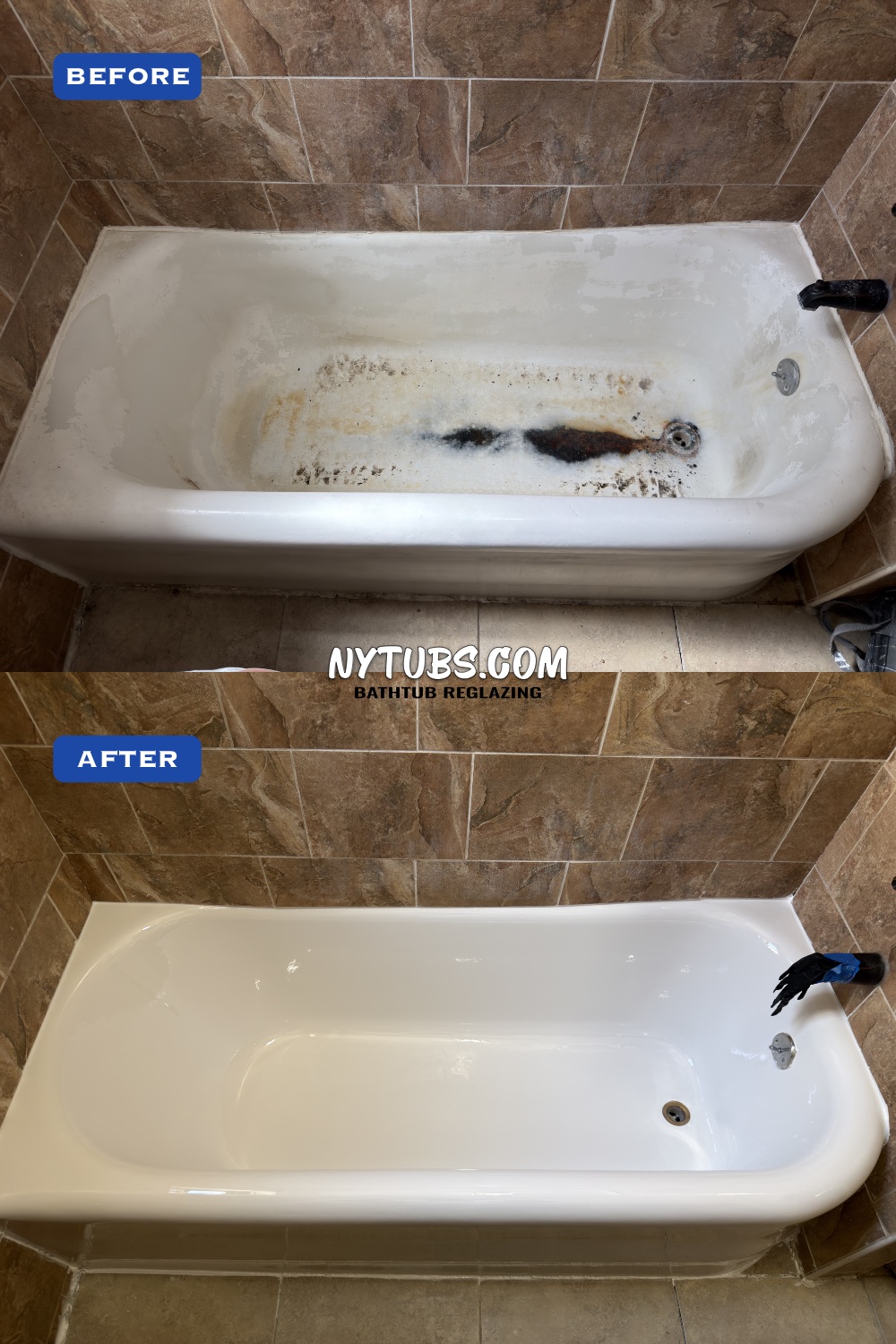
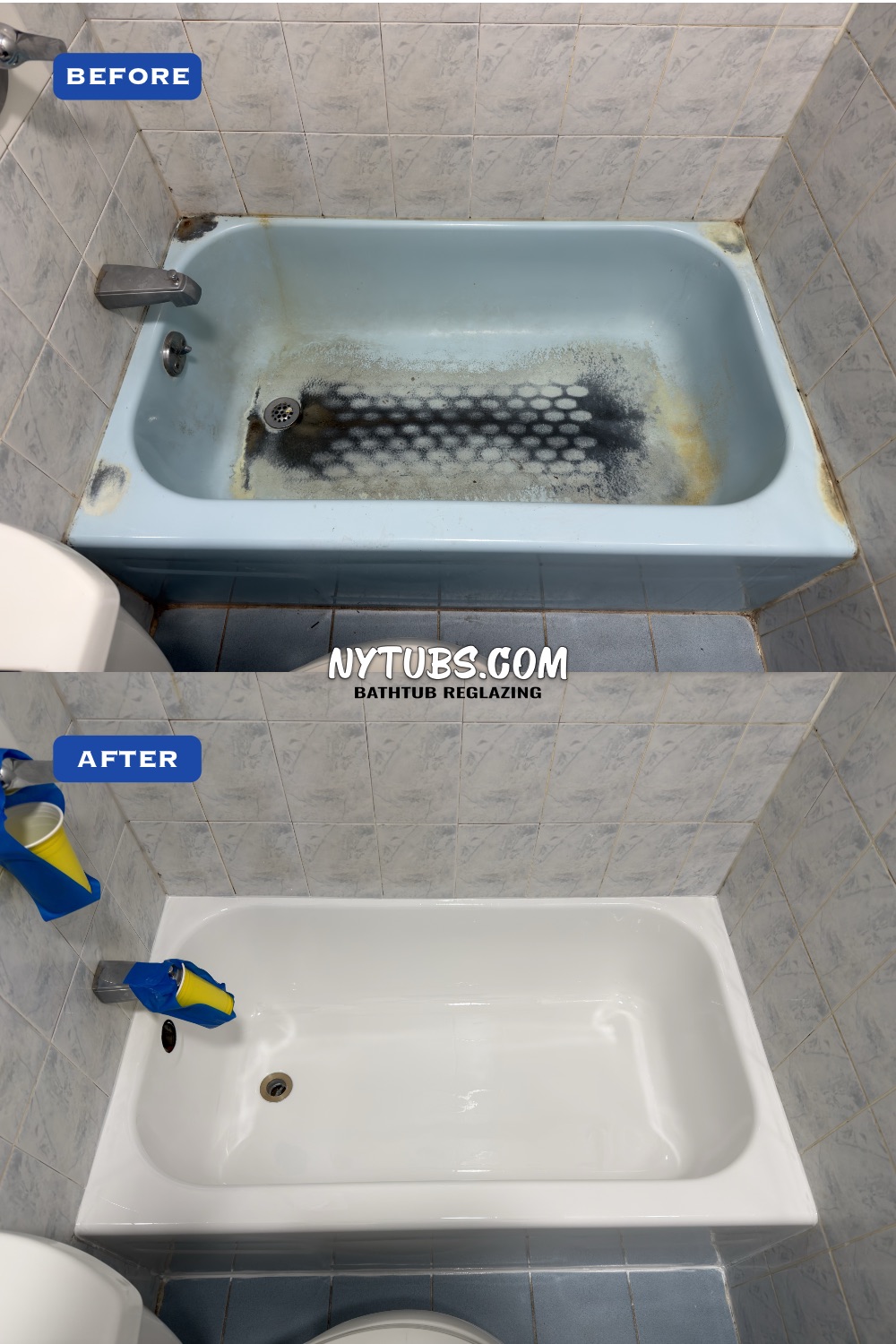
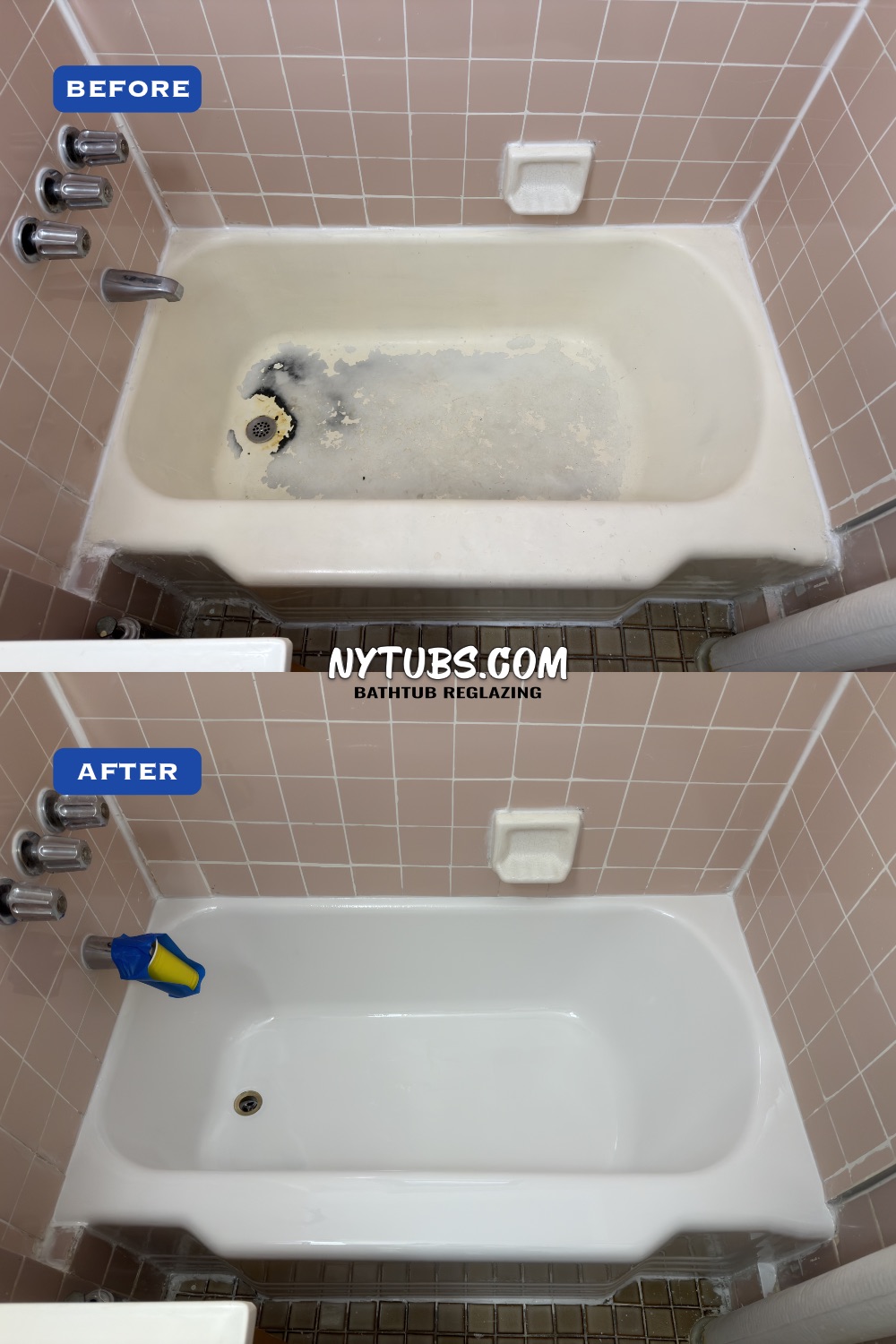
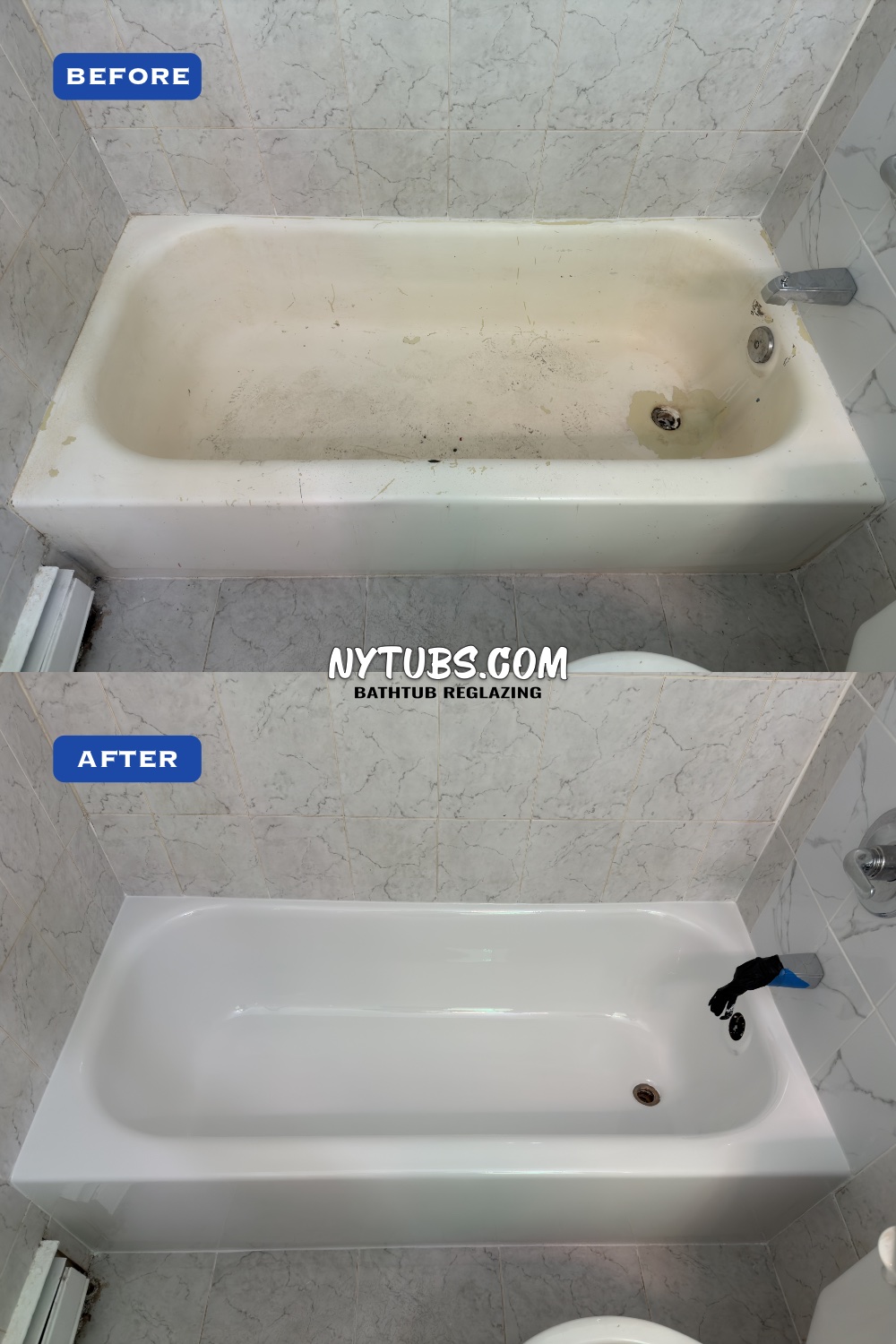
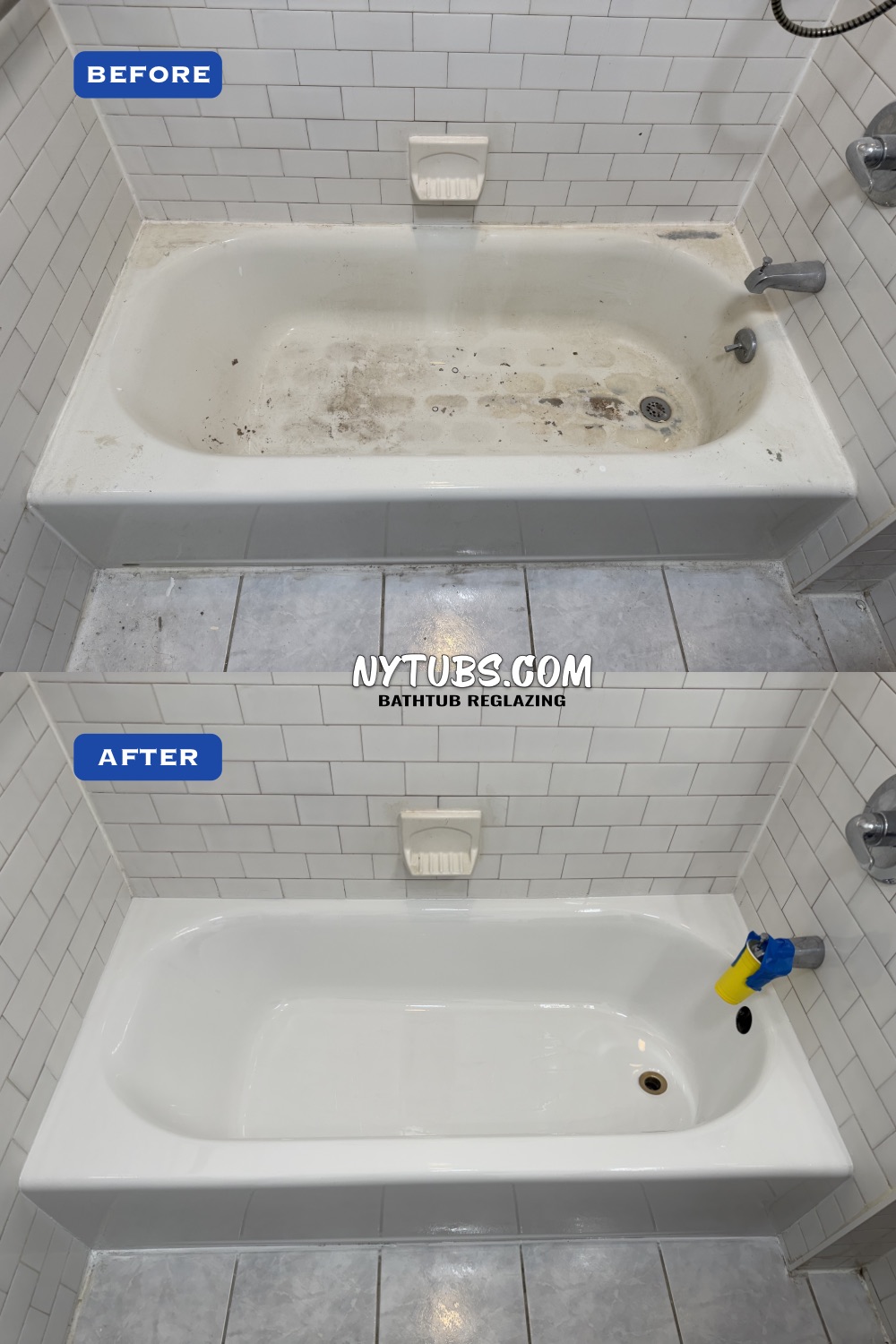
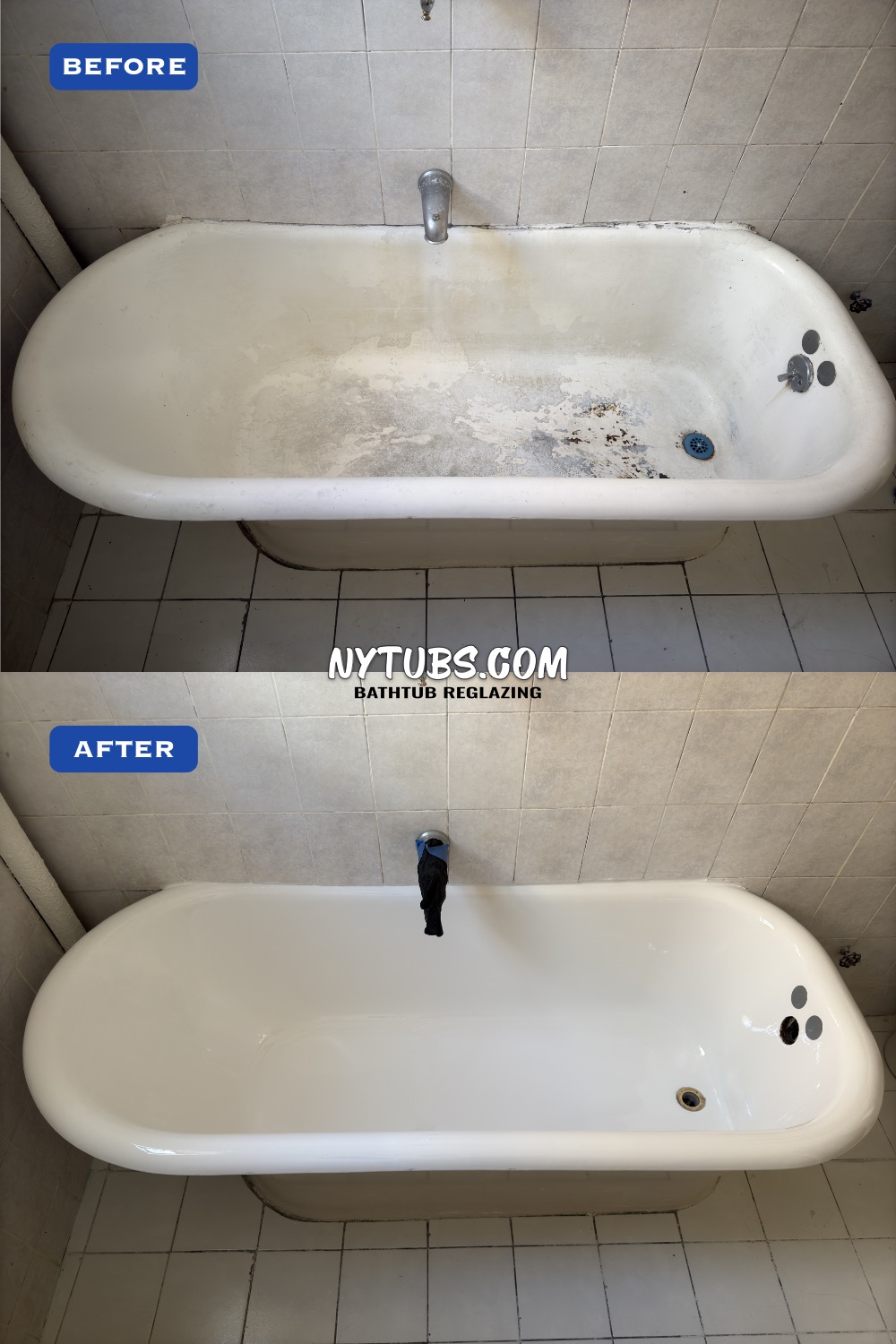
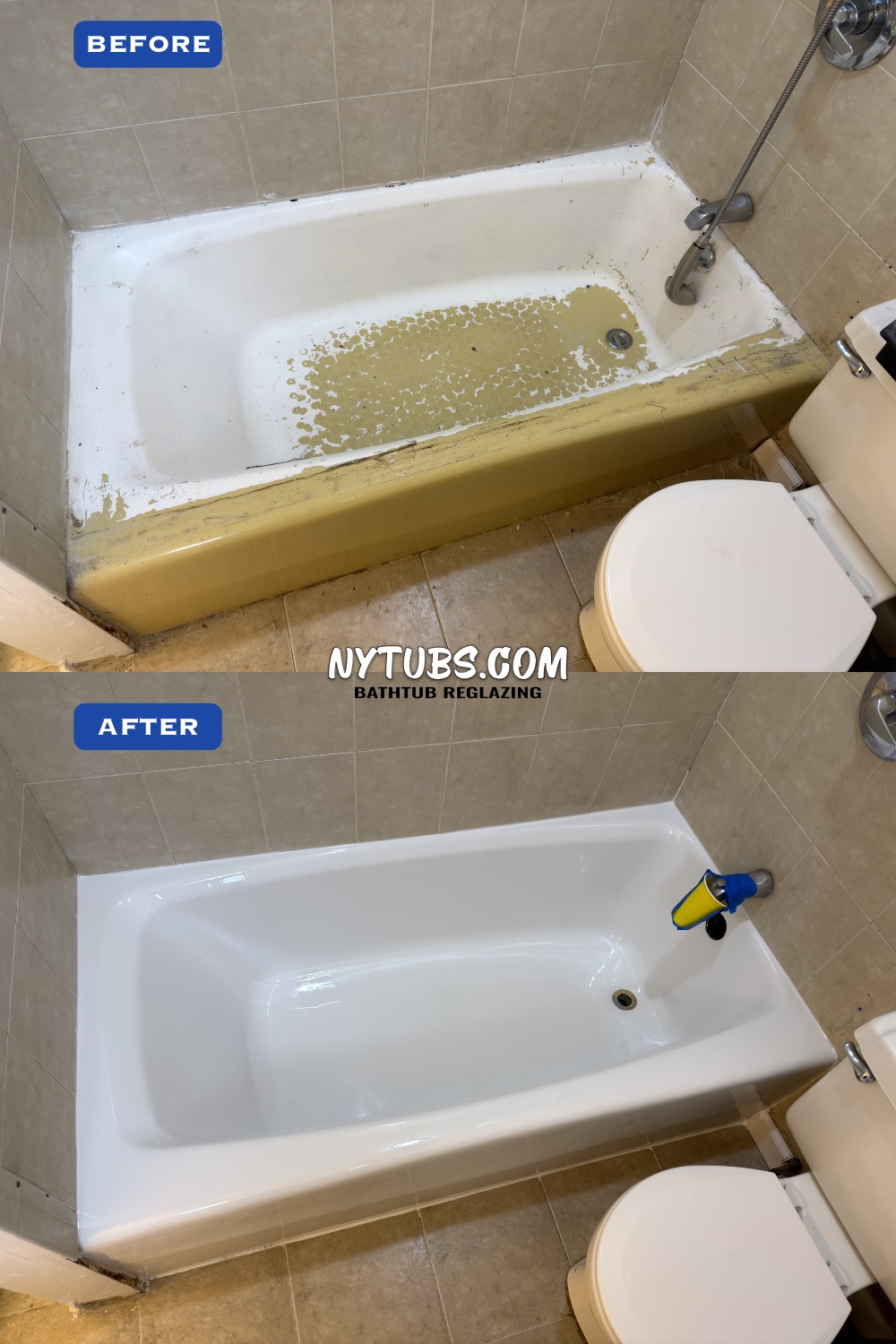
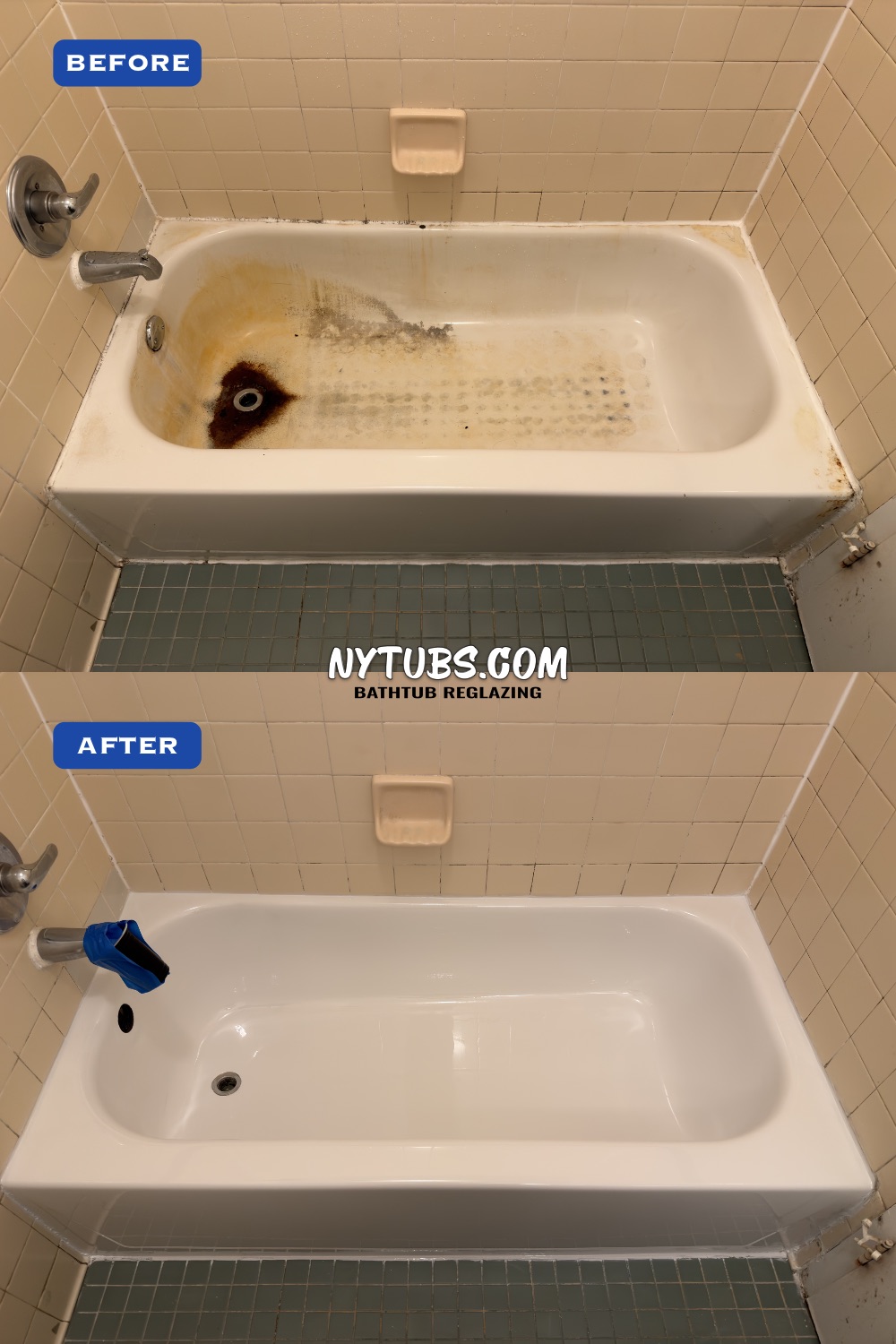
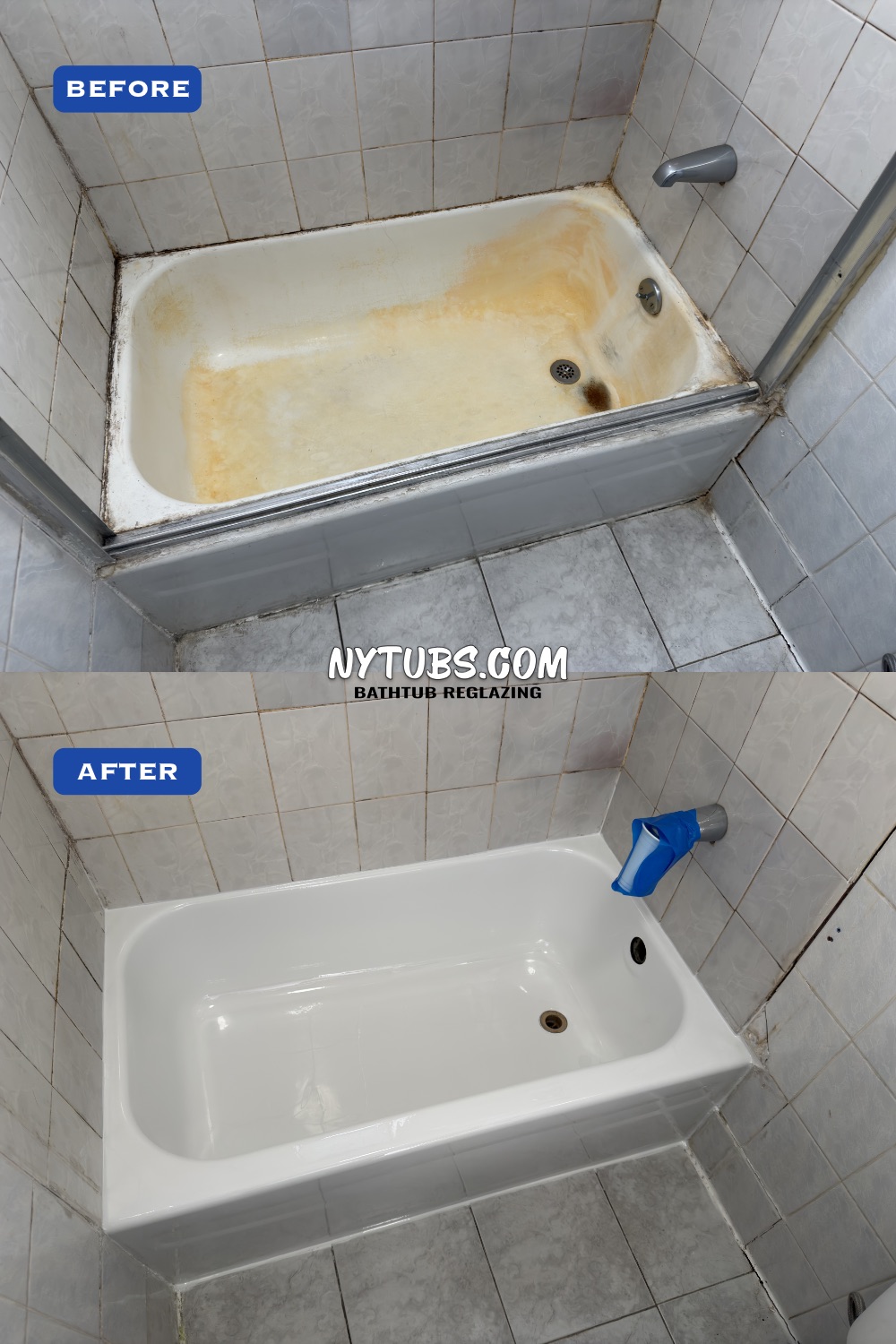
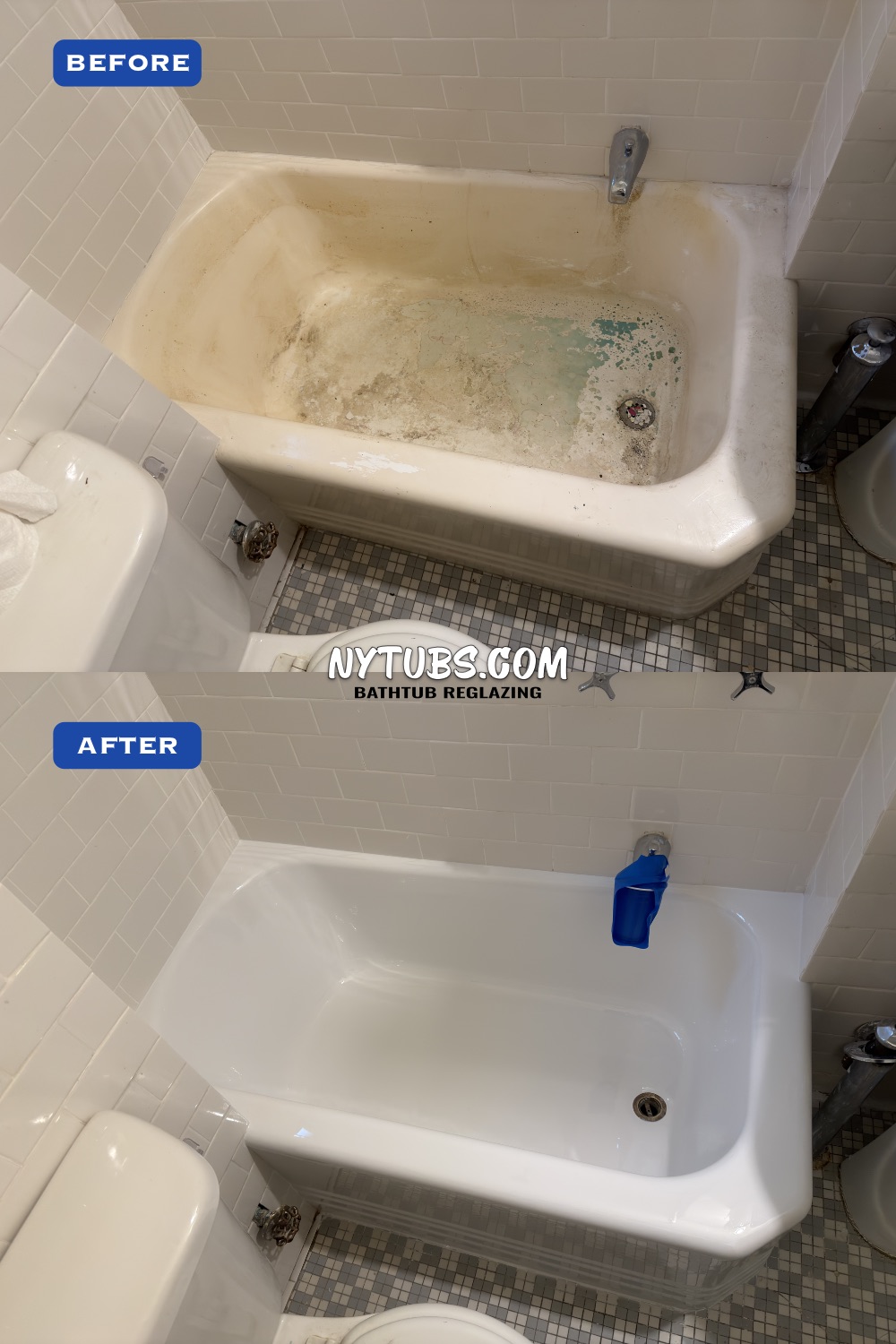
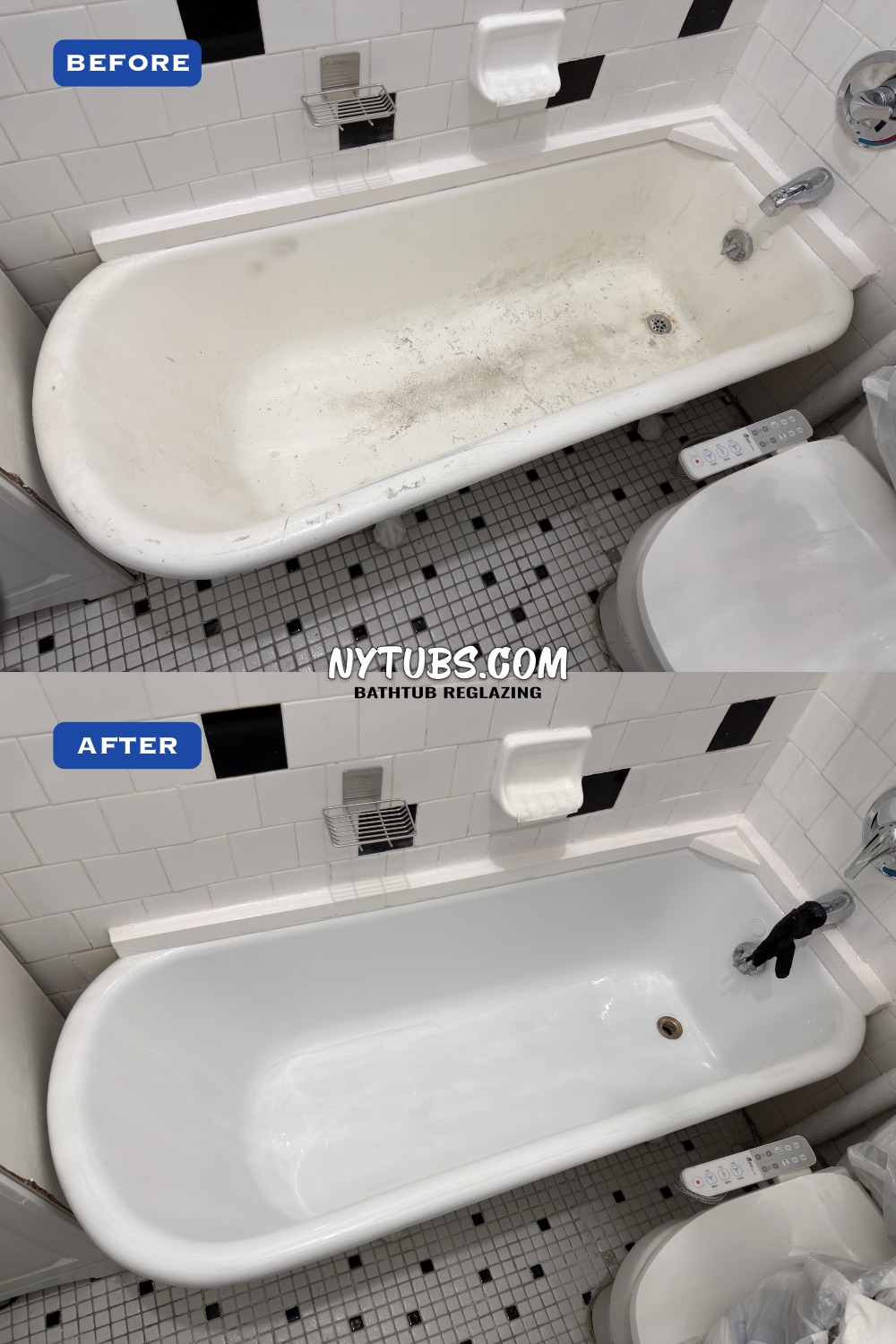
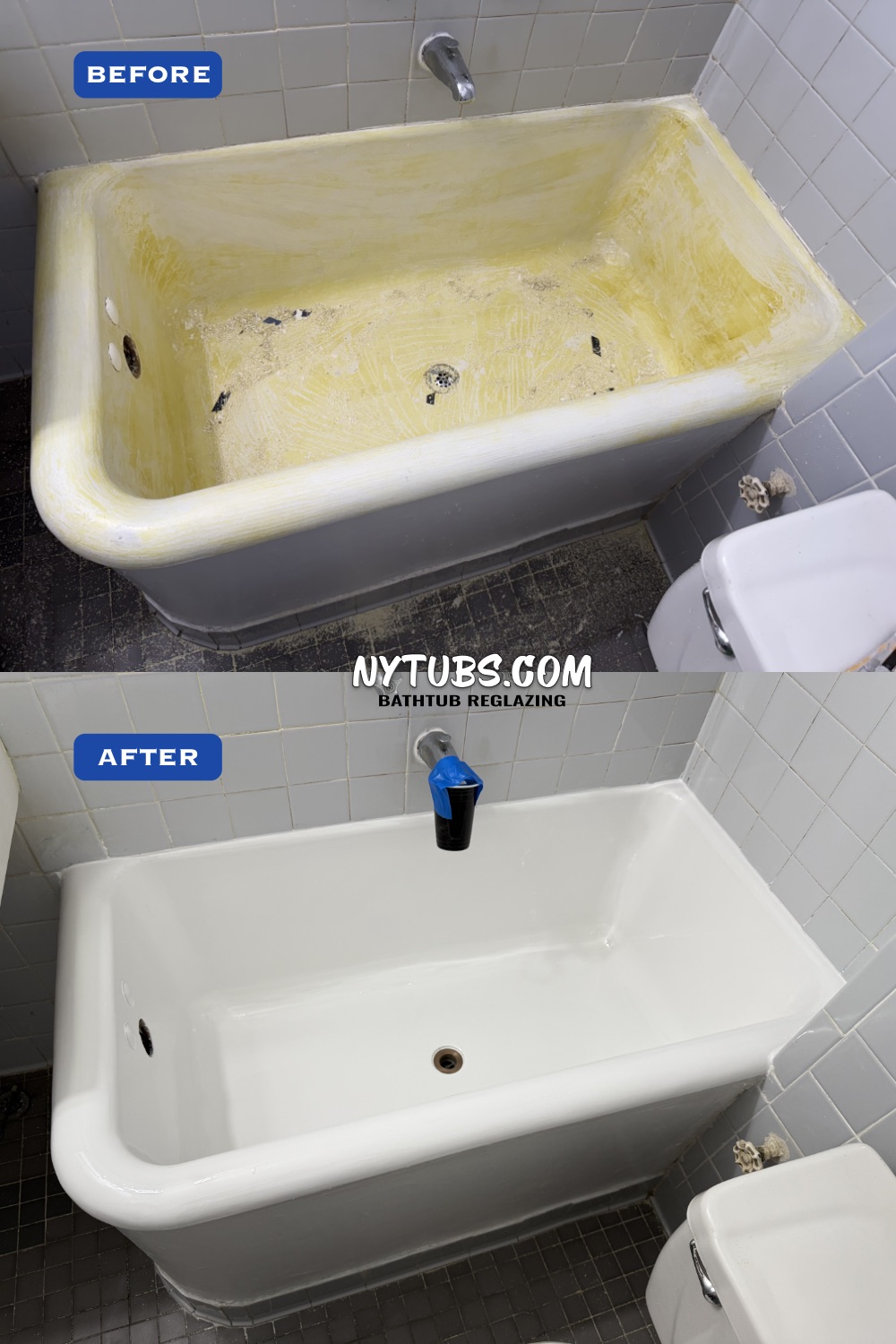

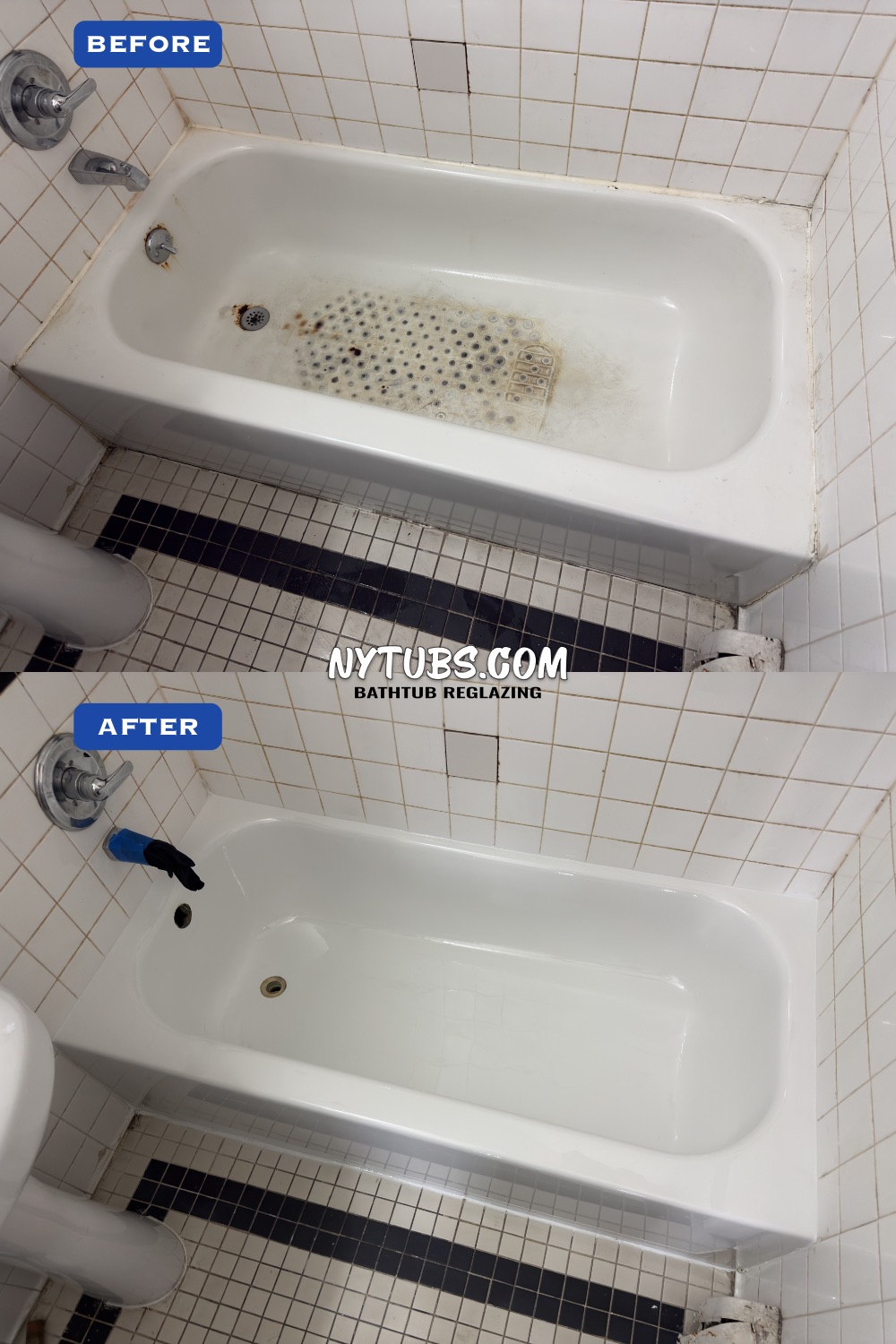
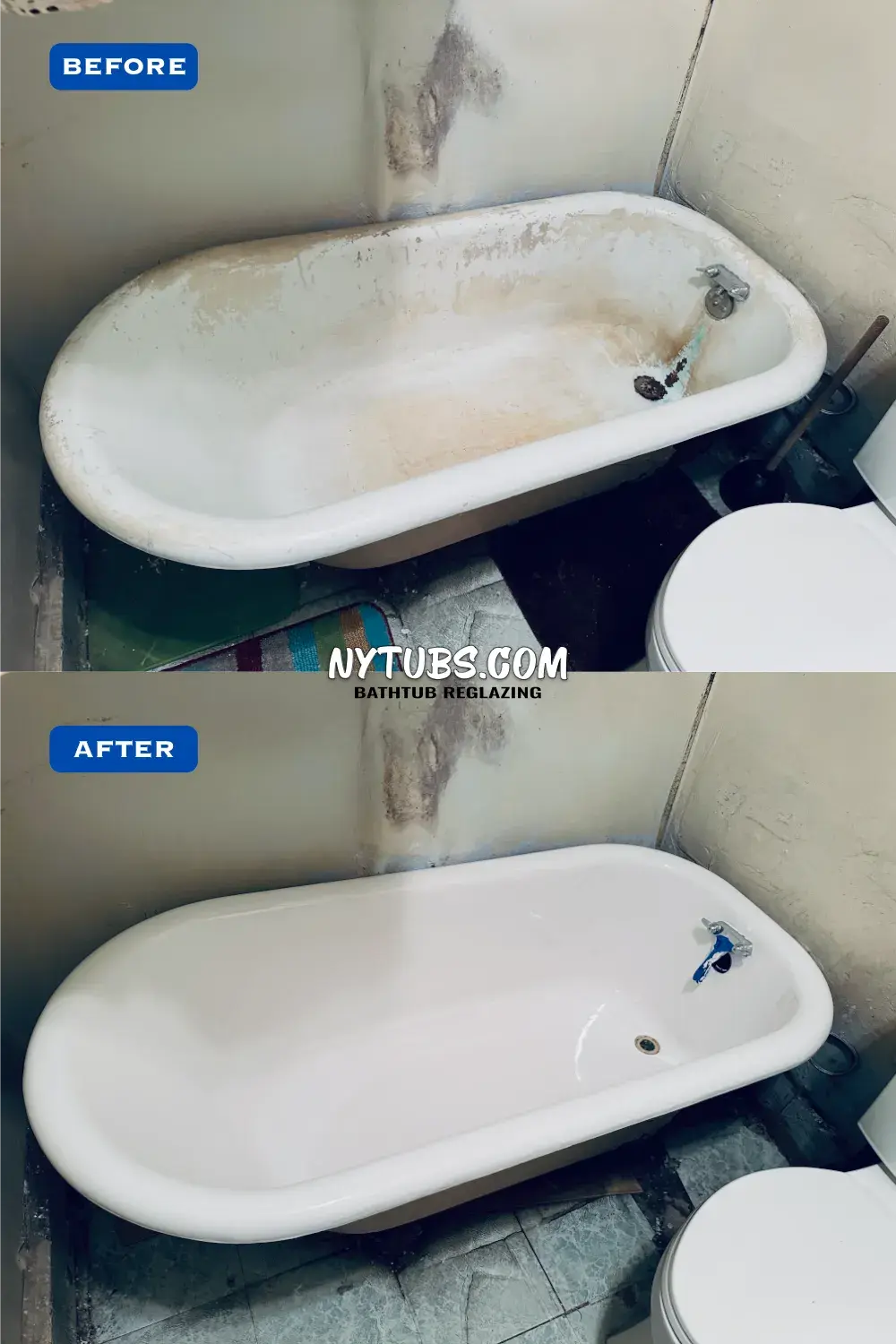
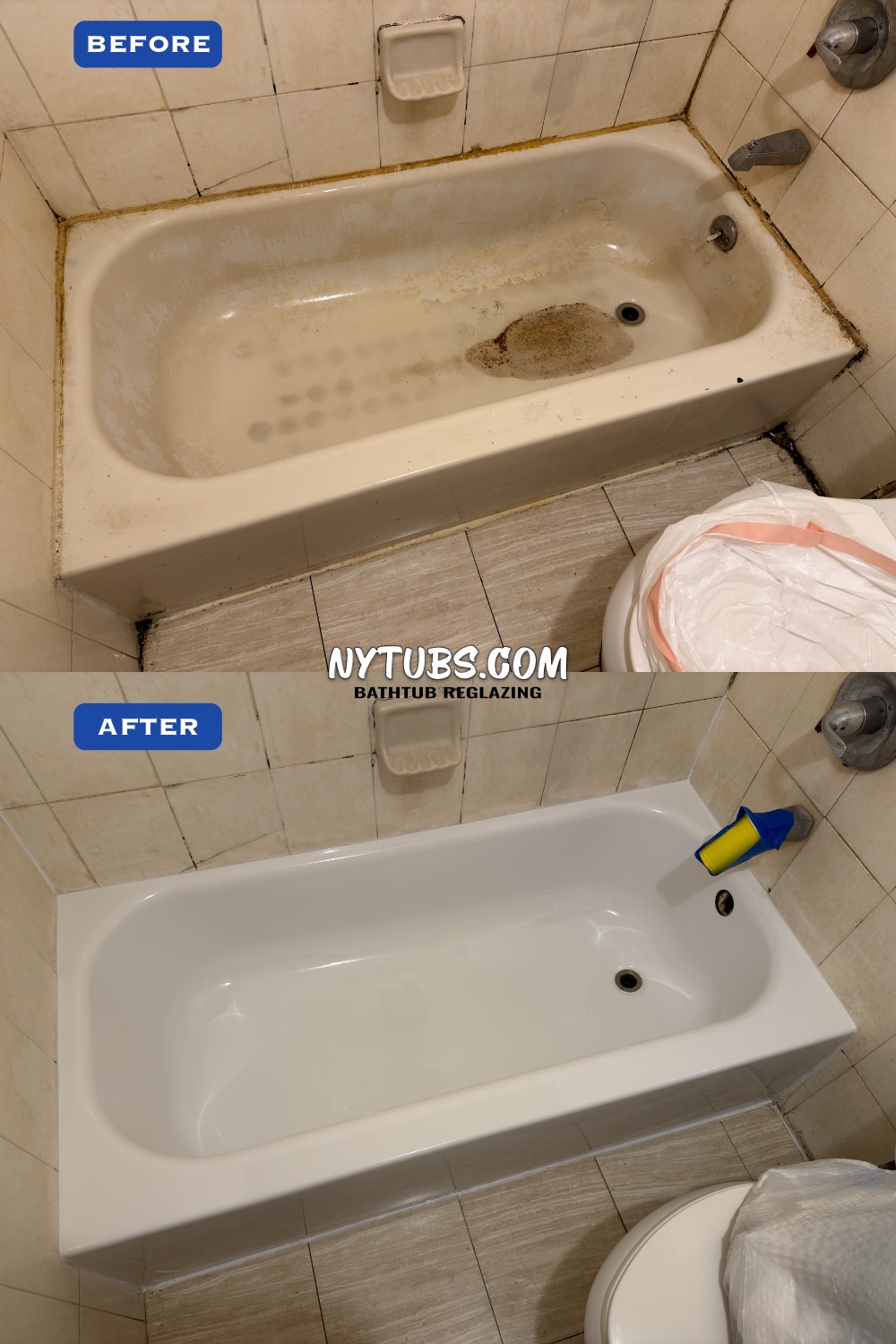
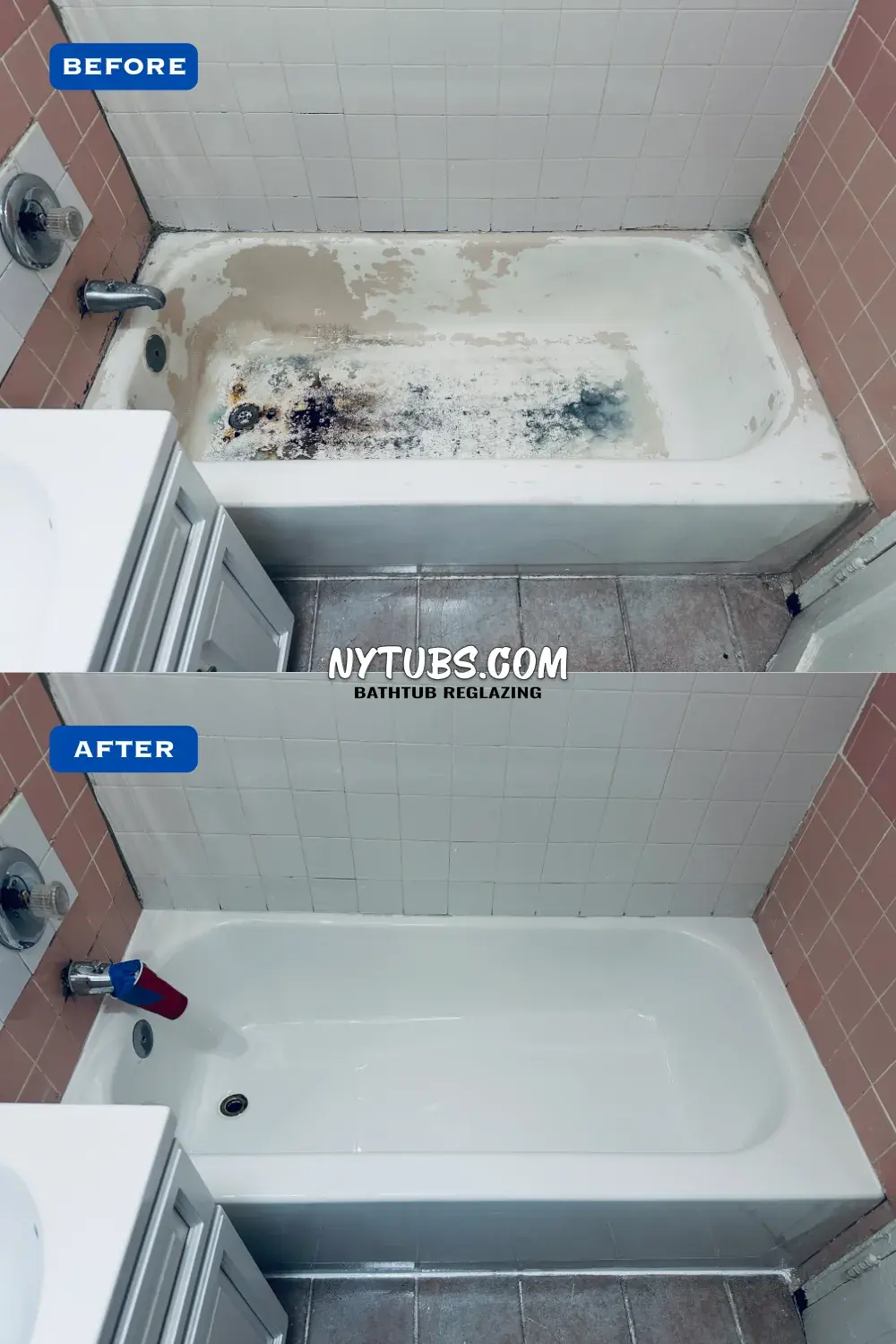
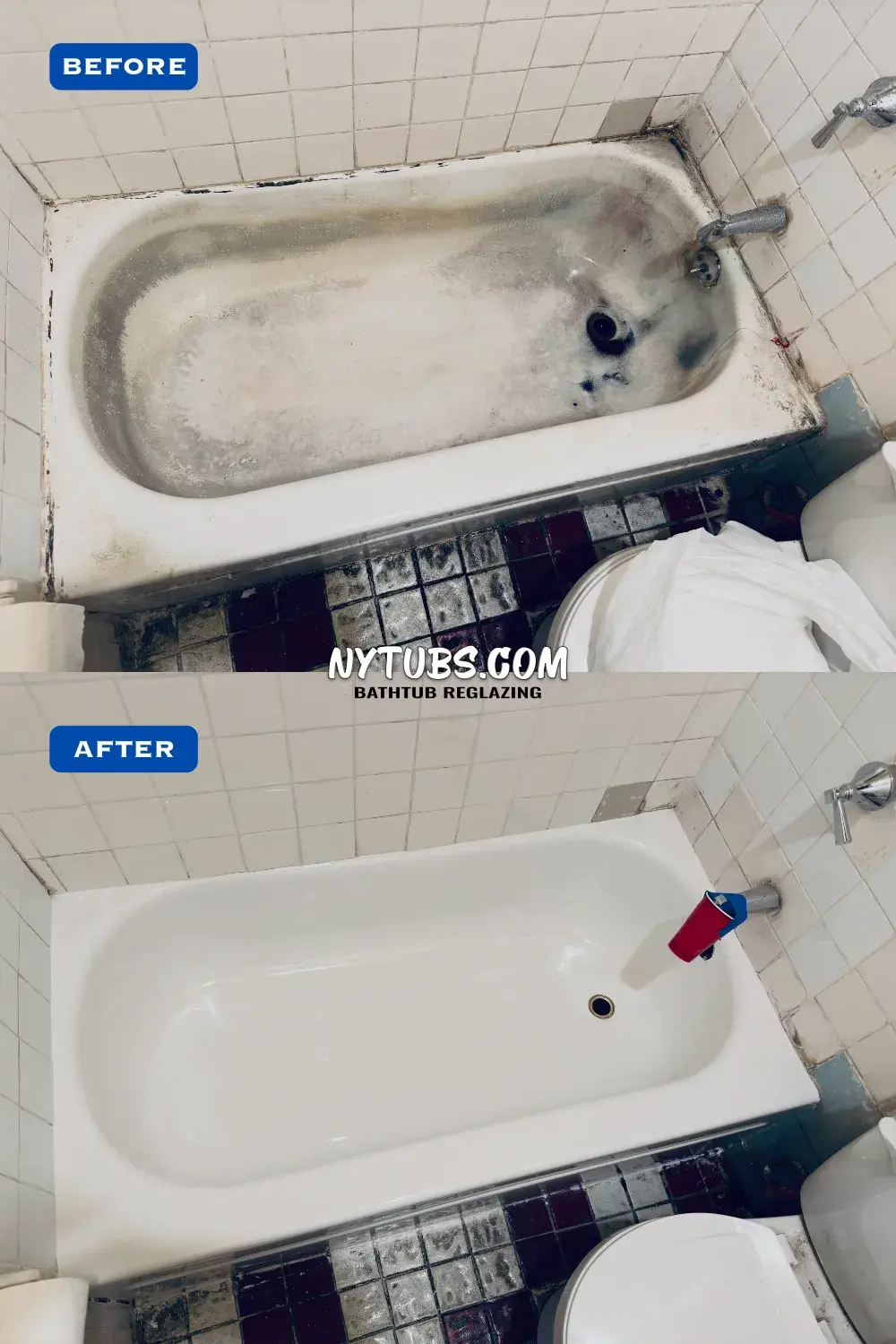
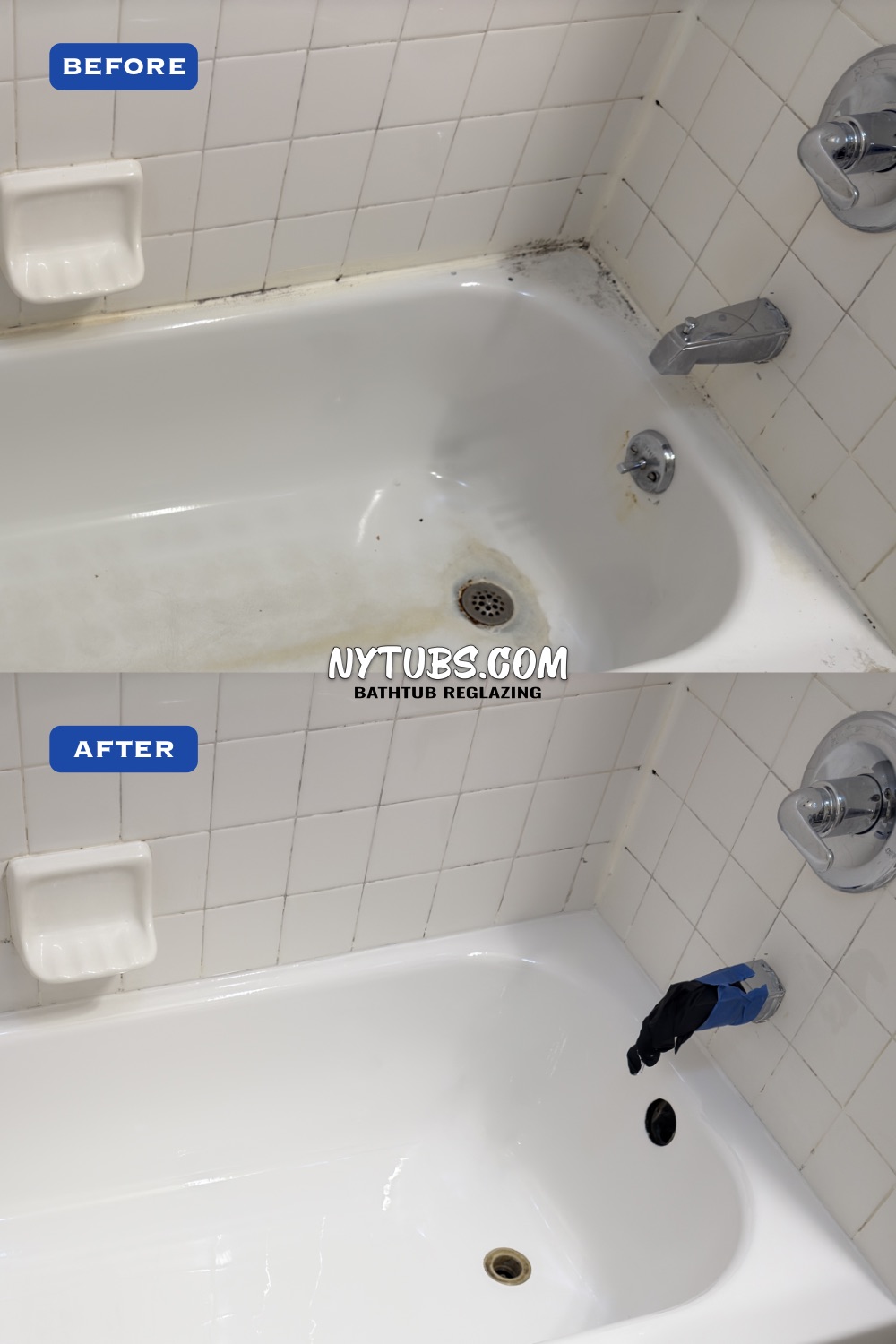

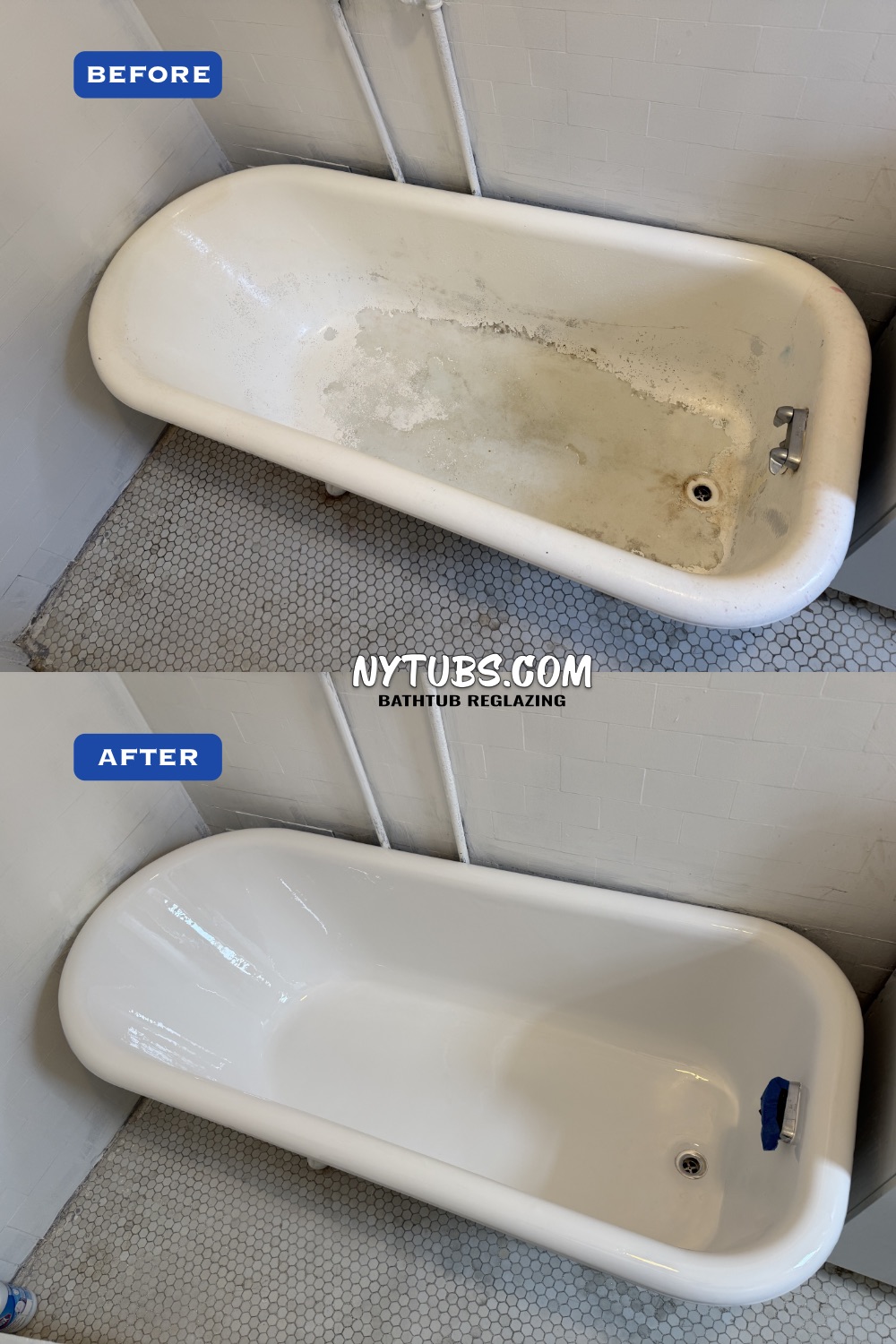
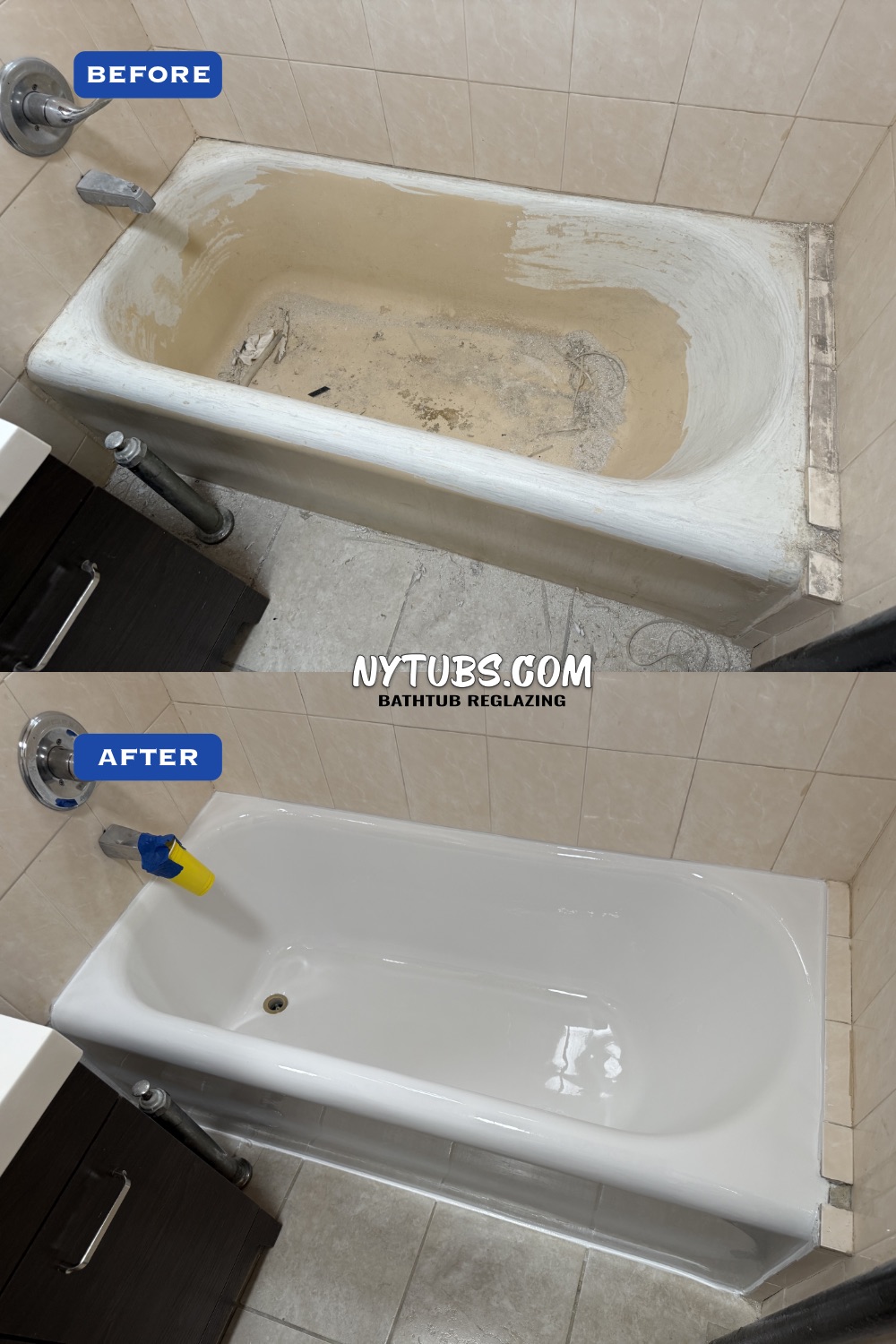
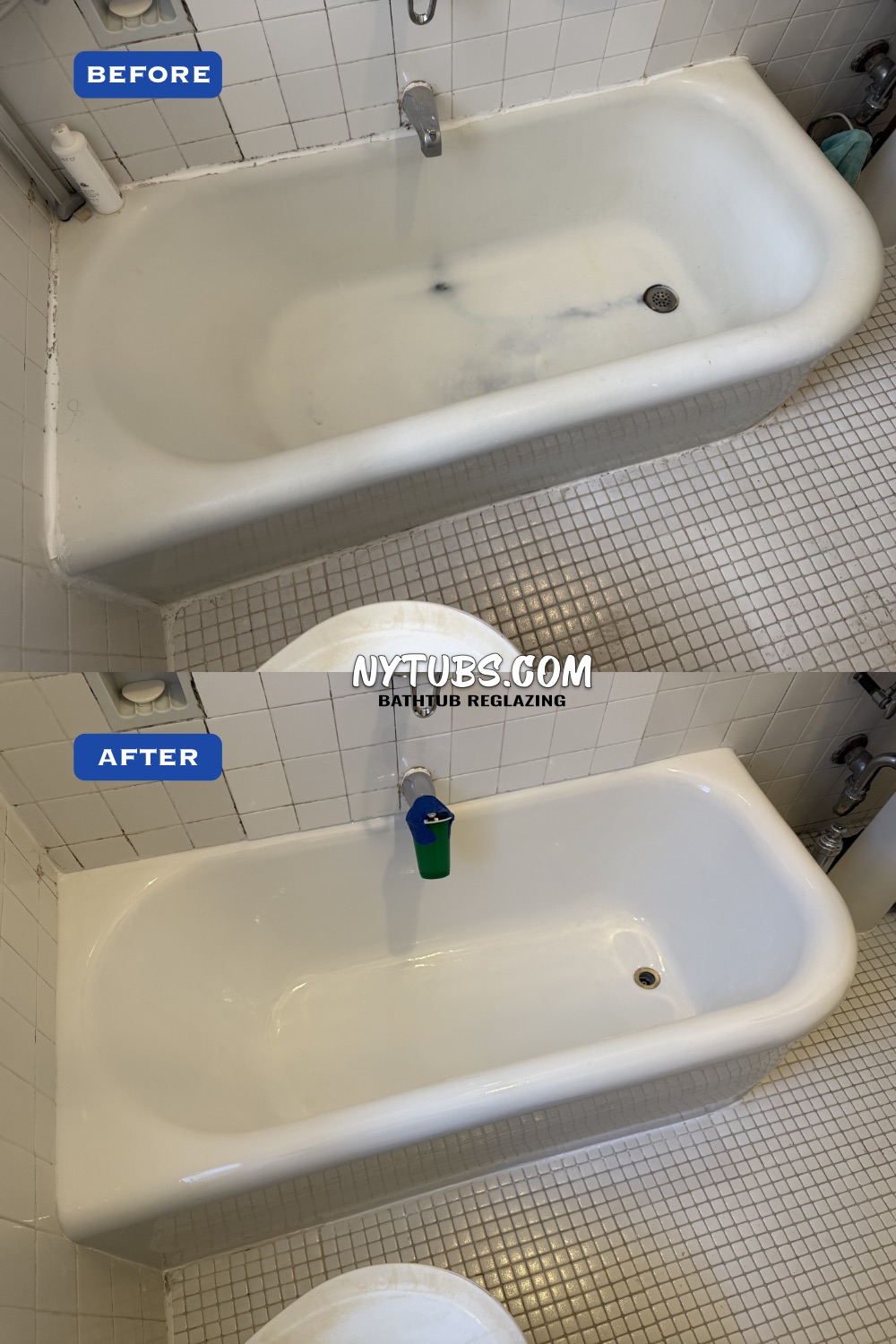
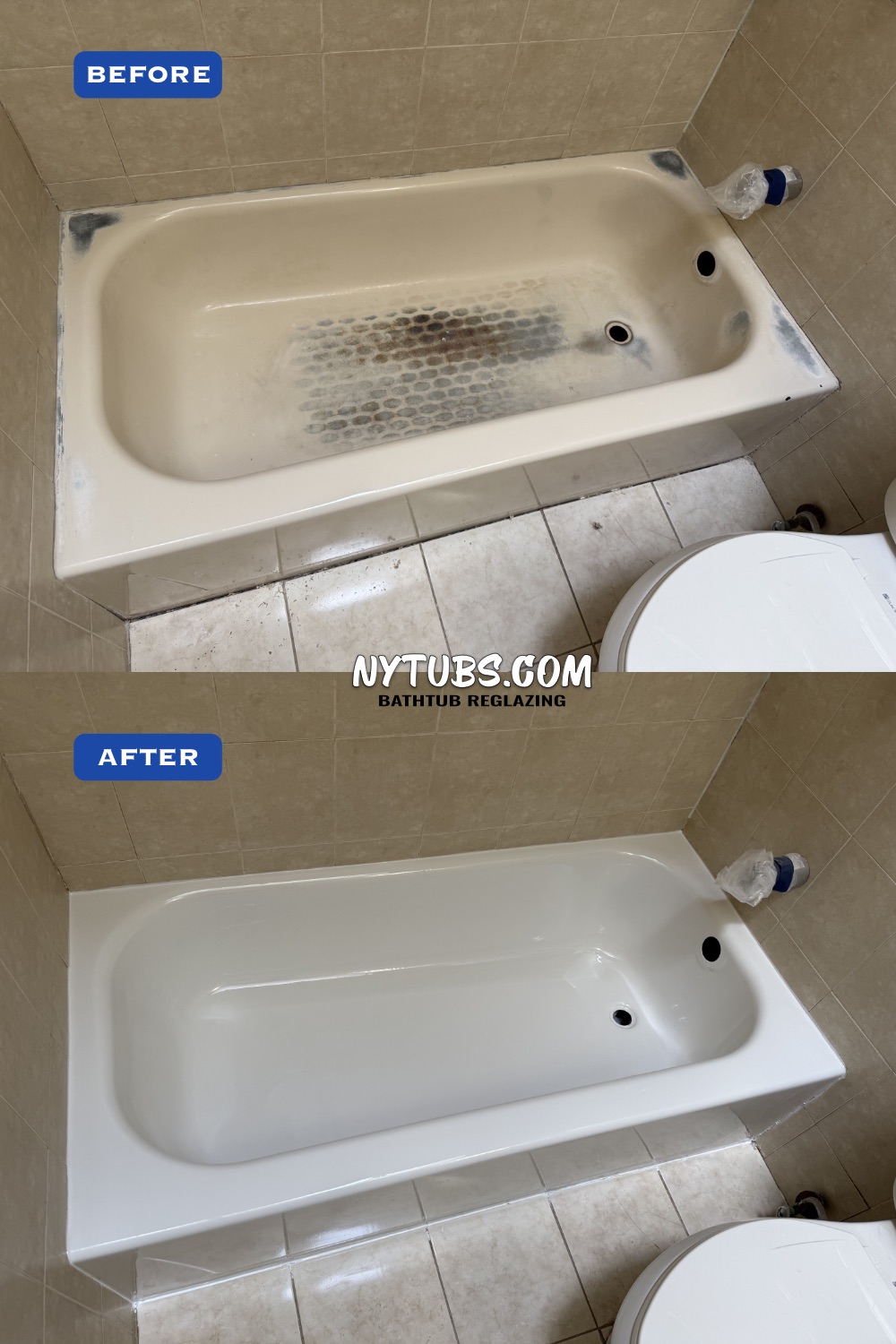
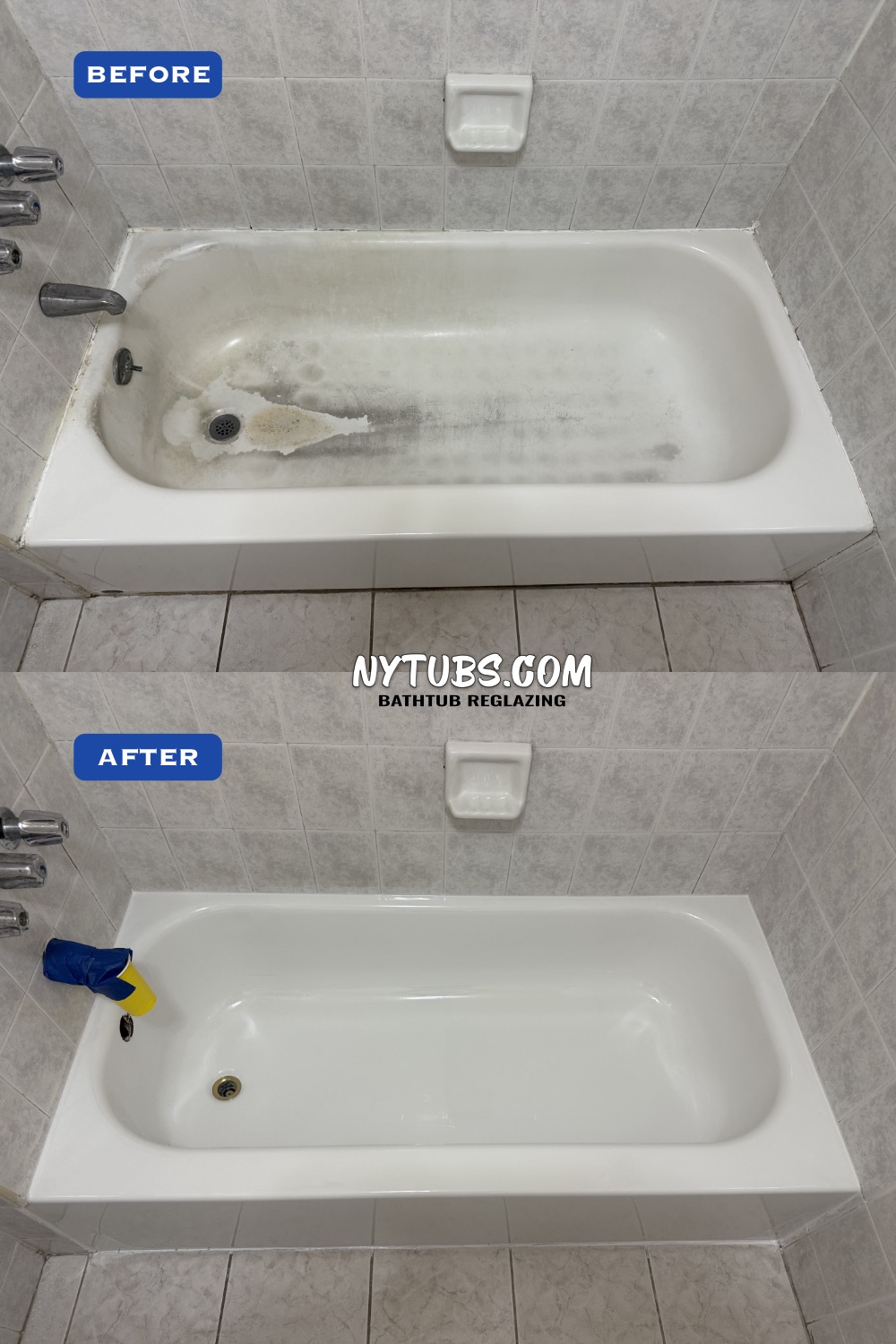
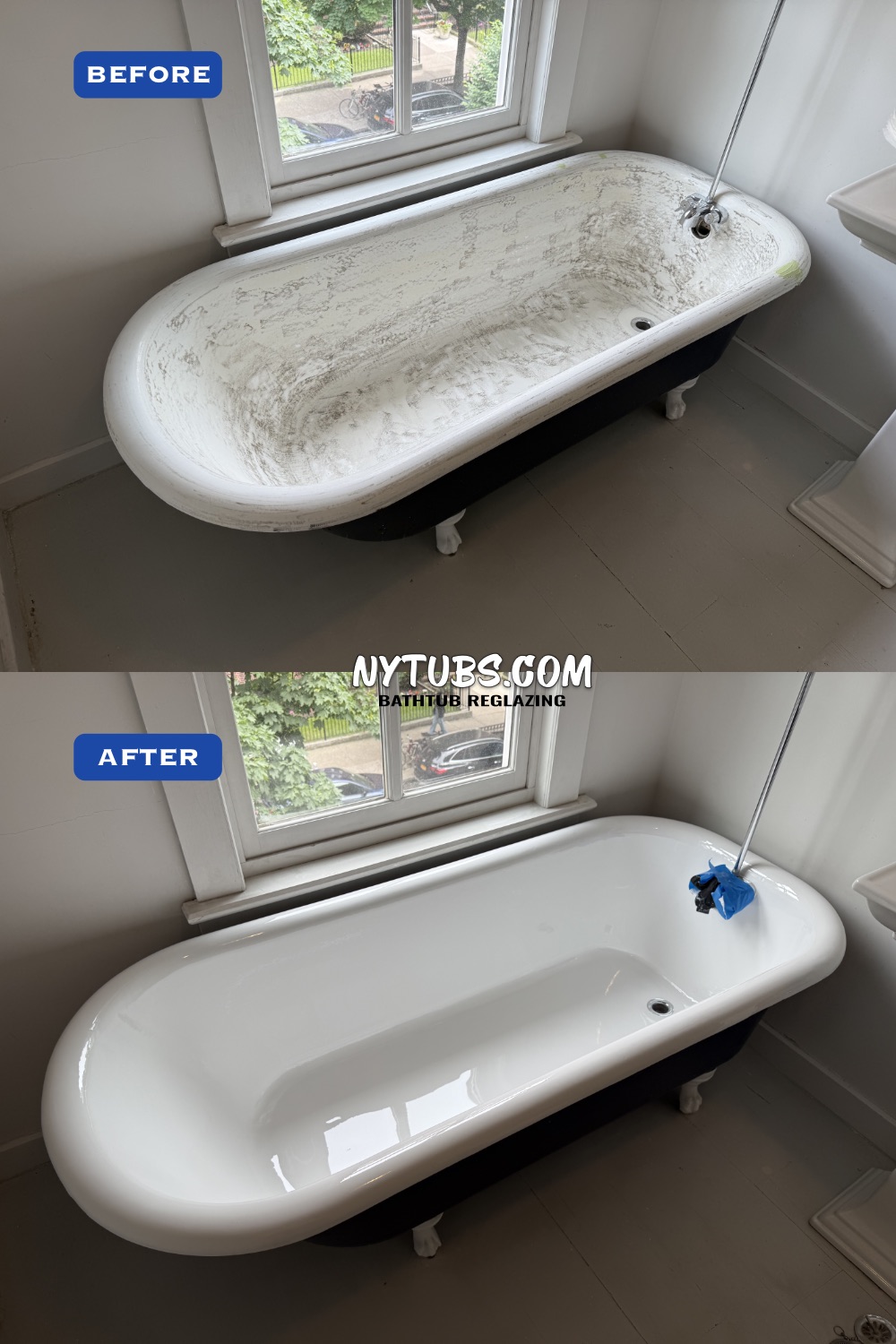
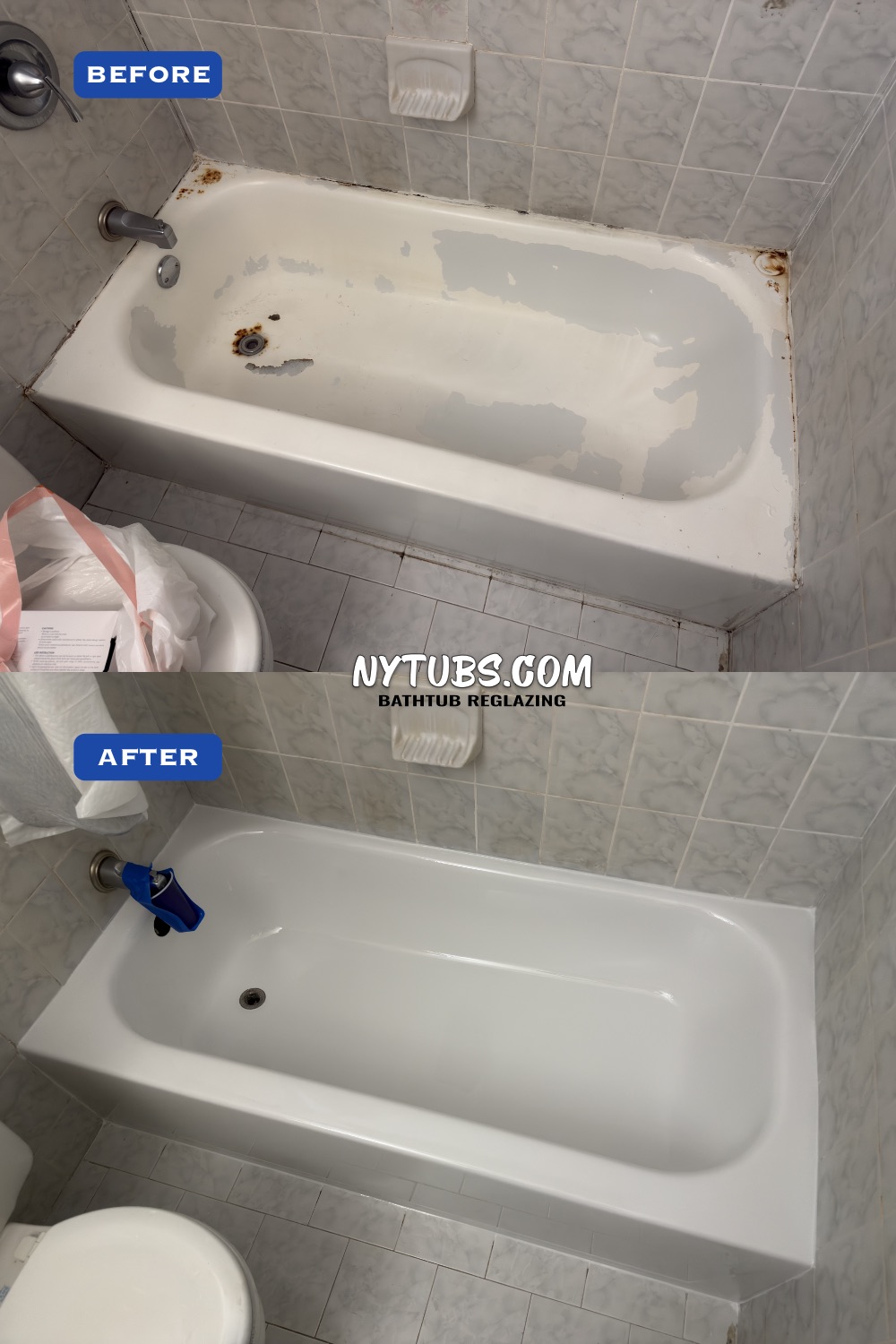
What our customers say



Follow us on Instagram
Refinishing your clawfoot costs about 10% of what a comparable new tub plus installation runs. The finish lasts 10-15 years. One visit, no demolition, ready to use the next day.
Our services
One method — pour-on, self-leveling coating — applied to the tubs New York apartments actually have.



-
-
What You Get✓ One visit, ready in 24 hours✓ 5-year written warranty✓ Licensed & fully insured